

At the 2026 edition of London Design Festival, discarded clothing became pigment, yarns, and boards — and clay from the Thames was transformed into ceramic vessels. Traditional craft techniques also found new uses in lighting, textiles, and furniture.
Contributor Fiona Coleman attended the London Design Festival for THE KINDCRAFT. From experiments to finished objects, her selections explore how materials can find new purpose and what we can learn from their transformation.
New Uses for Waste
The Or Foundation
The Or Foundation works in research, advocacy, and material development highlighting the impact of fashion overproduction on communities in Ghana. Founded in 2011, the non-profit operates in Ghana and the US with a focus on Kantamanto Market in Accra, where large volumes of secondhand clothing lands after being discarded.
At the Material Matters event, The Foundation's Foose Materials platform showcased two ways to reuse unwanted textiles. The first, Cassaboard, is a bio-composite made from post-consumer clothing waste and cassava-based binders. The boards are durable and absorb sound, and they take their color from the recycled fabric, with no added dyes. They are used in the Foose Acoustics collection of speakers and acoustic panels and could also be used in interior panels and furniture.
The second is Tarnty, a yarn made from T-shirts by the Foundation's Material Technology and Transformation Lab (MTTL). Each ball is made from a single garment and can be used for knitting, crochet, and weaving. The Foundation also works with weaving communities in Northern Ghana to make woven products from it.
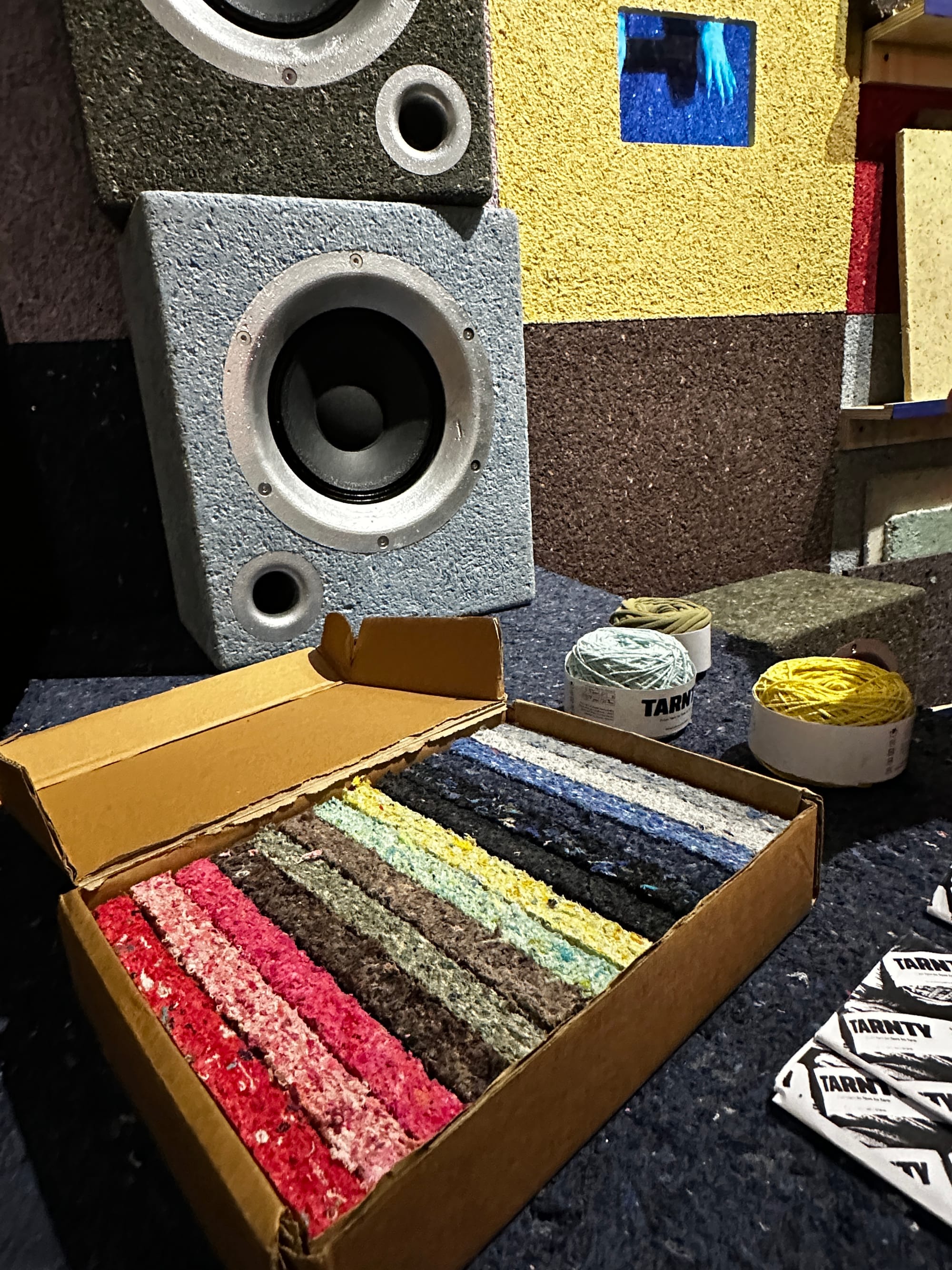
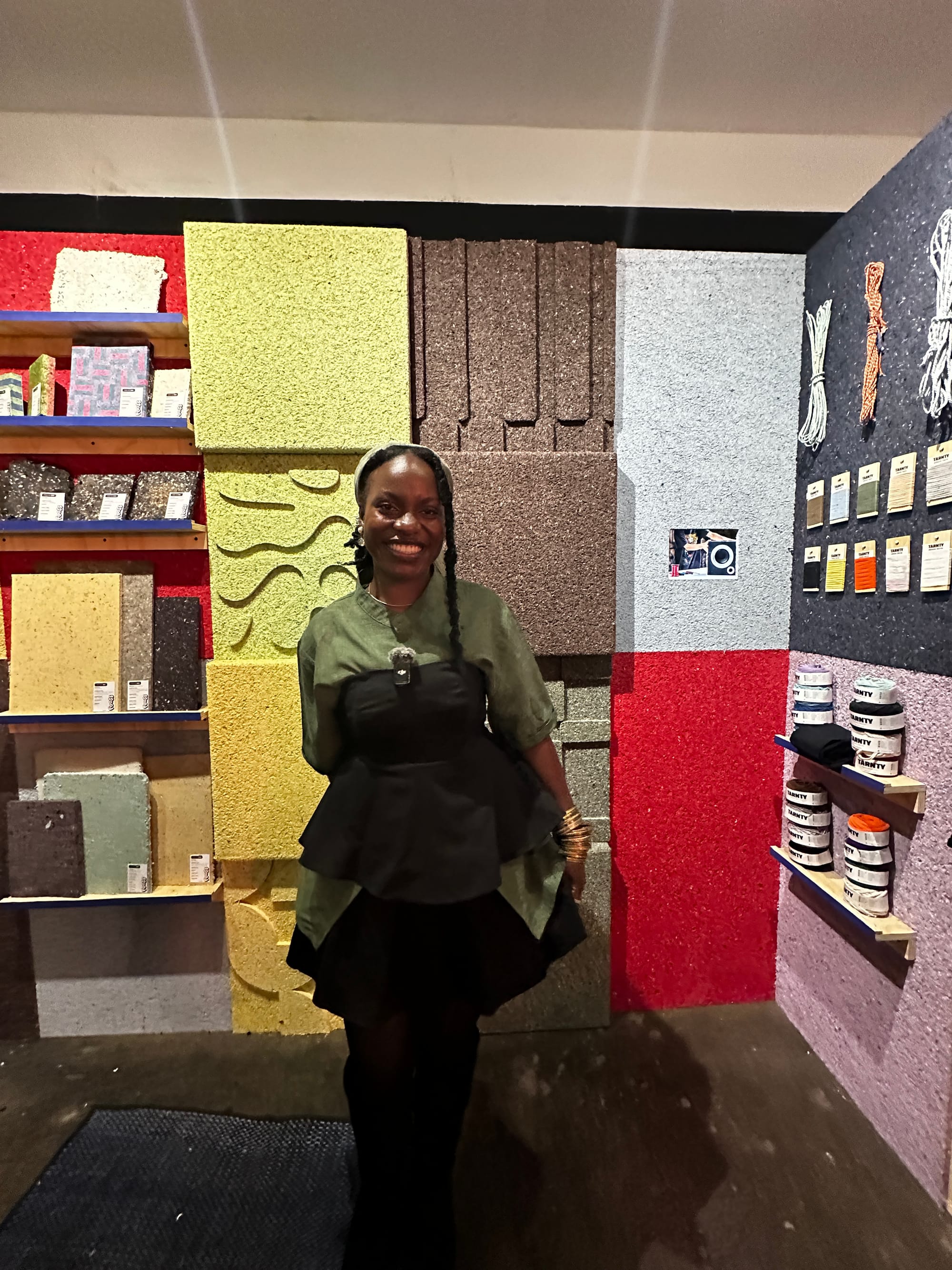
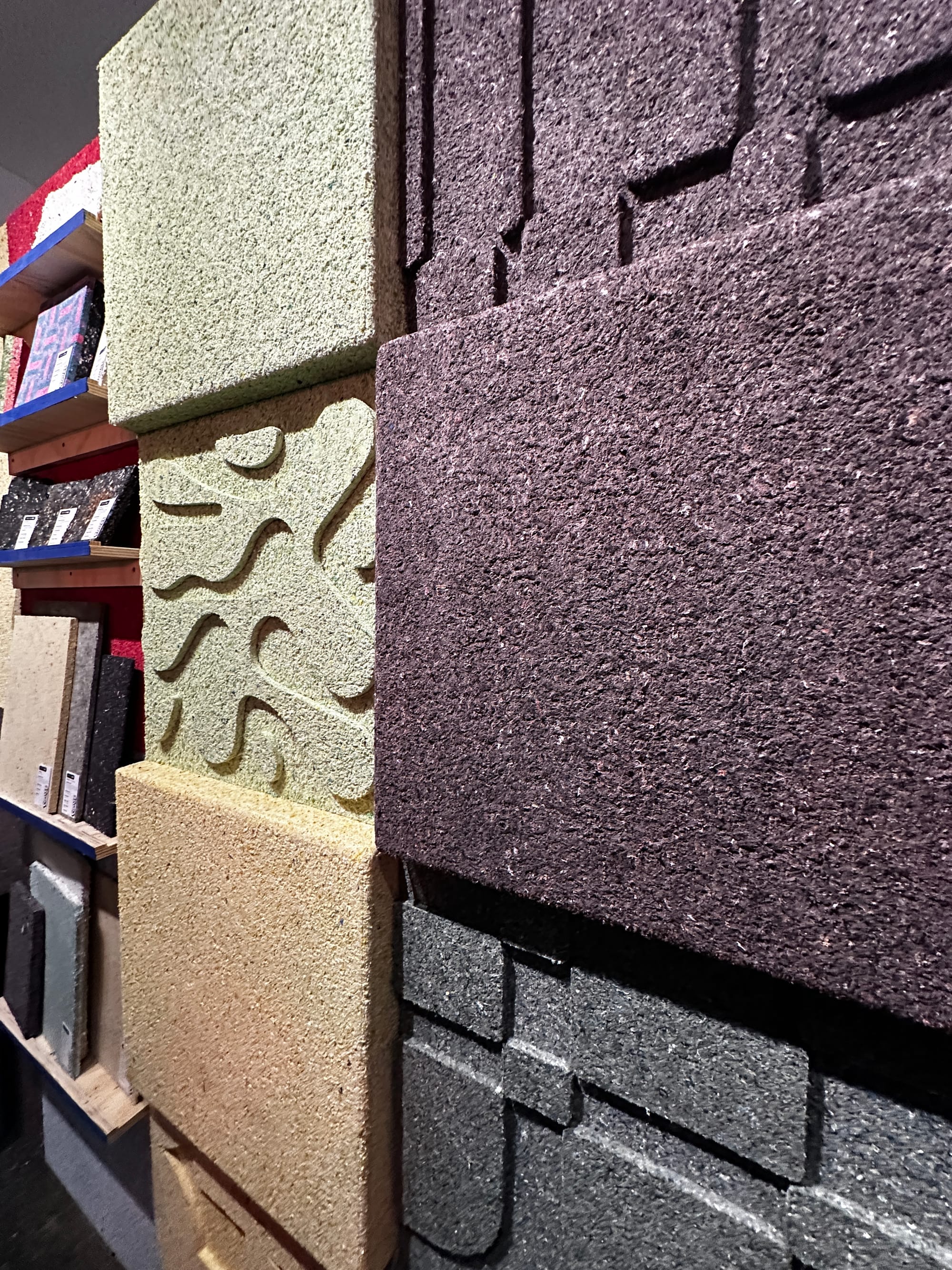
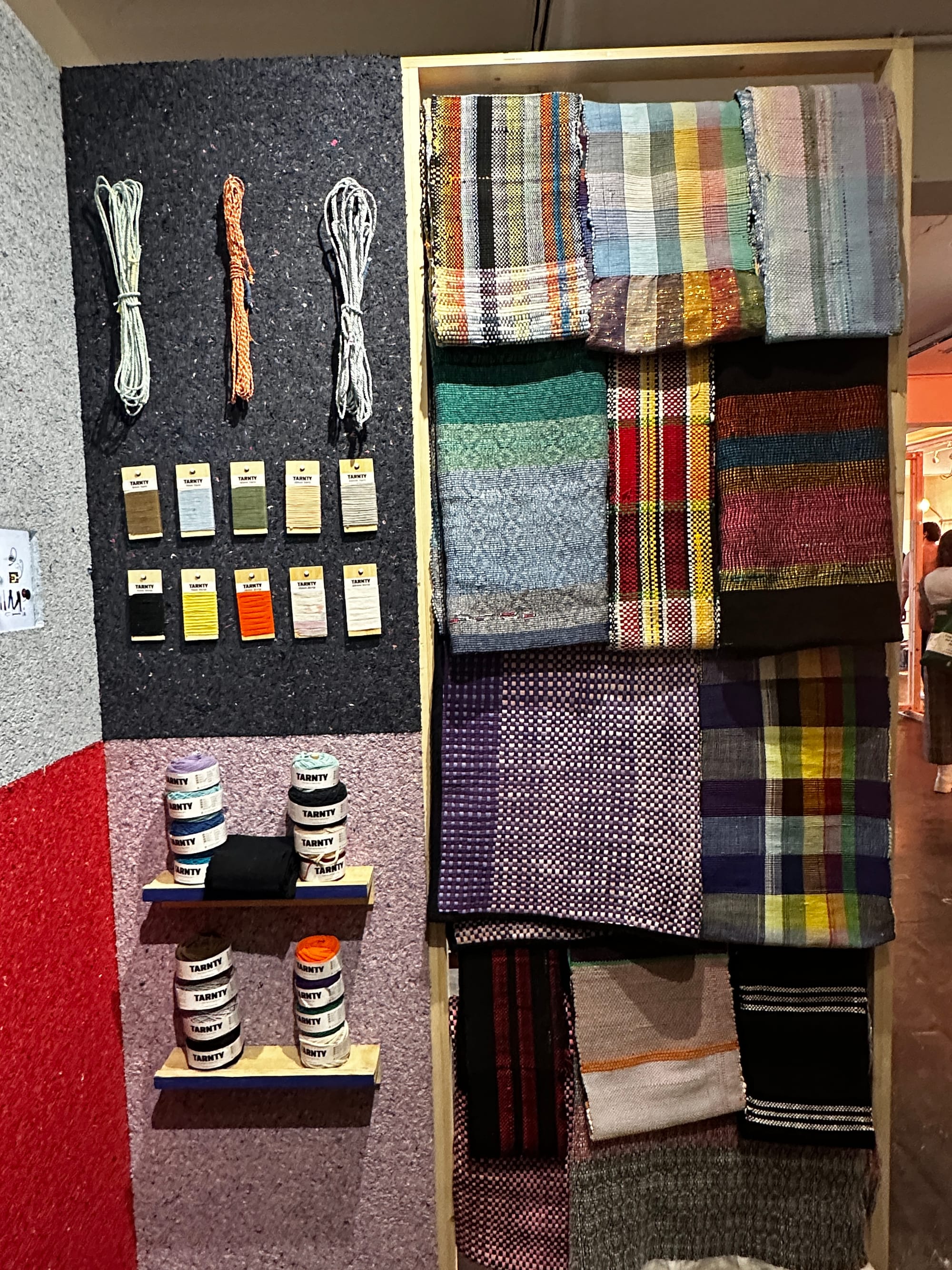
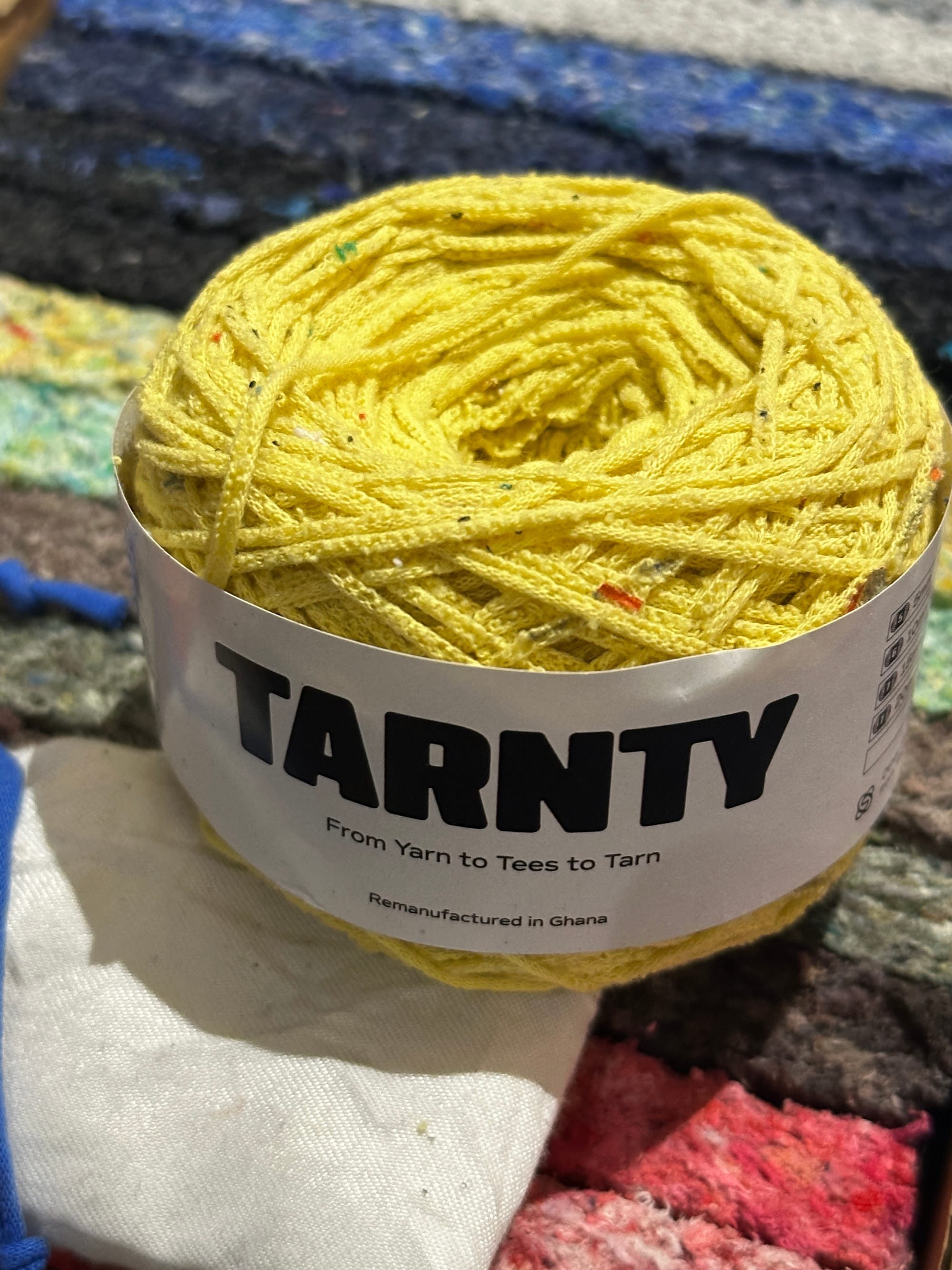
The Or Foundation. Photos by Fiona Coleman at LDF 2026.
'Second Song' by Spared
Brighton-based circular design studio Spared transforms waste materials into furniture and interior design objects. Its new collection, 'Second Song', launched at Material Matters and is made from waste generated by the studio
The collection of sculptural birds was made from studio waste — including offcuts, color tests, samples, coffee grounds, shells, workshop sawdust, waste plastic buckets, and packing foam. Some use a resin-free mineral binder, and others a composite made with 30% bio-based resin. More experimental versions try seaweed-derived materials and waste PLA, a plant-based plastic, from the studio's 3D printer.
Second Song birds have simple, rounded forms that let the materials show: flecks, color variations, and imperfections. Every piece is individually numbered. Spared launched the collection with Sussex Wildlife Trust, and 10% of its proceeds will support the Trust's work to protect and create habitats for birds and other wildlife across the county.
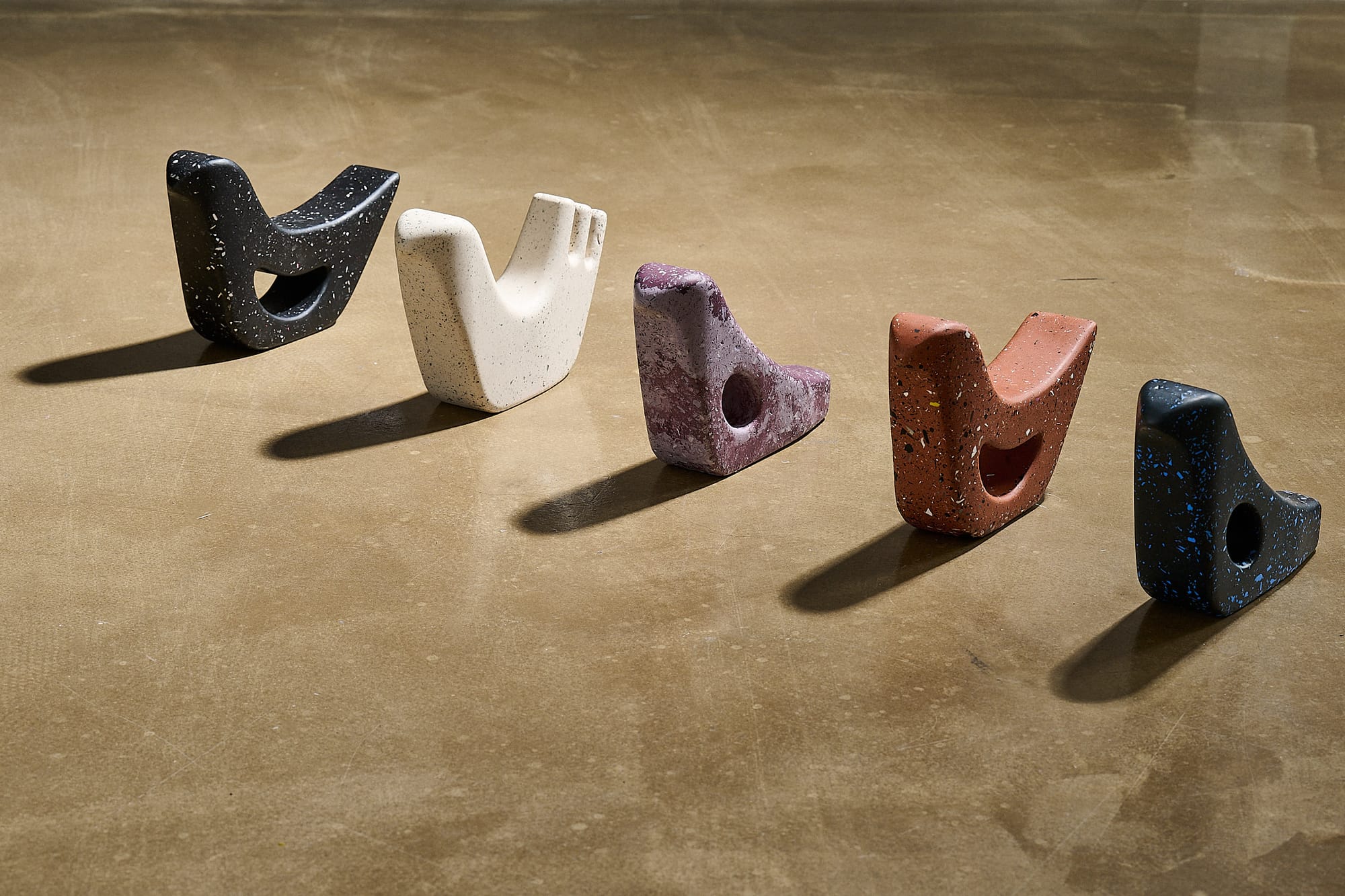
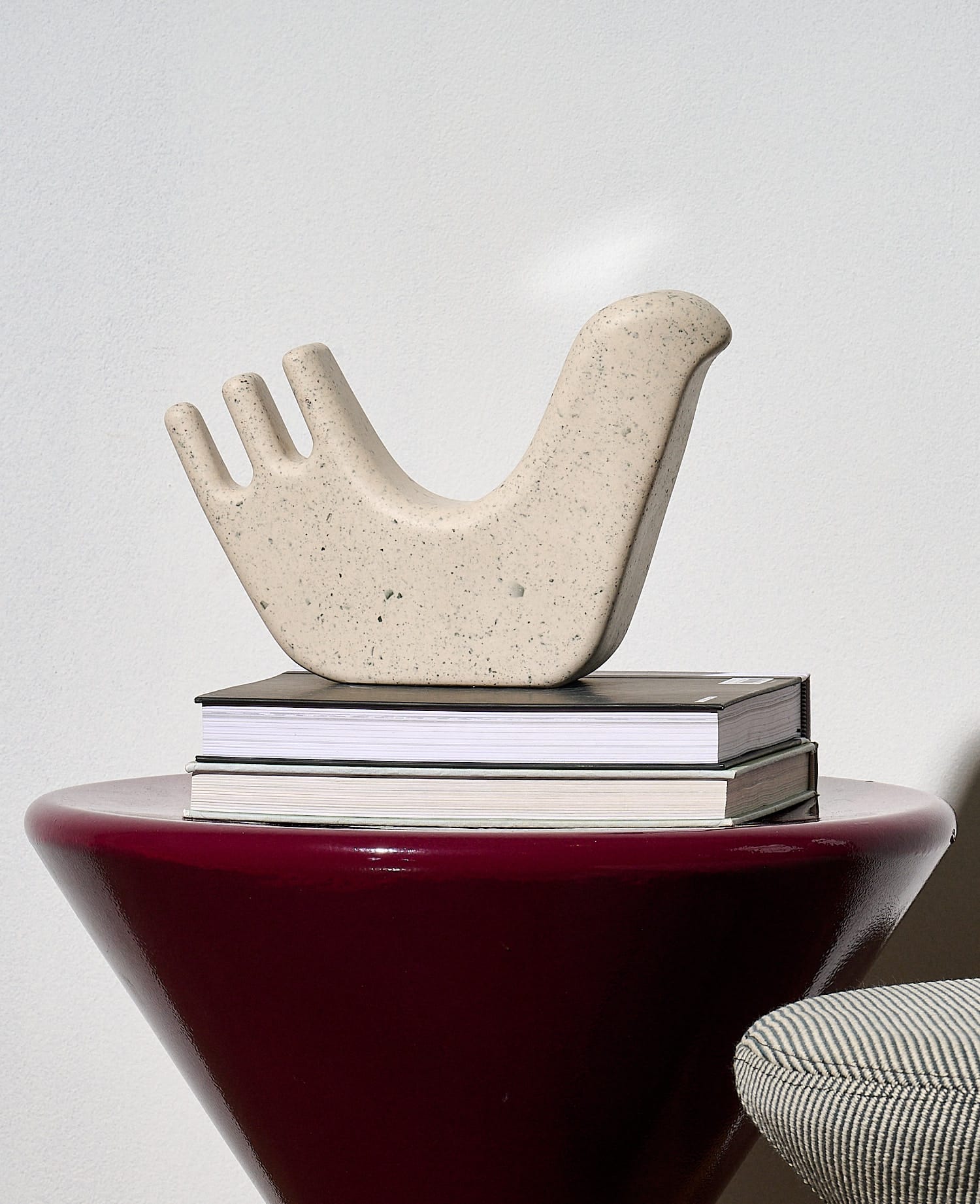
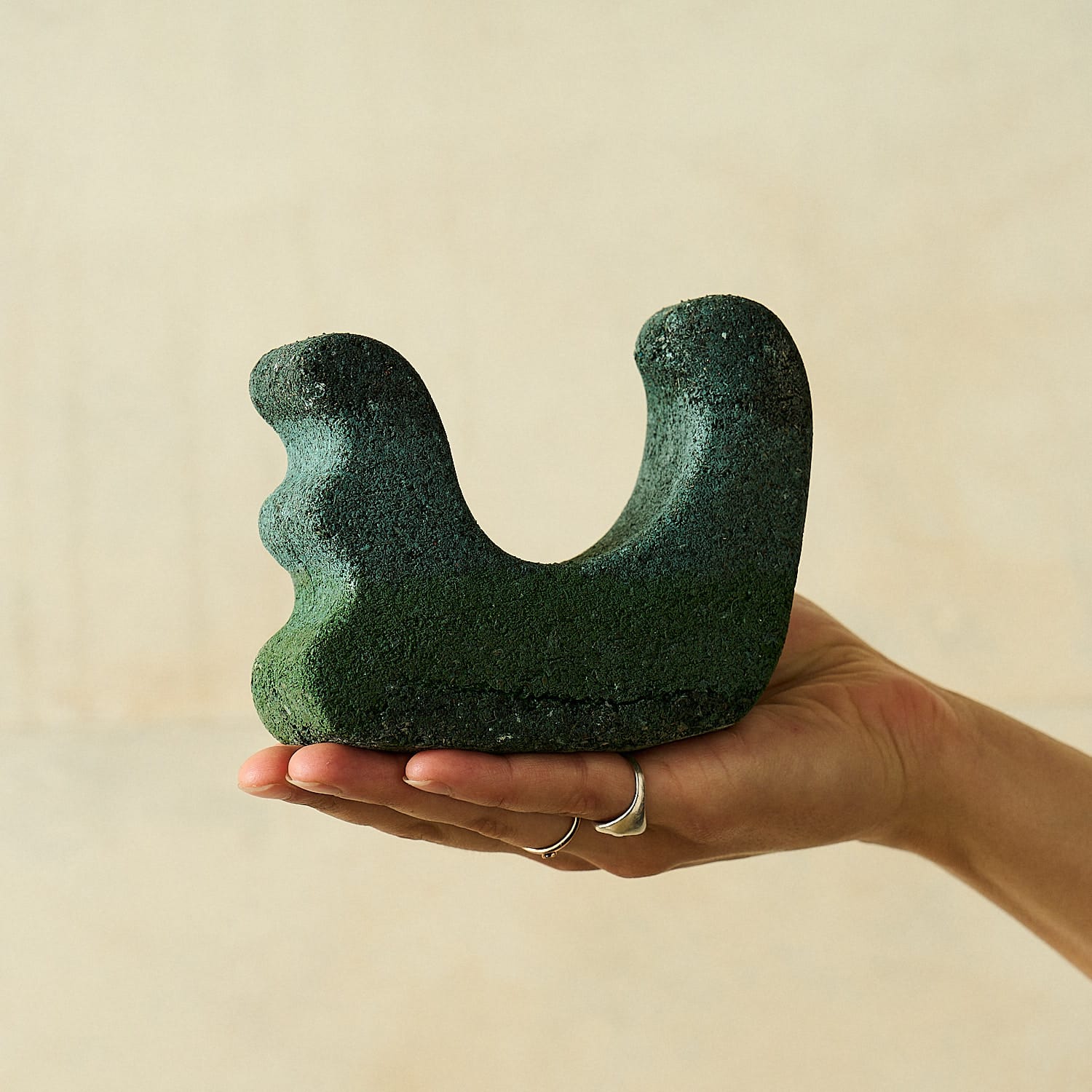
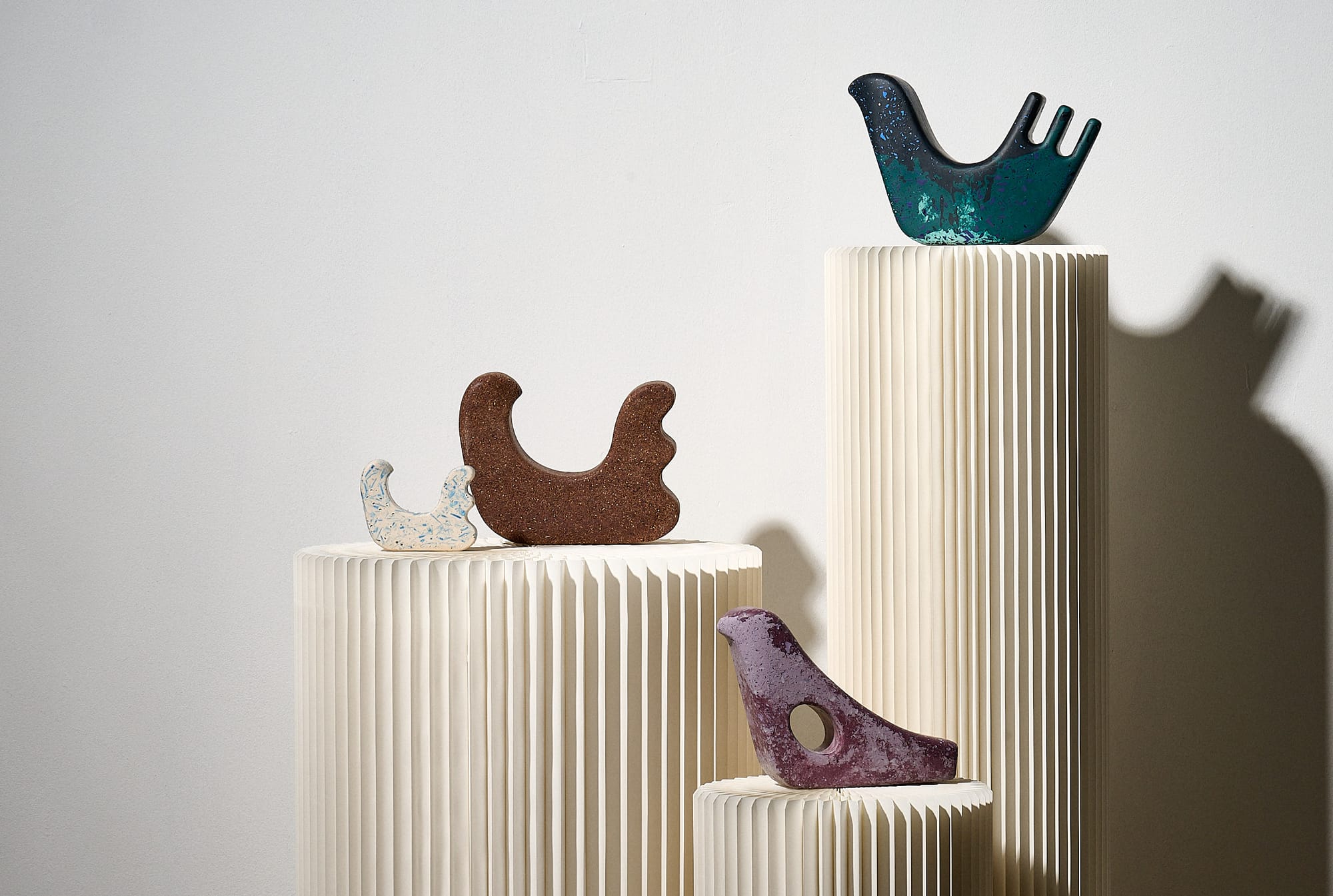
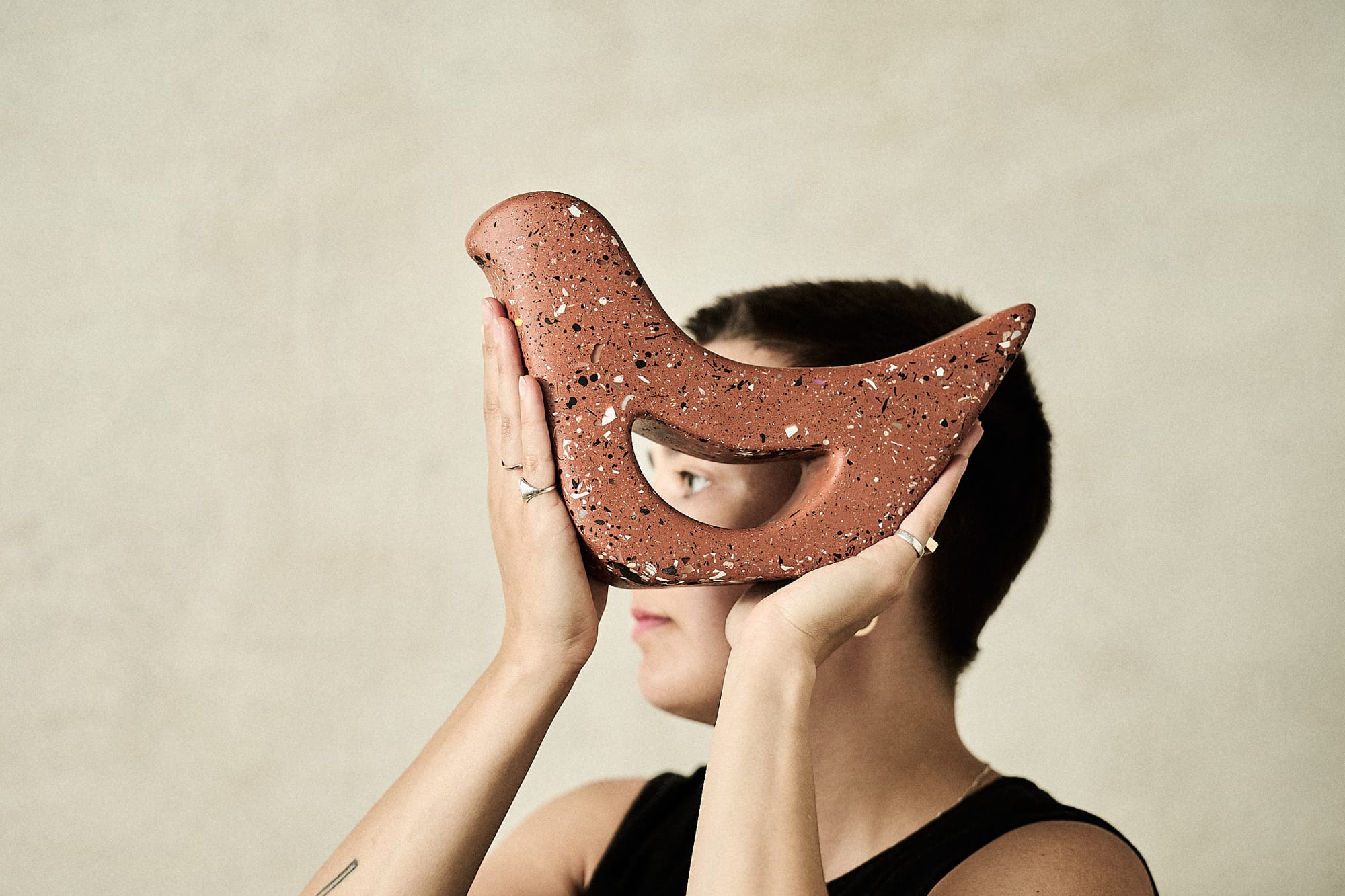
'Second Song' by Spared. Photos courtesy of Spared.
Color from Waste
Chroma Waste Lab: 'Colour Lab — From Waste to Value'
Textile recycling usually focuses on its fiber, but Colour Lab: From Waste to Value explored the potential of its color.
Developed and presented by Colour of Saying in partnership with the Chroma Waste Lab at Australia's RMIT University, the three-day program featured pigments milled from discarded cotton, dyed textile experiments and ink trials.
The exhibition asks how waste textiles can become a source of color, with experiments and workshops exploring the pigments’ possibilities and practical challenges.
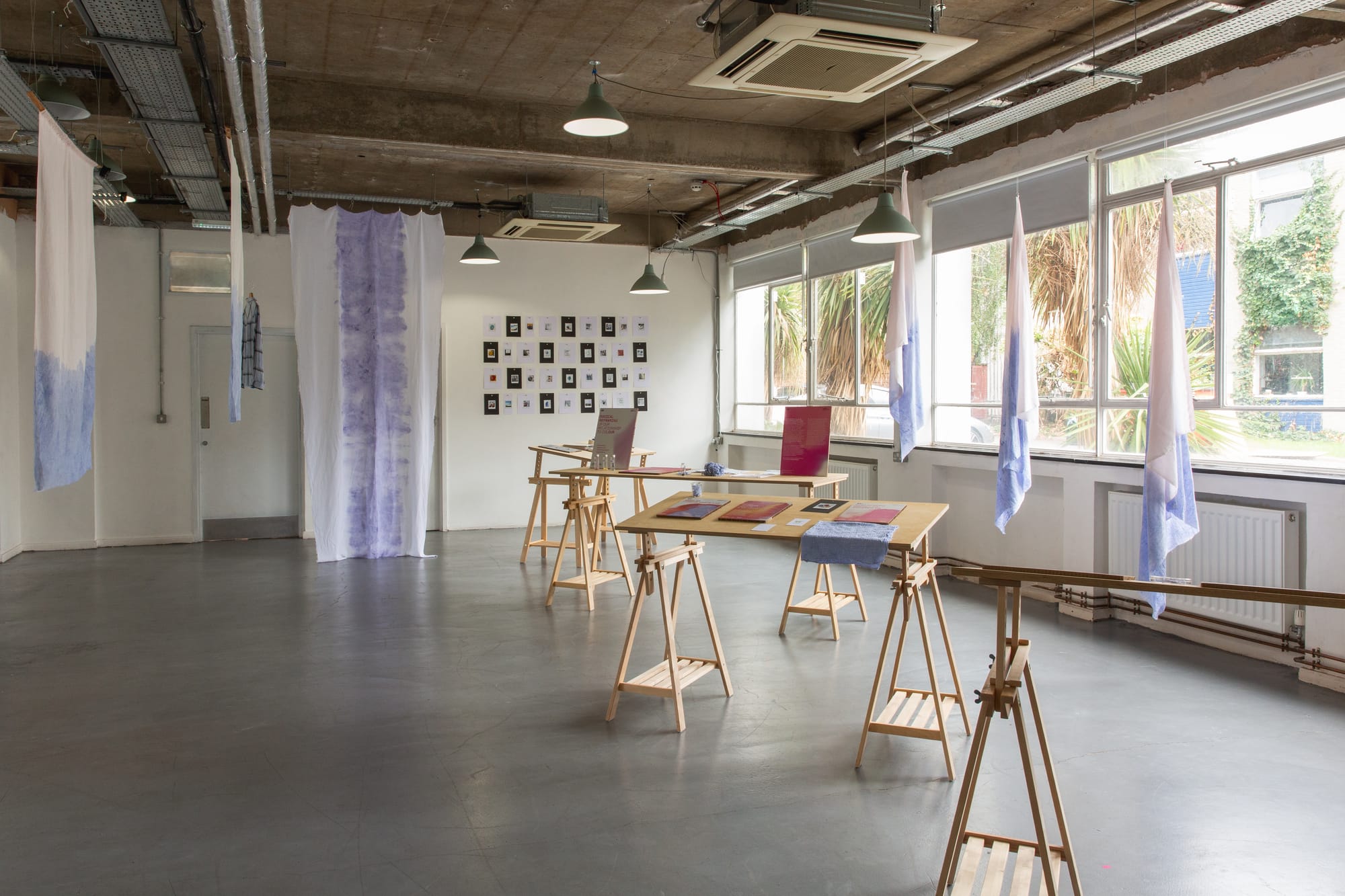
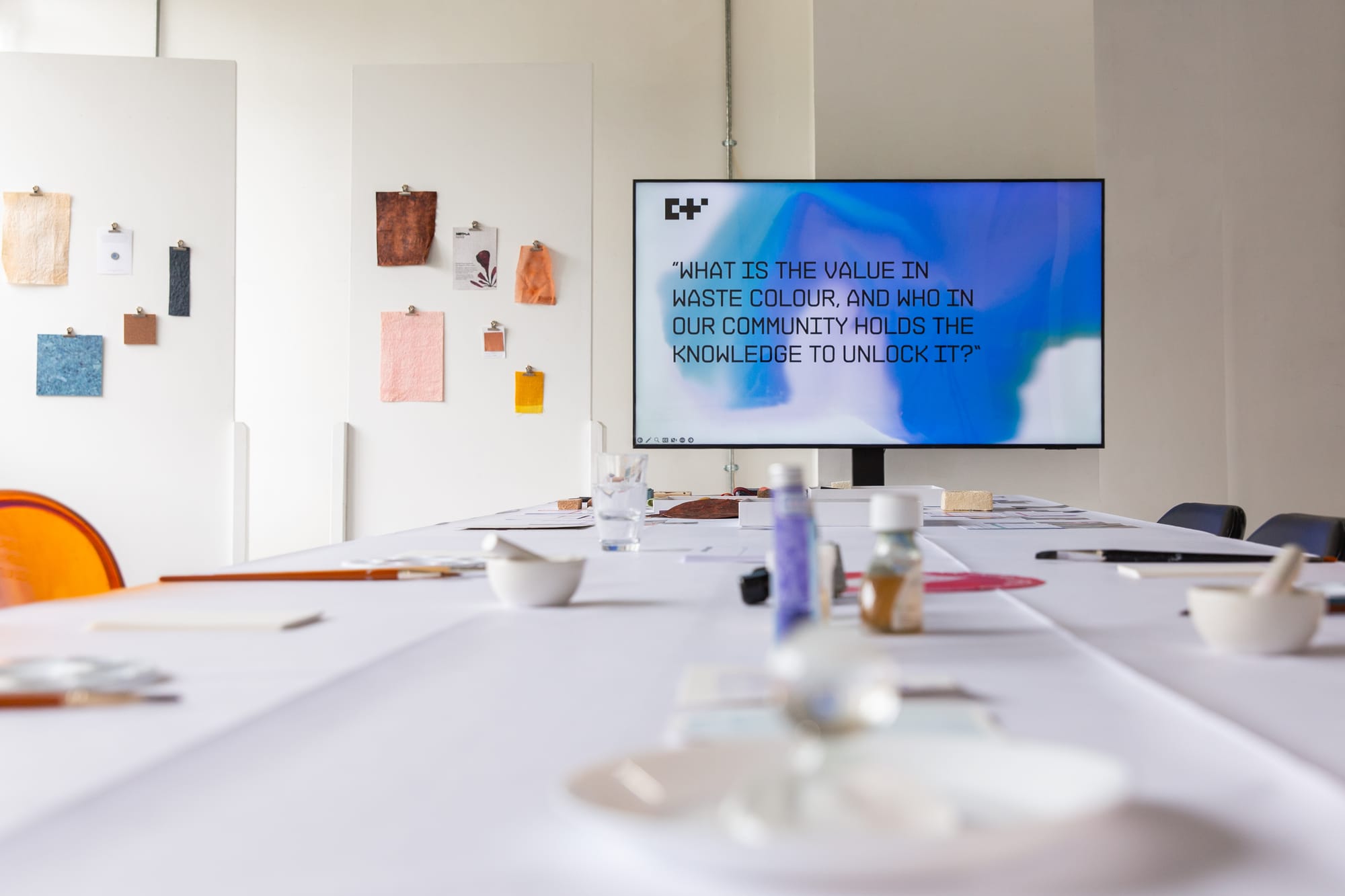
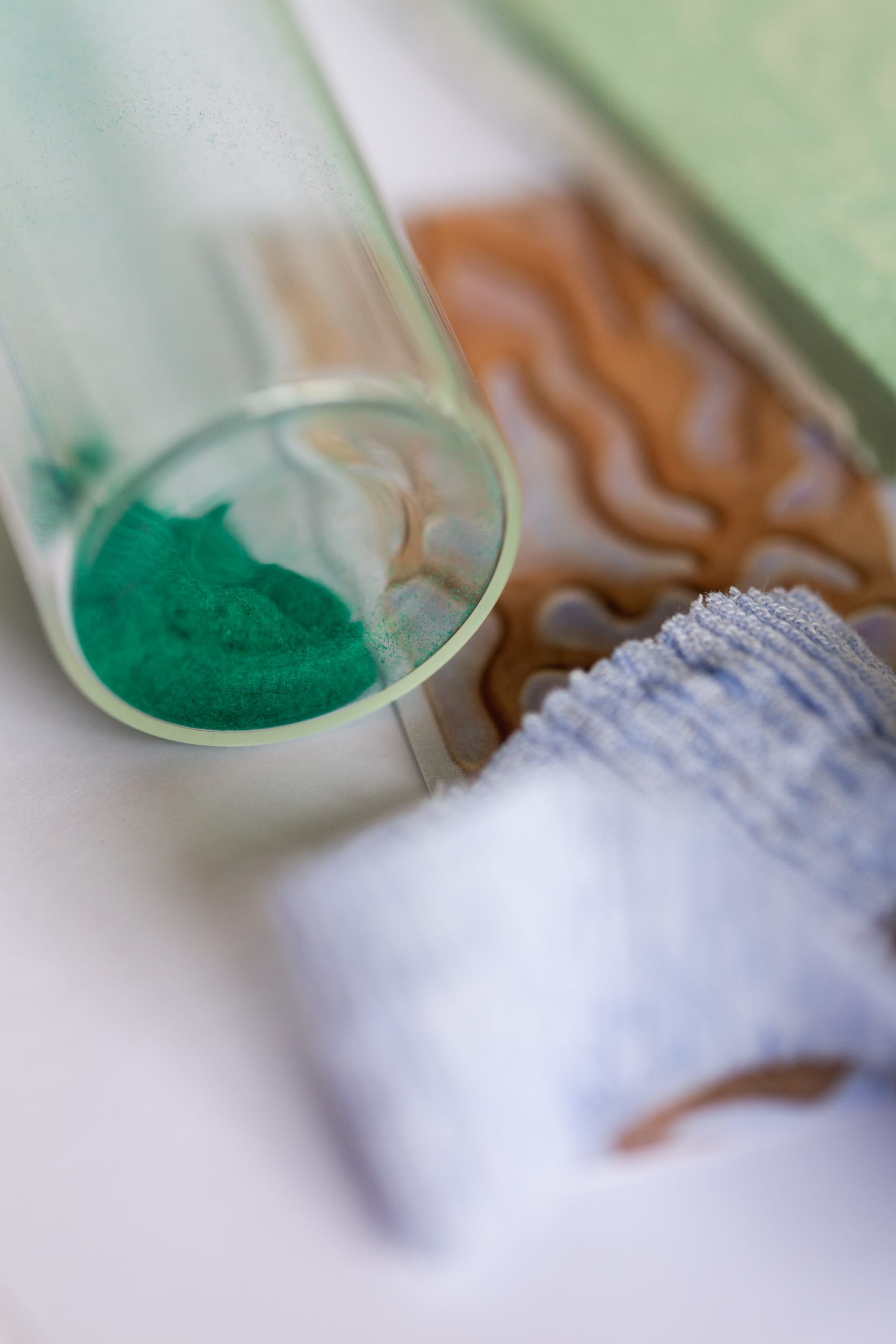
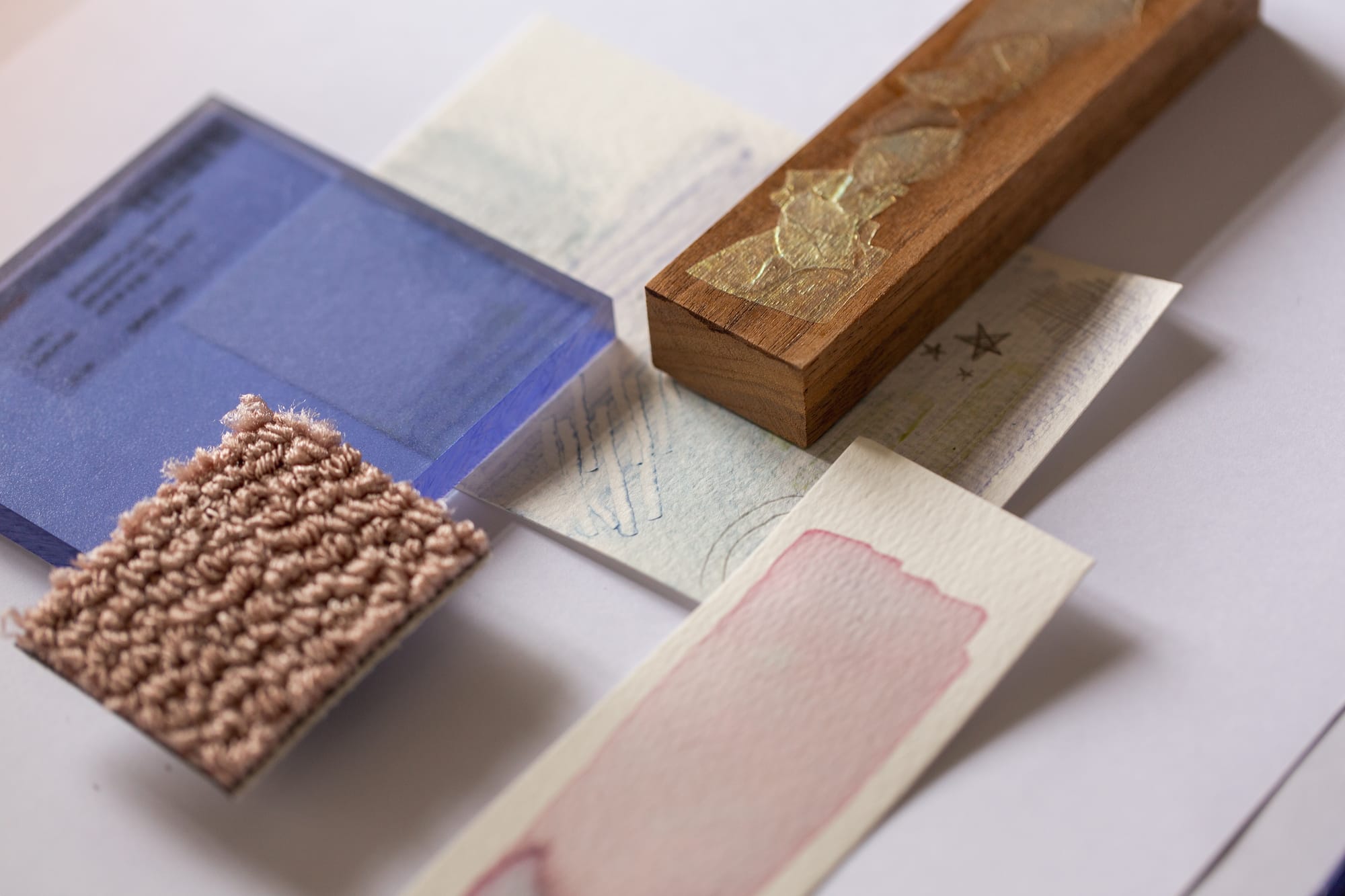
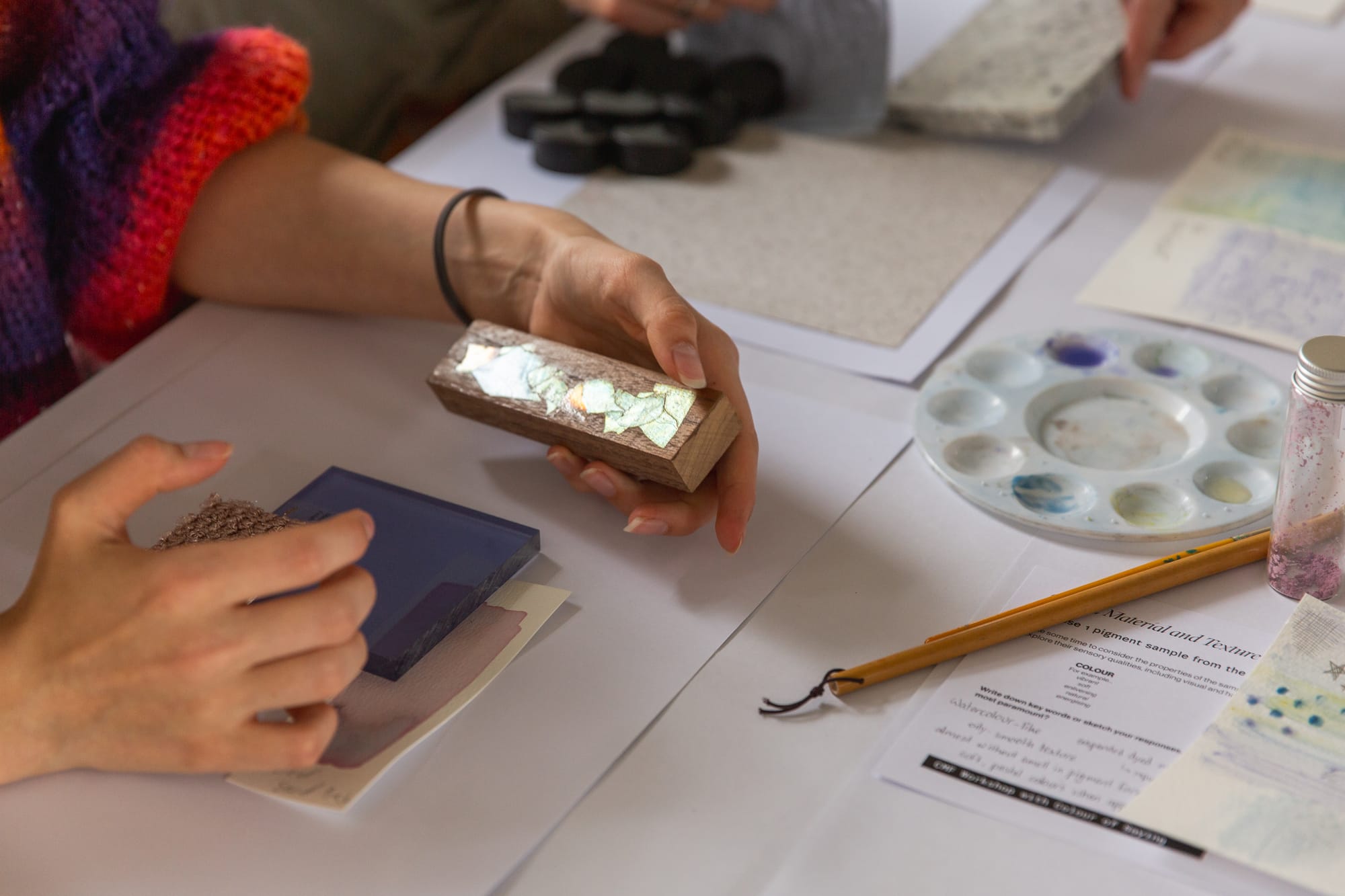
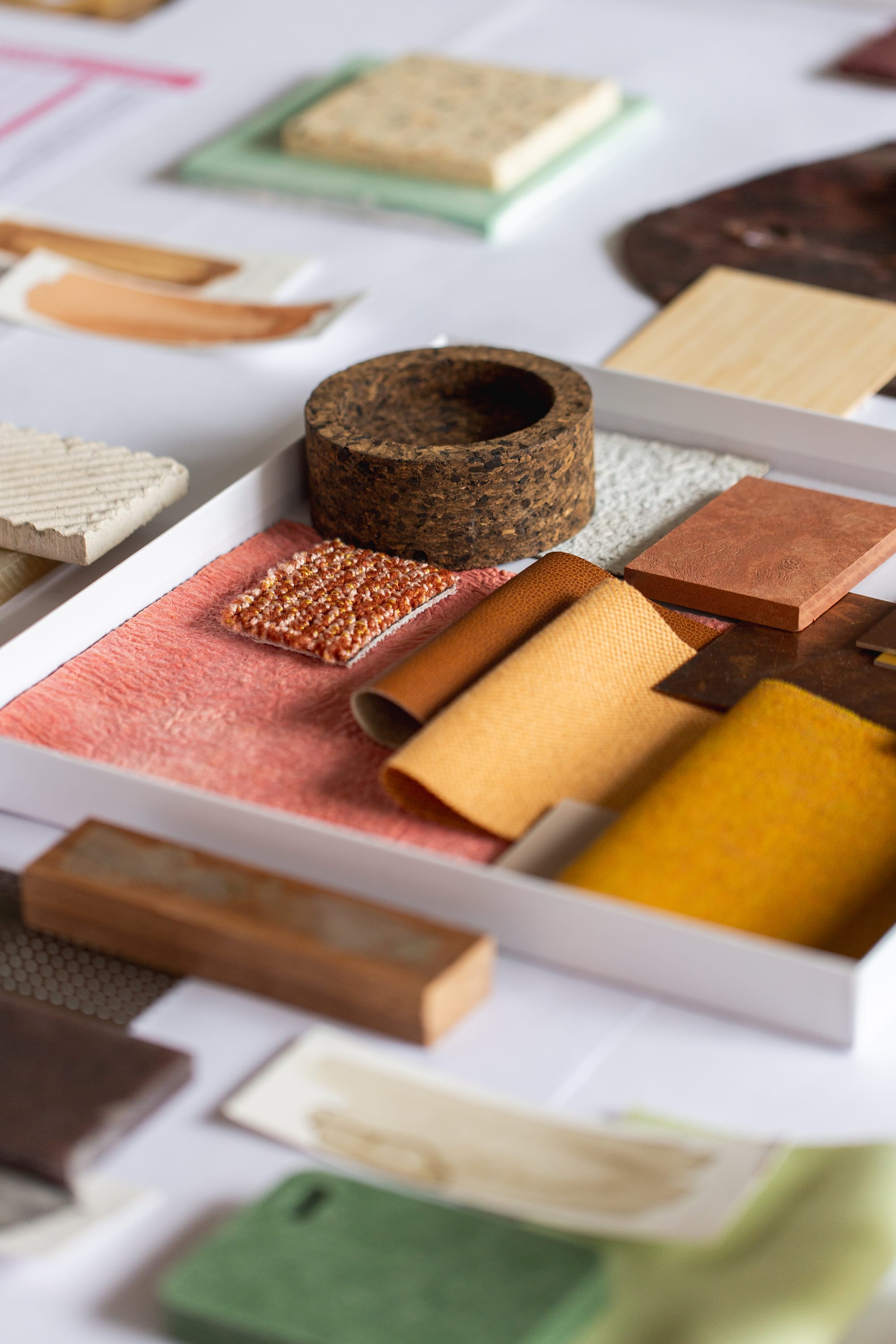
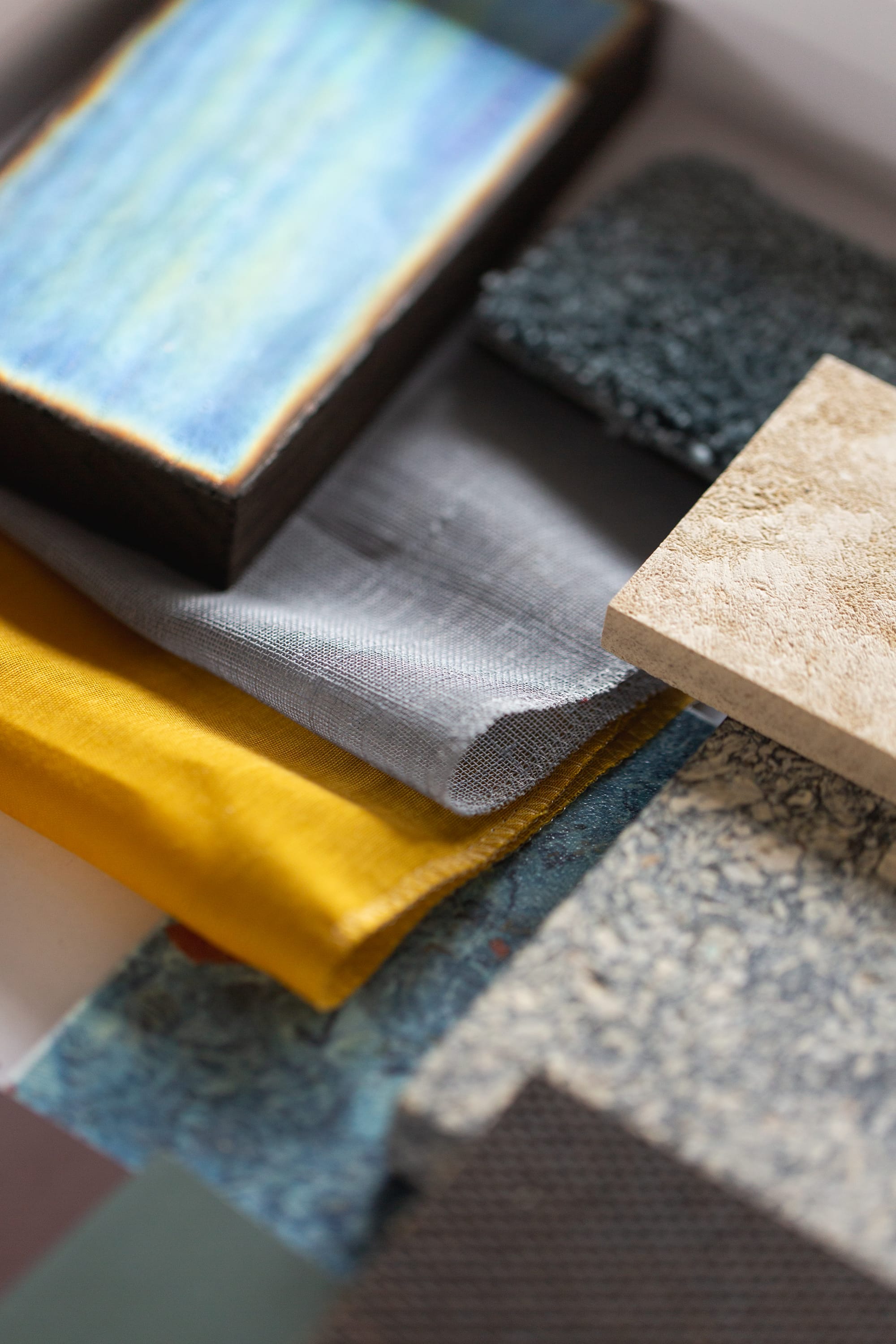
Chroma Waste Lab. Photos by Sara Hibbert.
A Sense of Place
'Thames Matter' by Neve Beill Ceramics
For London-based ceramicist Neve Beill, the River Thames is both a source of materials and a record of the city's past. Her latest collection, 'Thames Matter', brings together hand-thrown ceramic vessels made from clay gathered from the shore, alongside foraged sand, rocks, reclaimed glass and other local materials.
Beill tests what she collects, firing samples at different temperatures and developing glazes from natural materials such as ash. These experiments inform the shape, surface and color of each piece. Some also incorporate impressions of objects found along the river.
Ranging from small vessels to large-scale sculptural forms, the collection draws on the shore's textures, colors and shapes to create contemporary ceramics that celebrate material transformation.
Her work reveals the unexpected beauty and potential of materials often overlooked or discarded, encouraging a deeper connection with place and process.
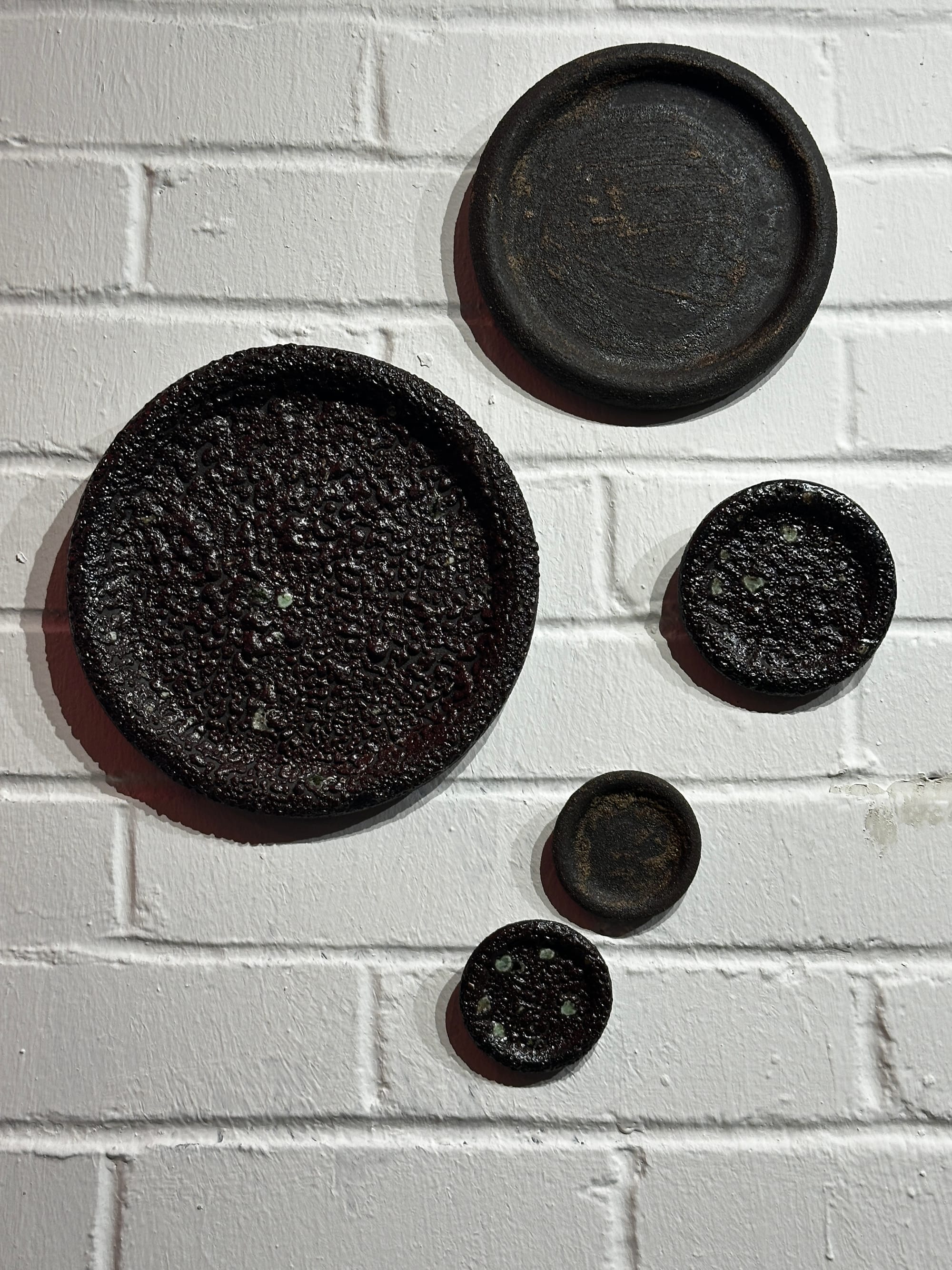
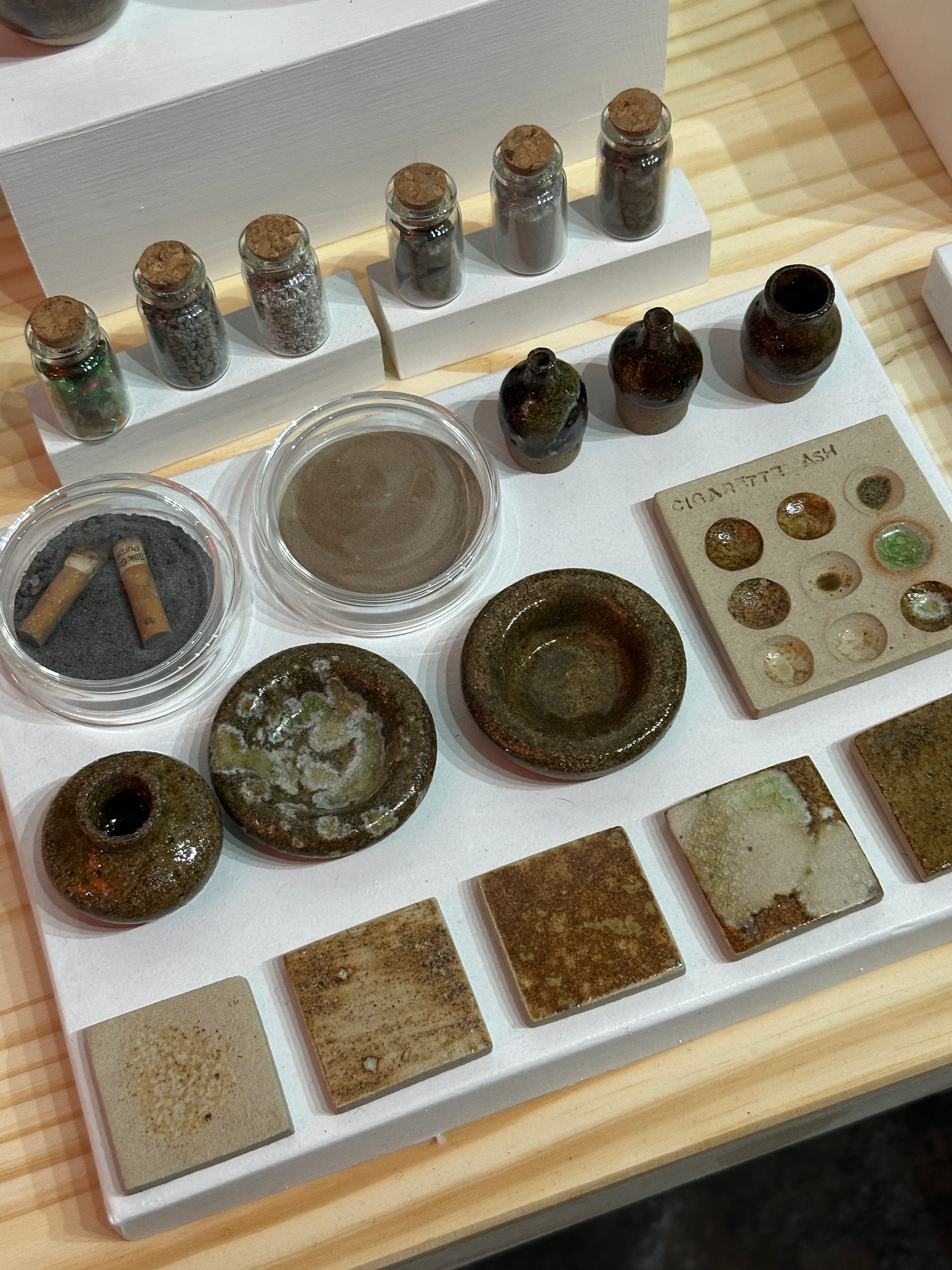
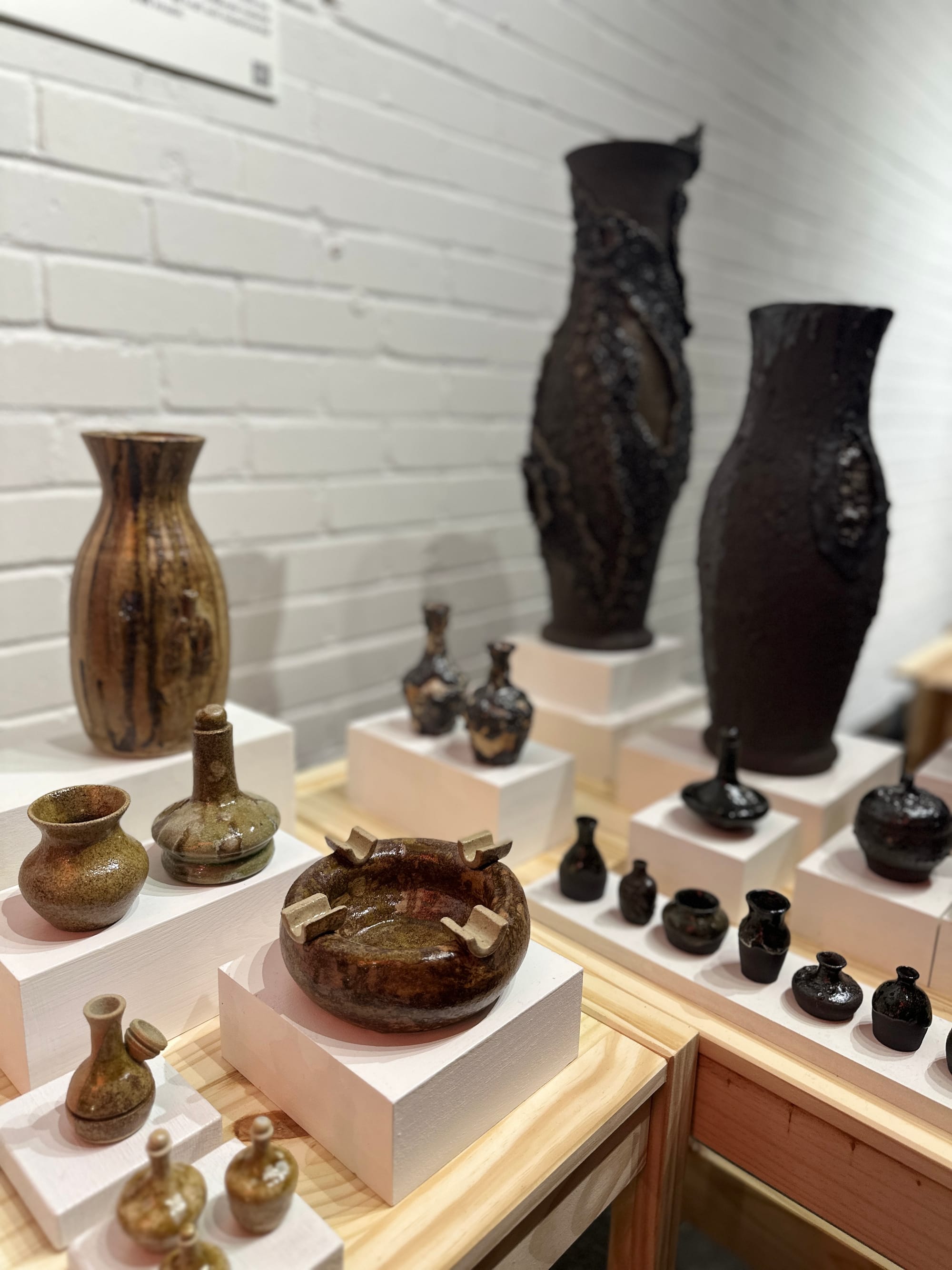
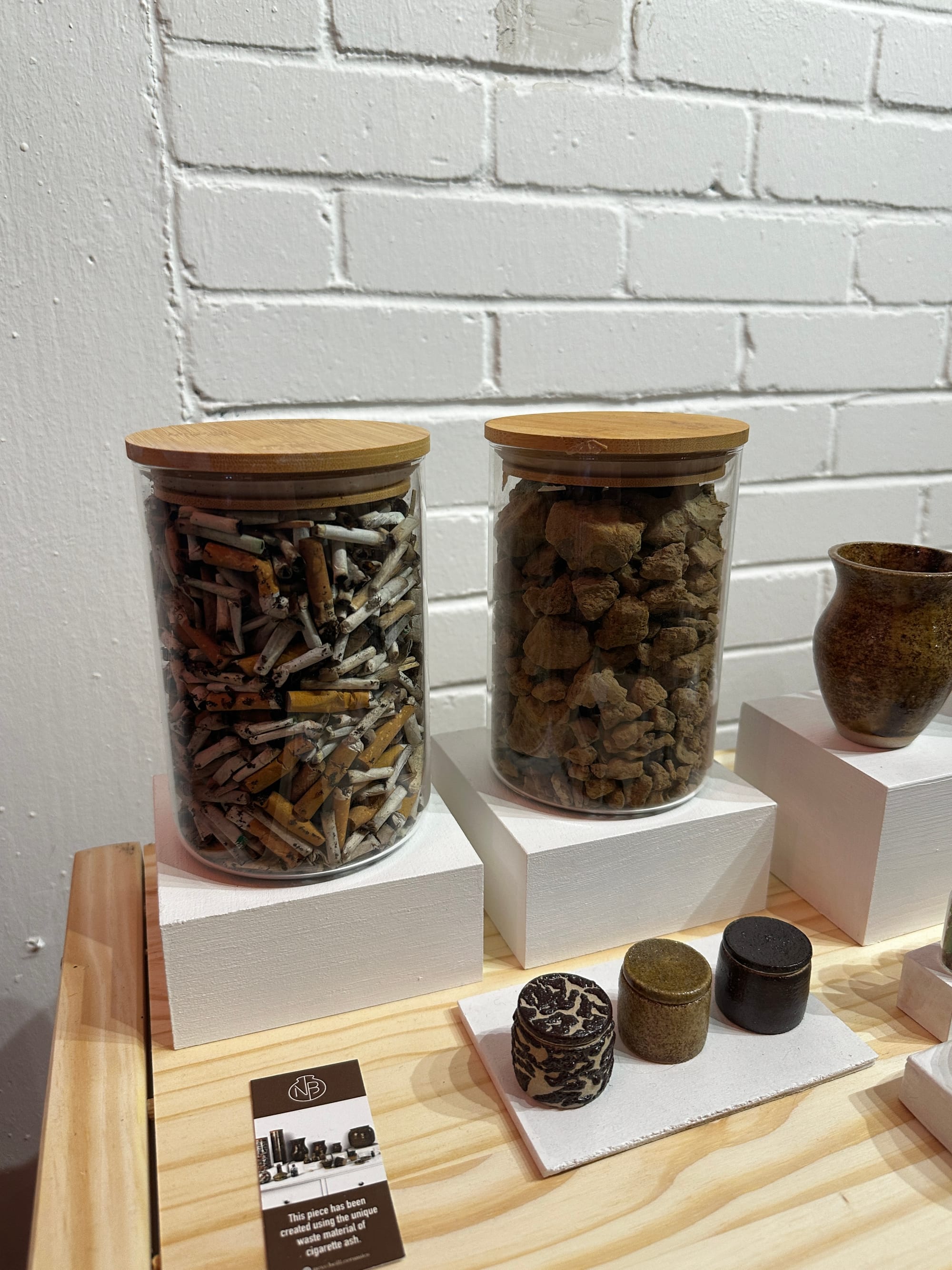
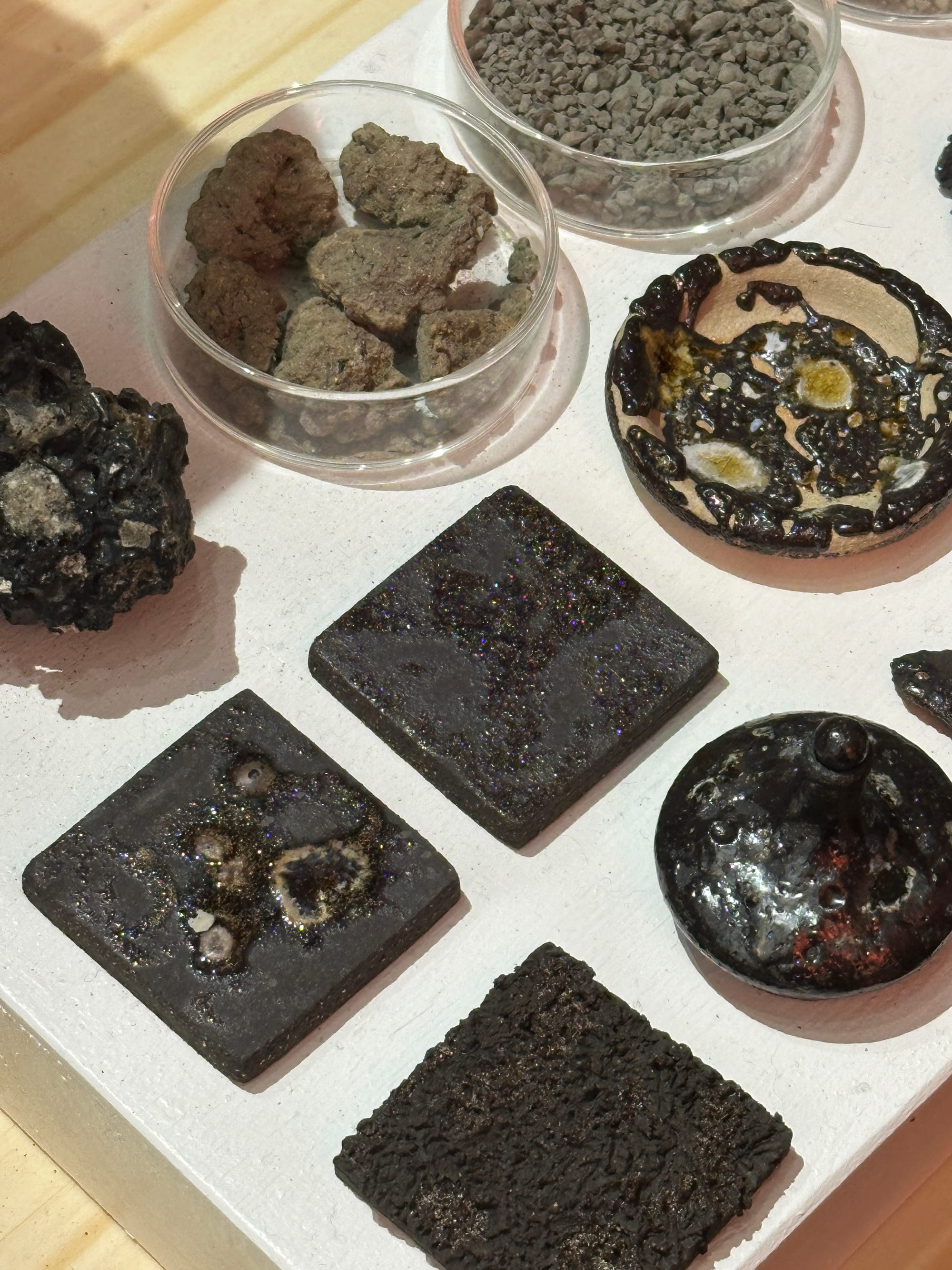
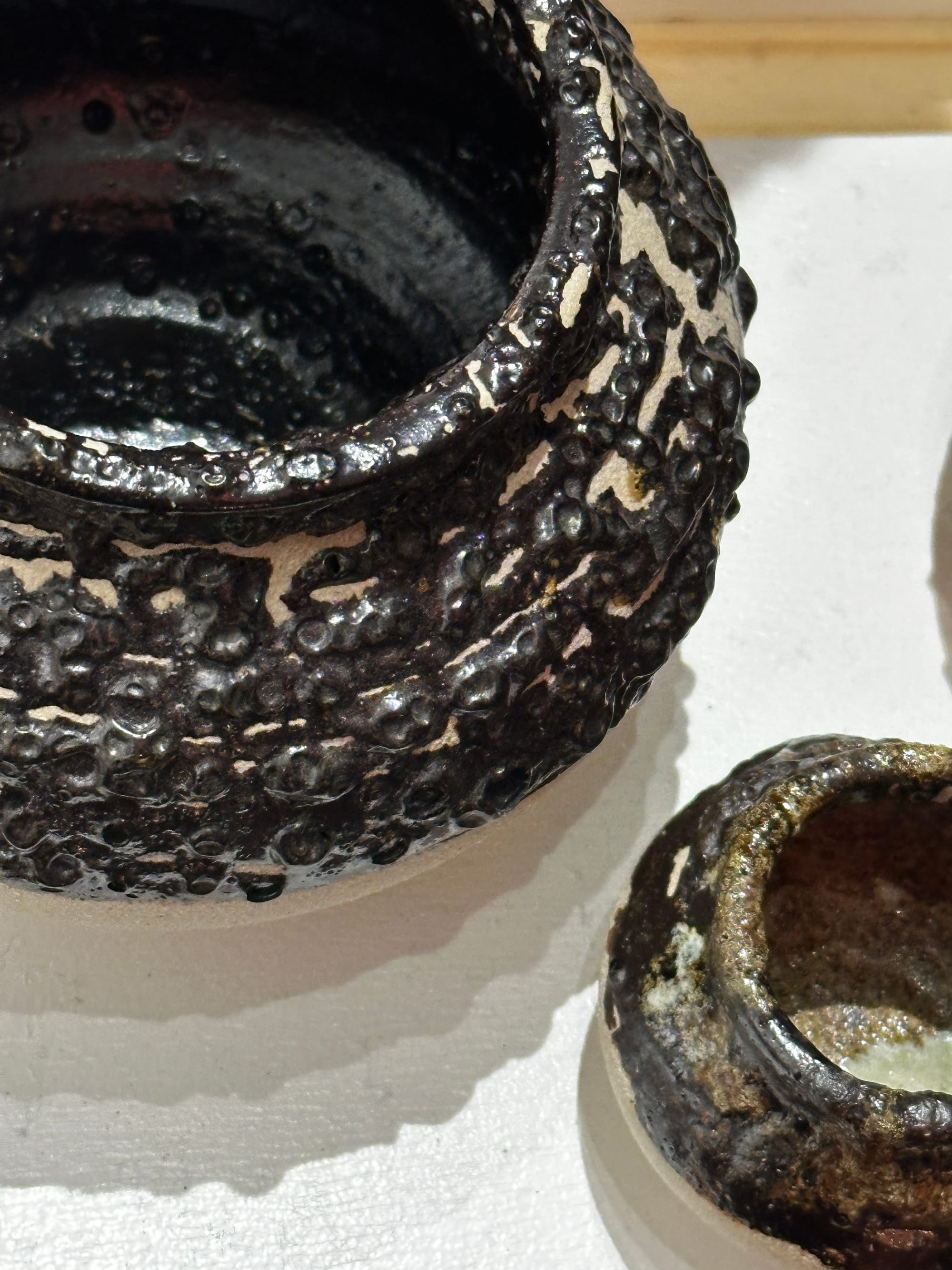
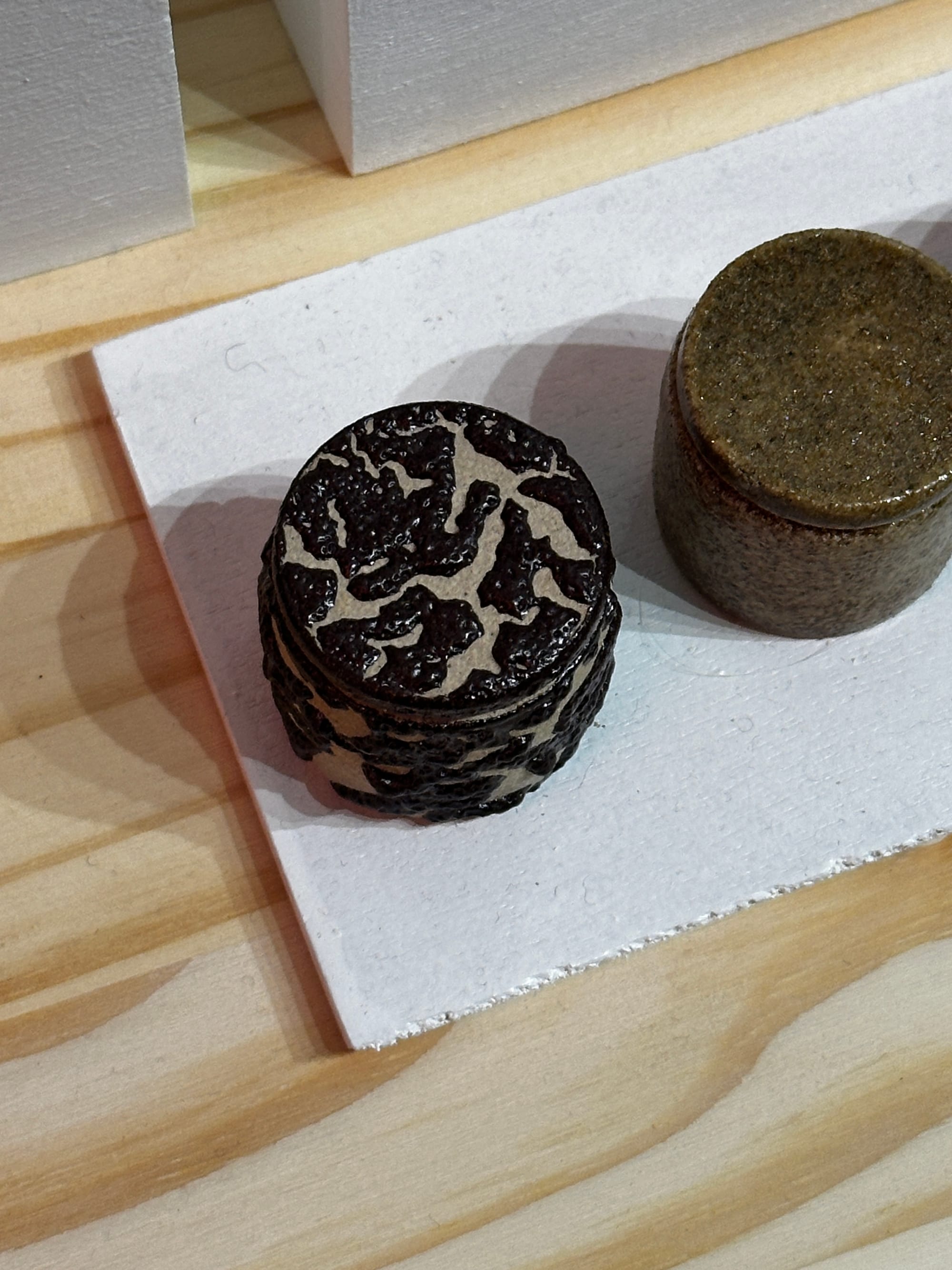
'Thames Matter' by Neve Beill Ceramics at LDF 2026. Photos by Fiona Coleman.
Malai
Malai uses mature coconut water, a by-product of coconut processing in Kerala, India, to ferment bacterial cellulose. The material is a plastic-free, compostable bio-composite and can also incorporate natural fibers and plant extracts.
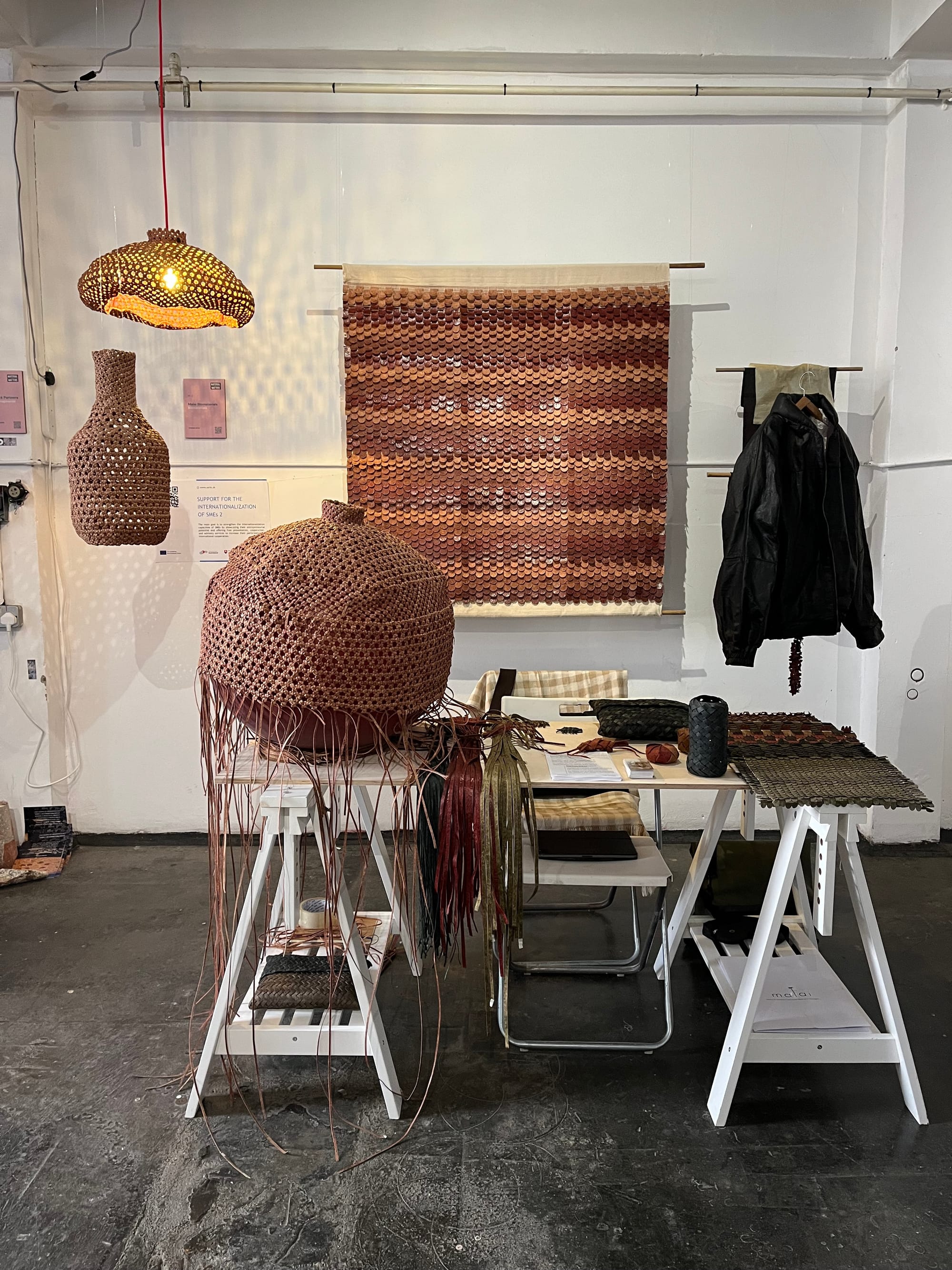
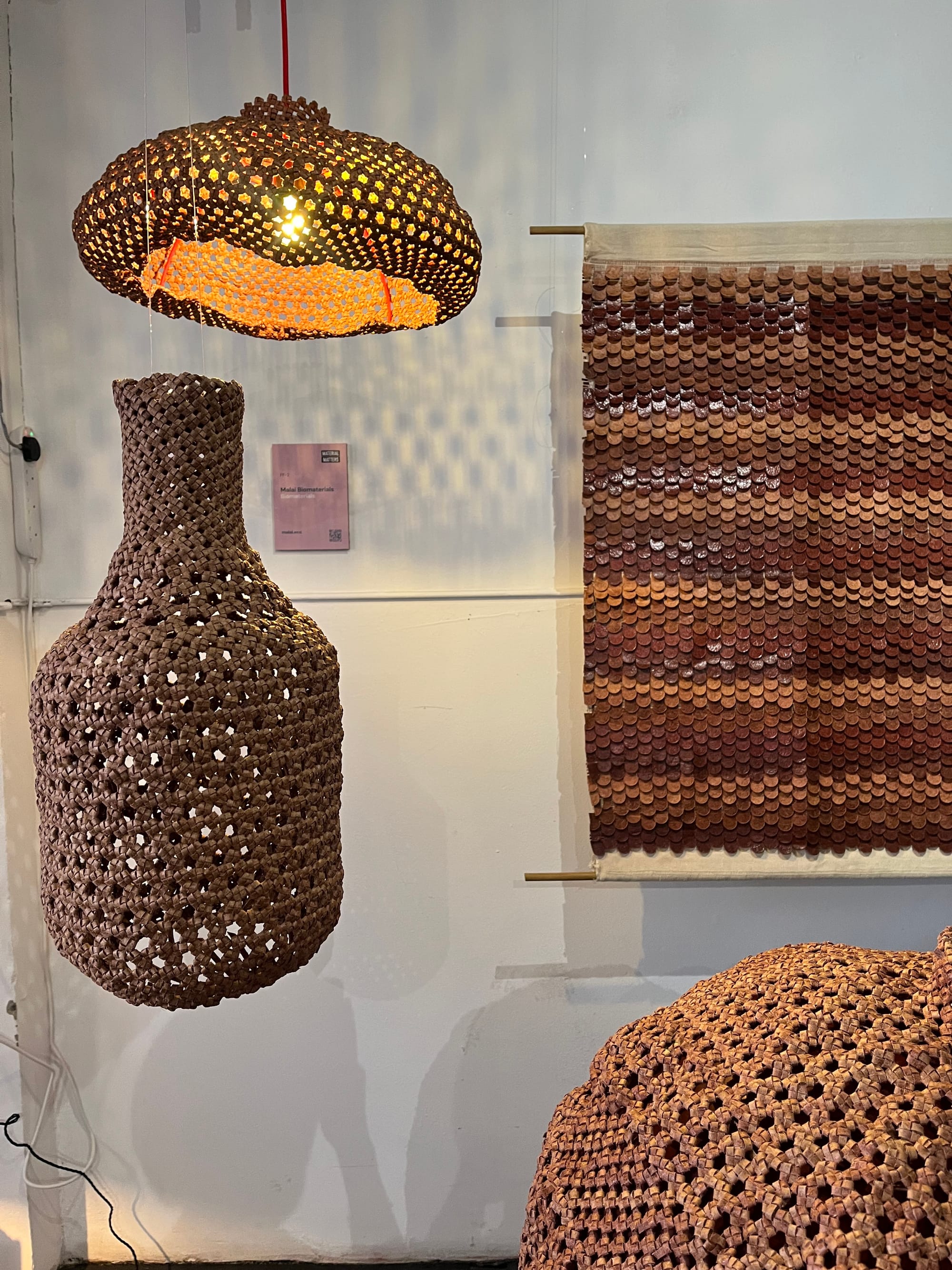
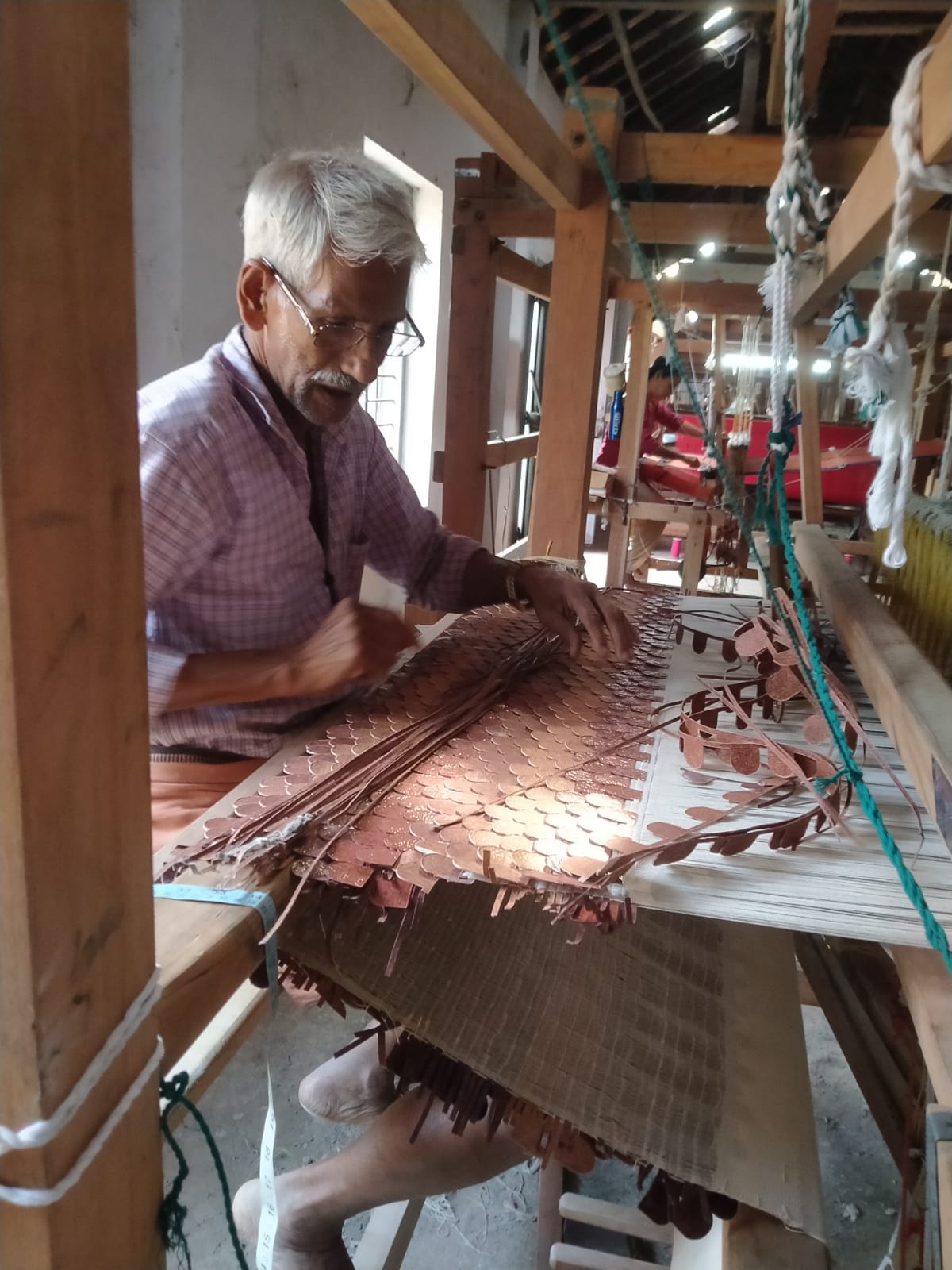
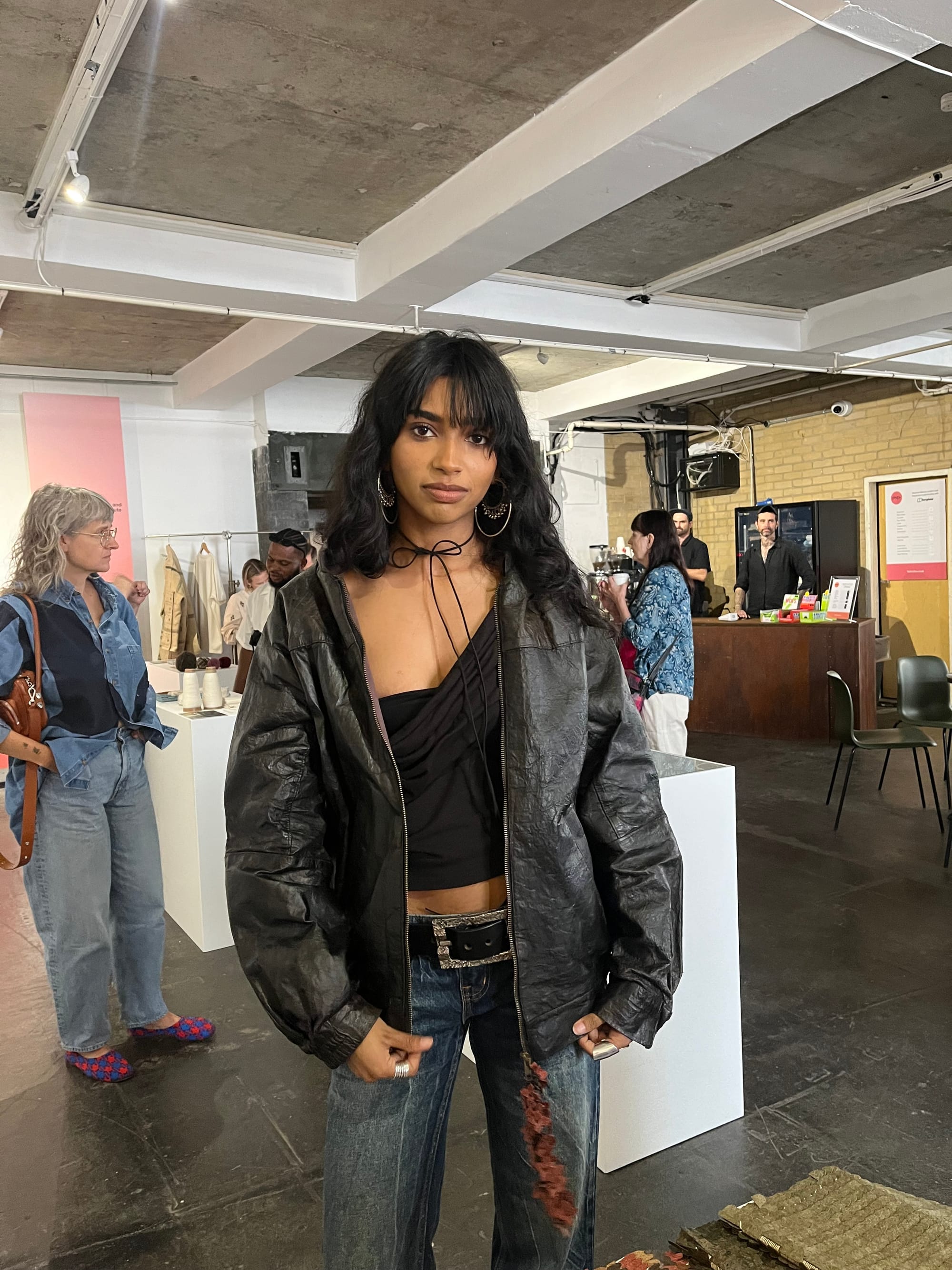
At Material Matters, Malai presented three collaborations that explored how their materials could be used alongside traditional craft. An armadillo tapestry combined Malai bio-composite panels with khadi handloom weaving from Kannur, Kerala. Malai also showcased a jacket developed with Goa-based brand Fool Dost using Malai Pure, a newly launched biomaterial. The third project, Koodai chandeliers, was developed with London-based designer Franco Miotto and artisans in Tamil Nadu. Each hanging form is built from thousands of hand-tied knots which aren't perfectly uniform, leaving small variations across the finished pieces.
The three projects use Malai materials in different ways, from woven panels and clothing to sculptural lighting. The craftspeople's skills and techniques are integral to each design.
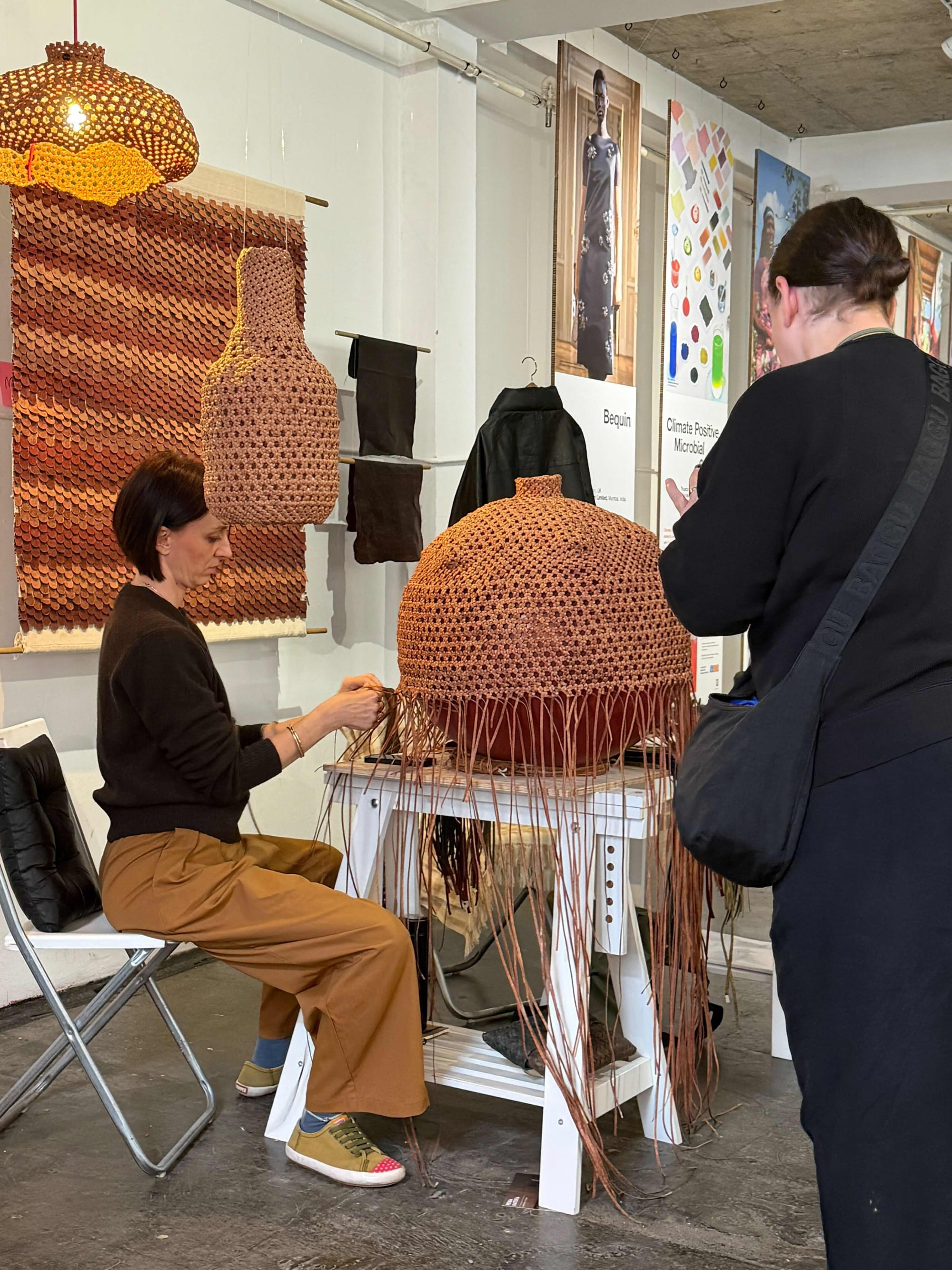
Malai at LDF 2026. Photos courtesy of Malai
Color and Craft
Briar by North South AD x 2LG Studio
Launched at the London Design Festival, Briar is a lighting collaboration between North South AD, founded by architect Shak and interior designer Trivi, and 2LG Studio. Inspired by the garden, the collection features floor, table, wall and pendant lights shaped from stems, buds, branches and thorns.
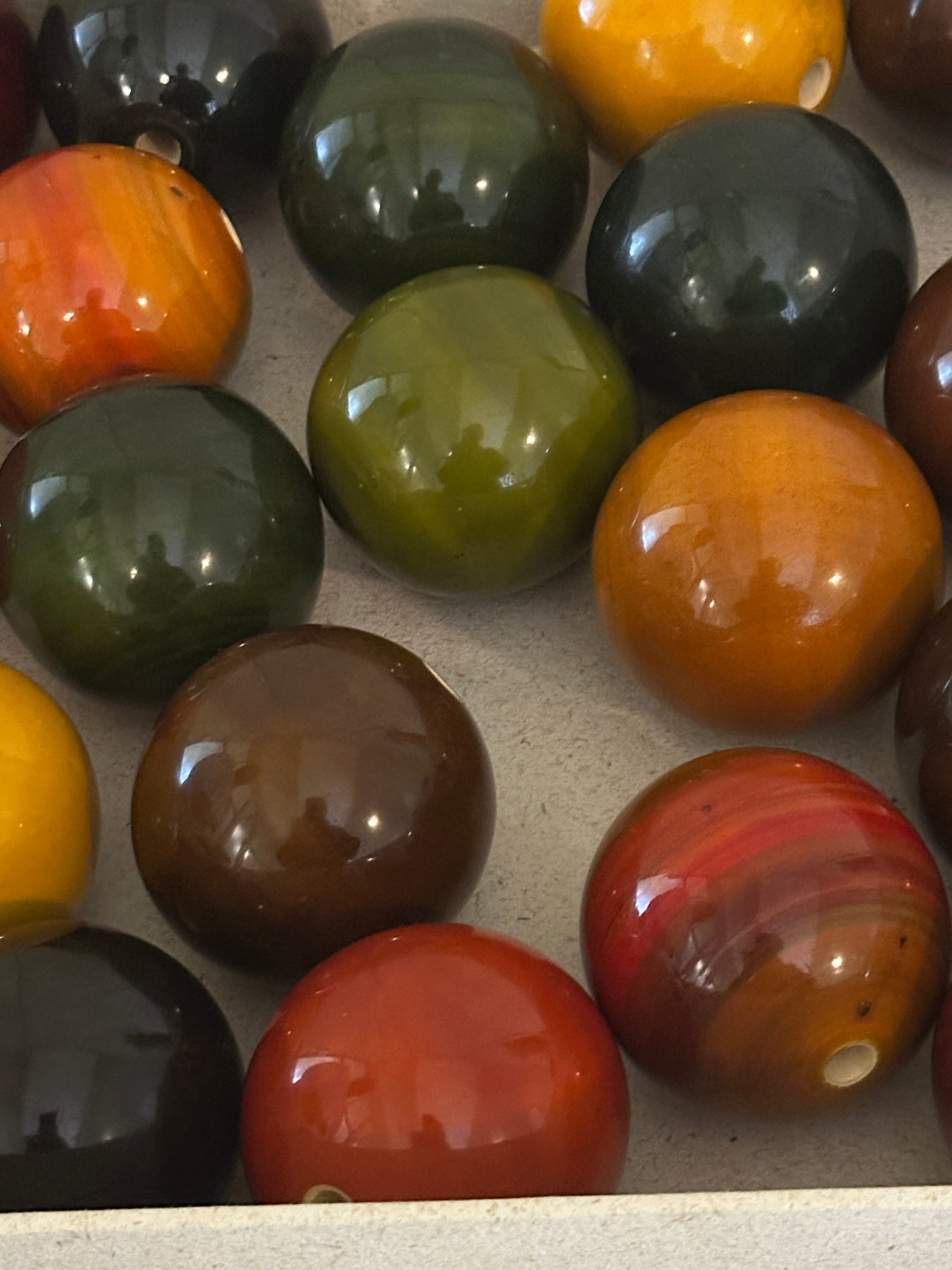
Each light is crafted from individually turned wooden elements, drawing on a South Indian toy-making tradition dating back around 400 years. The wood is sustainably harvested and finished with vegetable dyes, adding color while leaving the grain and texture visible. The collection brings a traditional woodworking technique into contemporary lighting resulting in forms resemble slender stems or thorn-like shapes.
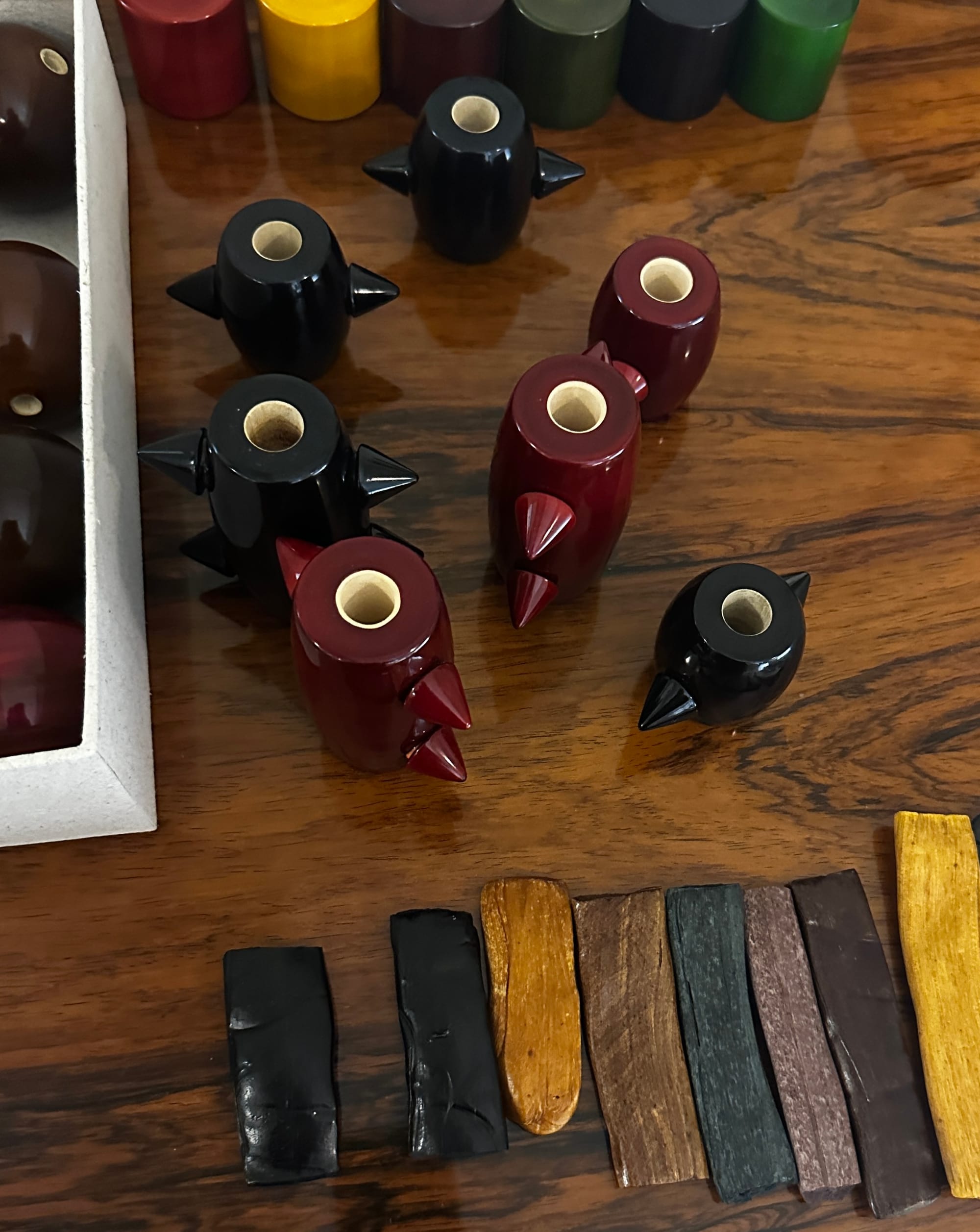
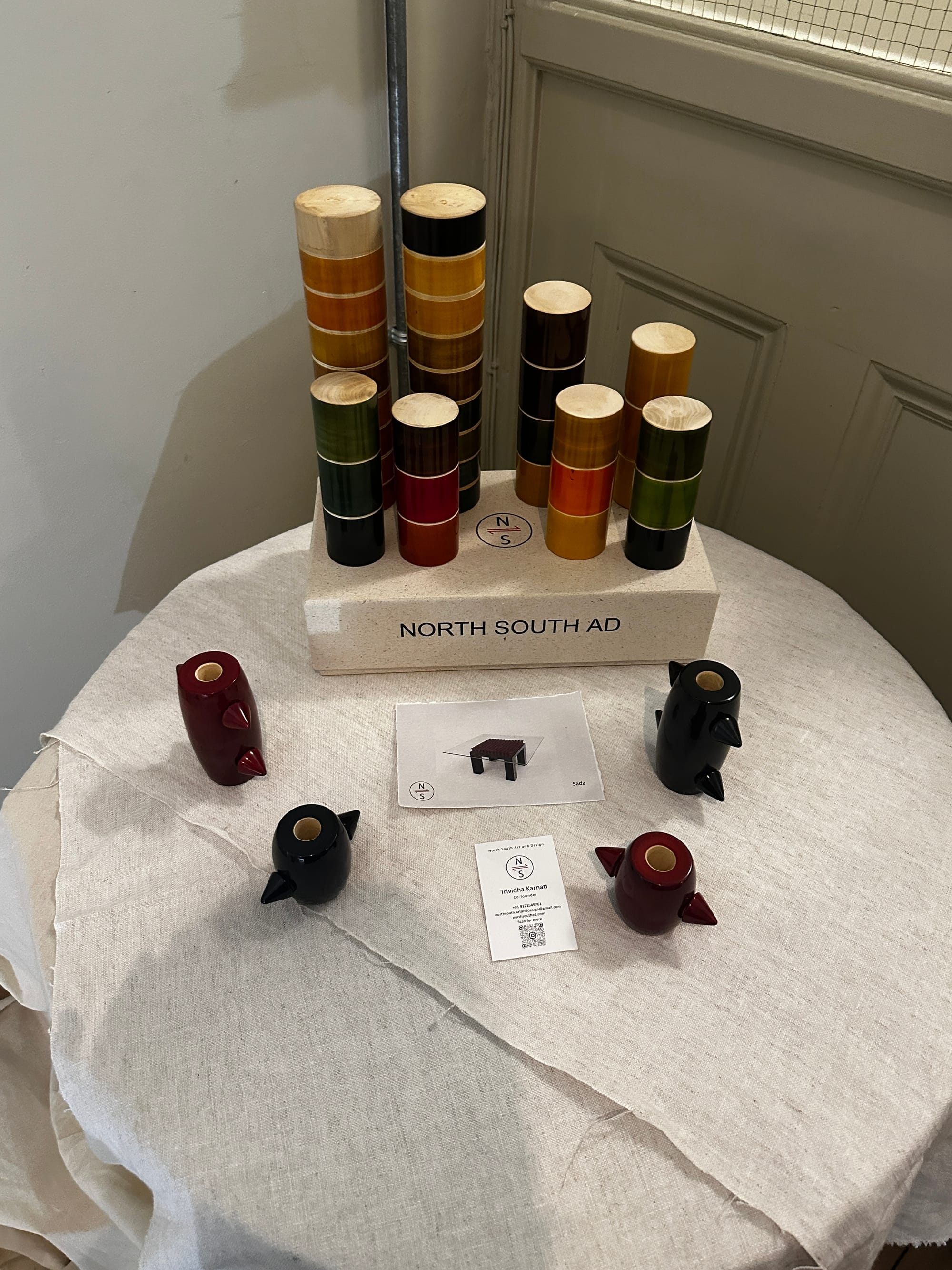
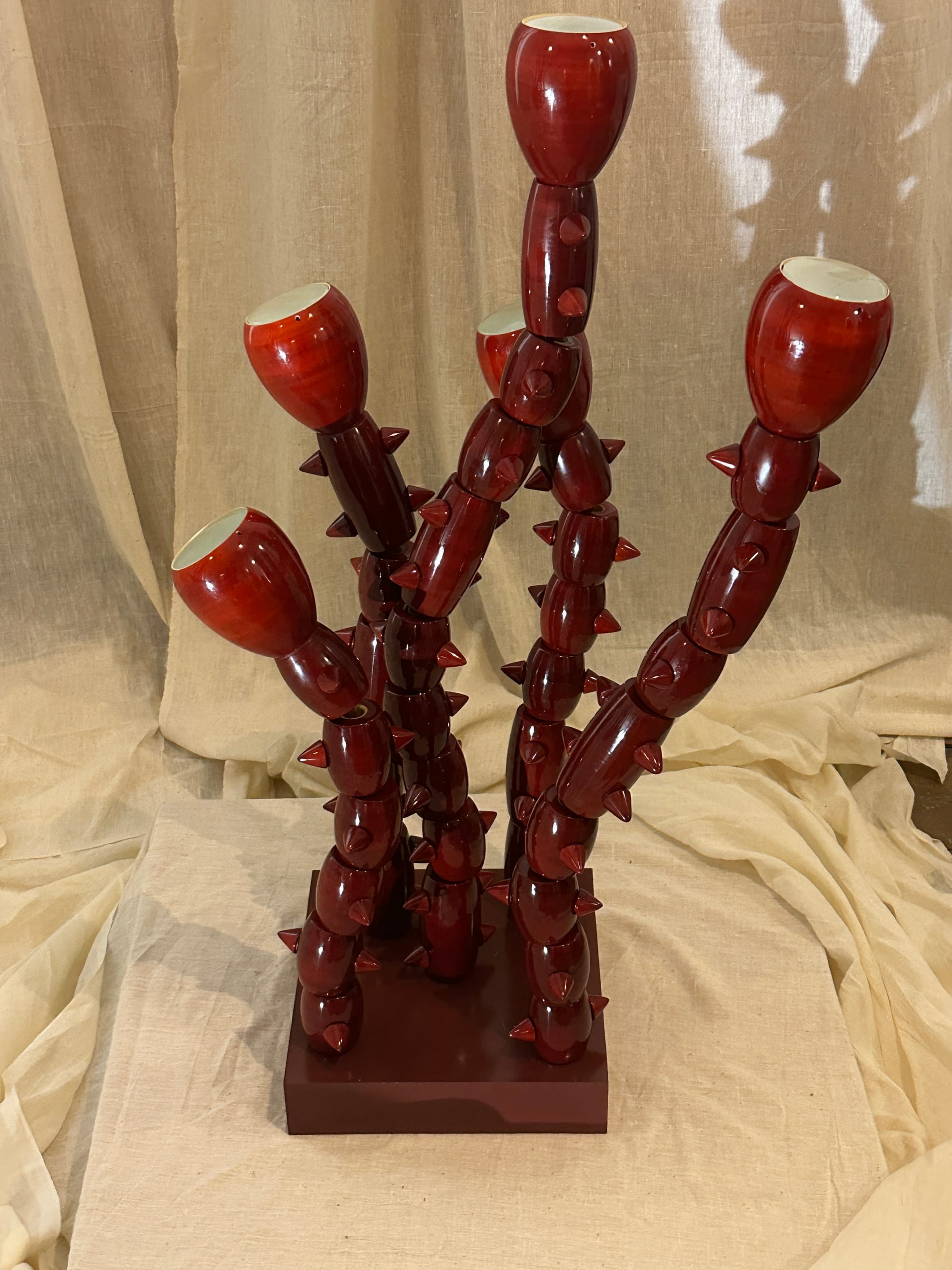
Briar by North South AD x 2LG Studio at LDF 2026. Photos by Fiona Coleman.
'Kataginu' by Bethan Laura Wood x Suzusan — Craft × Tech at the V&A
At London's V&A Museum, British designer Bethan Laura Wood and Hiroyuki Murase of Suzusan, a Japanese textile house specializing in Arimatsu Narumi shibori, exhibited a collaborative lighting collection called 'Kataginu'.
Inspired by the kataginu, a traditional Japanese sleeveless vest with structured shoulders, the collection translated its silhouette and dyed patterns into hanging, table and floor lamps. The project took shibori folded, stitched and resist-dyed fabric beyond clothing, using textiles to create 3D sculptural forms. Traces of stitching and folding remained visible, showing each stage of making and the living quality of hand-dyeing, that resulted in flat surface pattern and a three-dimensional form.
The collection was part of Craft x Tech, an experimental project looking at new applications for Japanese craft traditions, and Kataginu uses an established technique in a new setting.
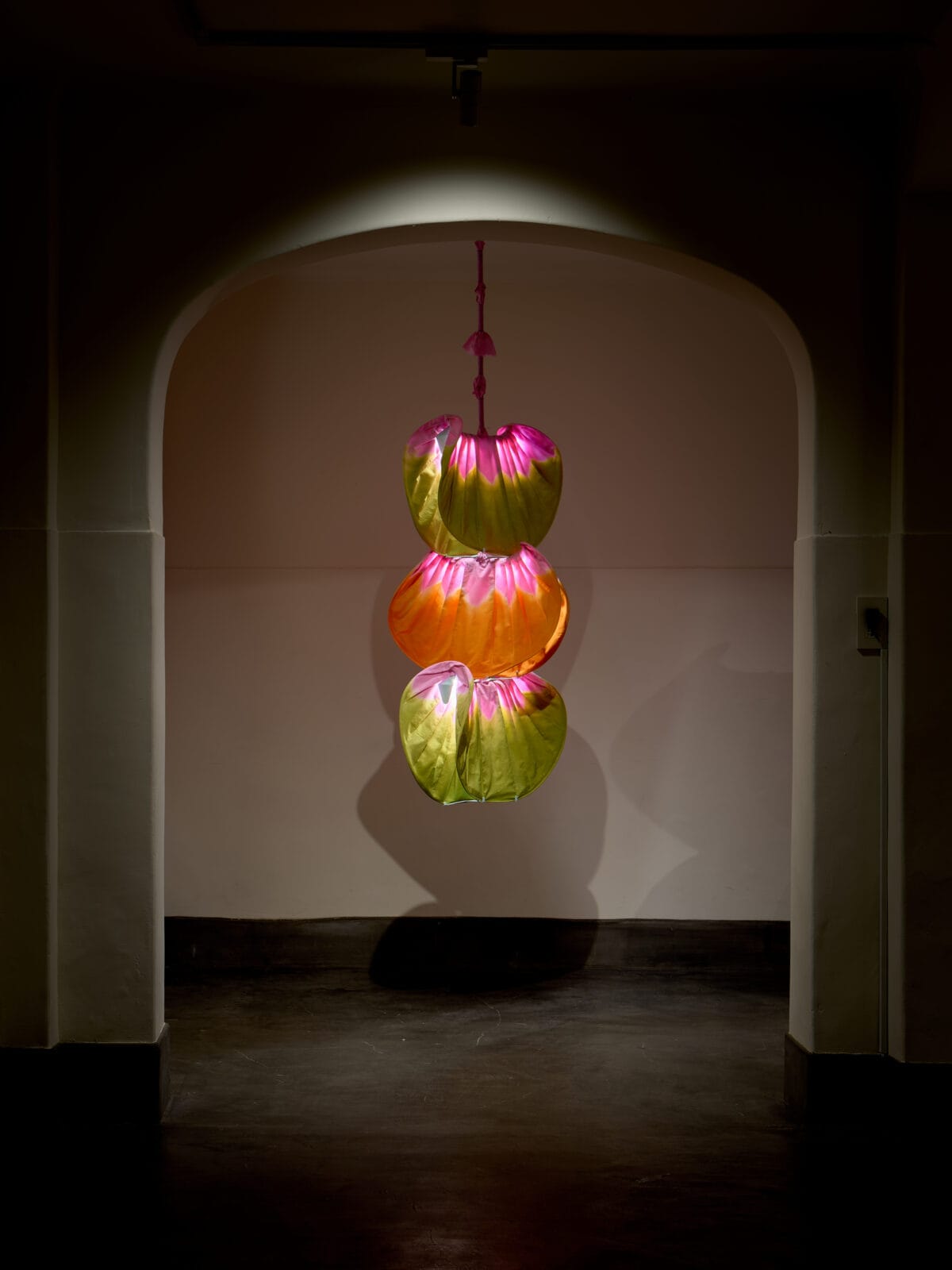
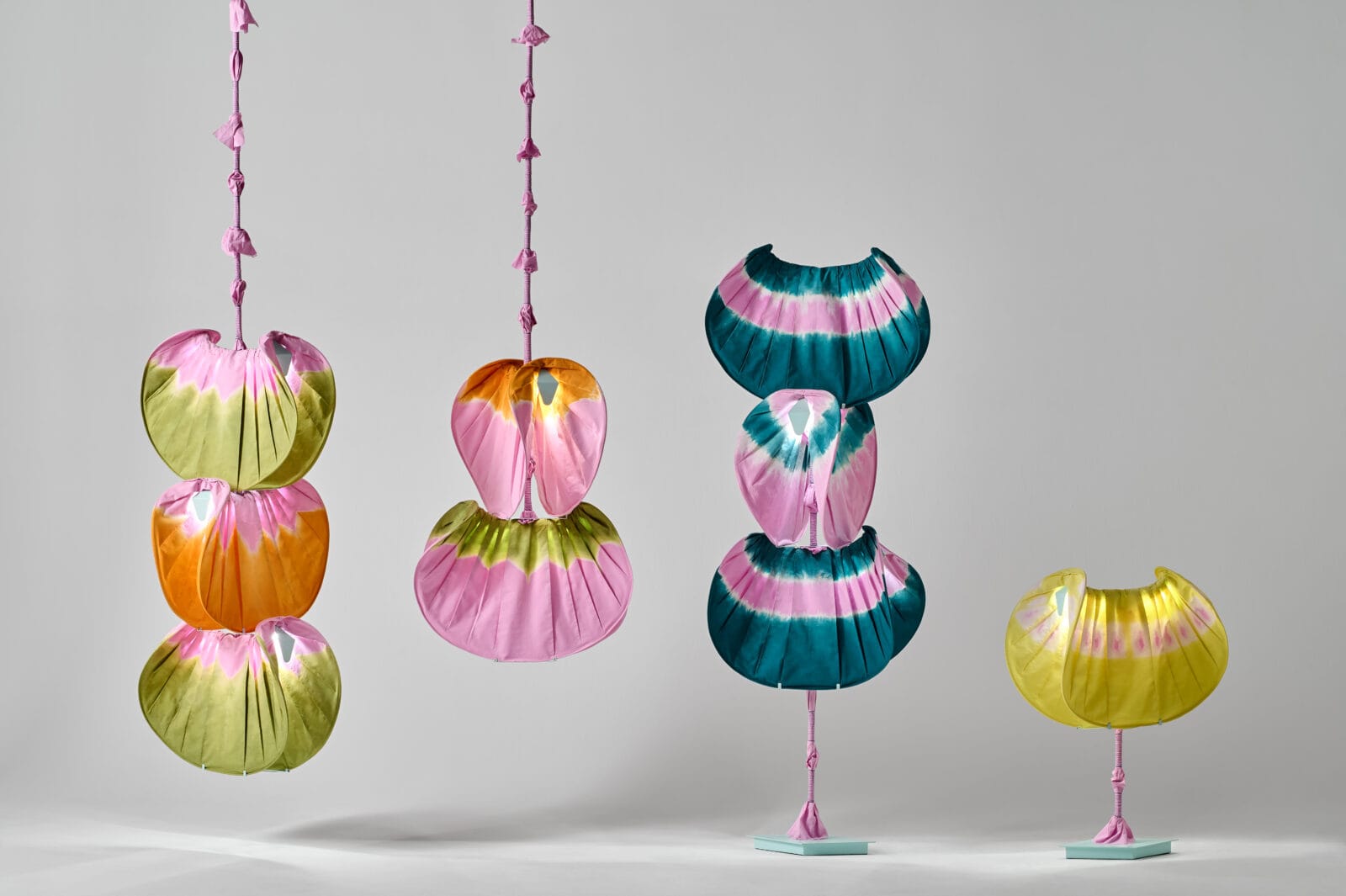
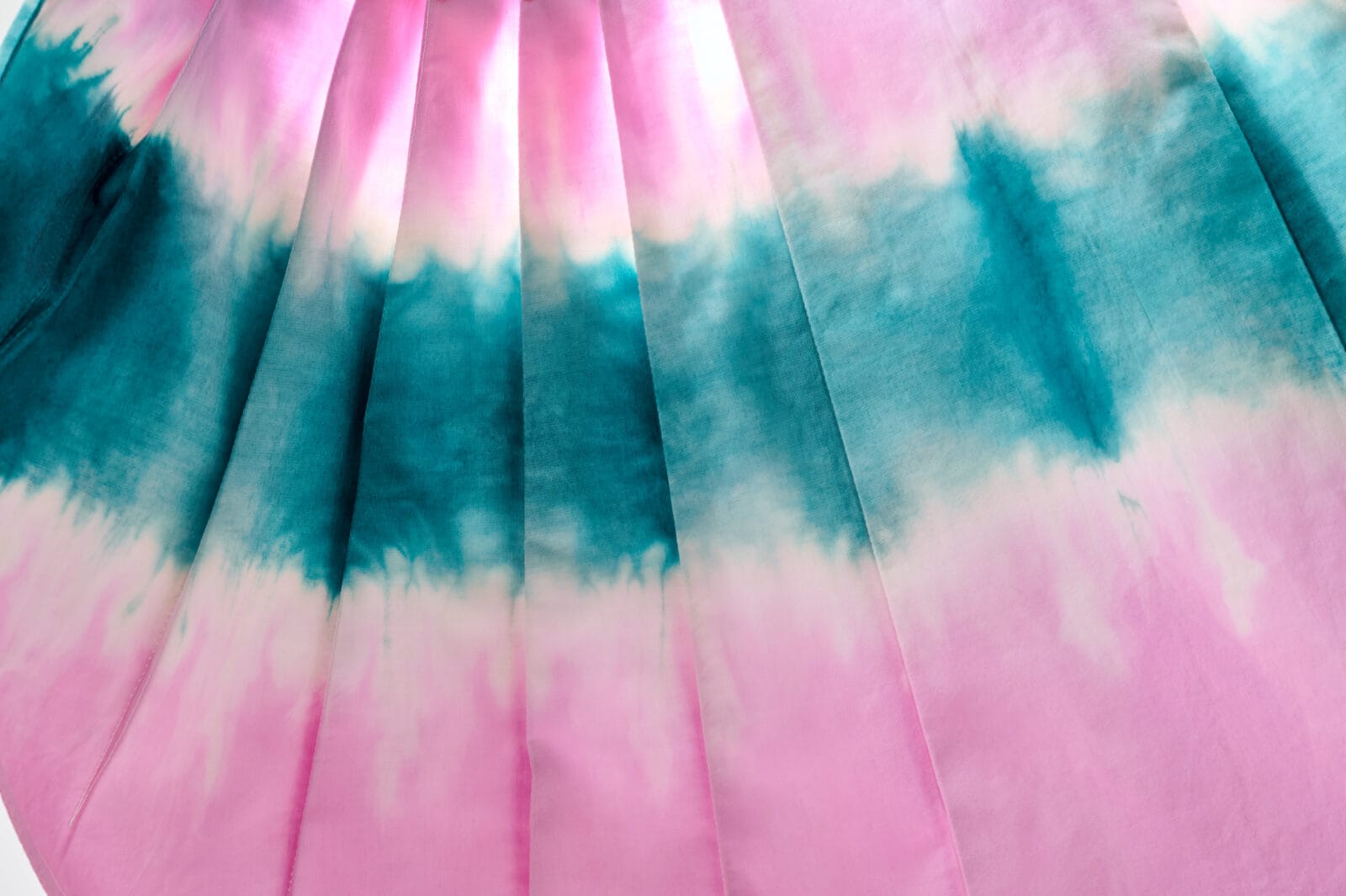
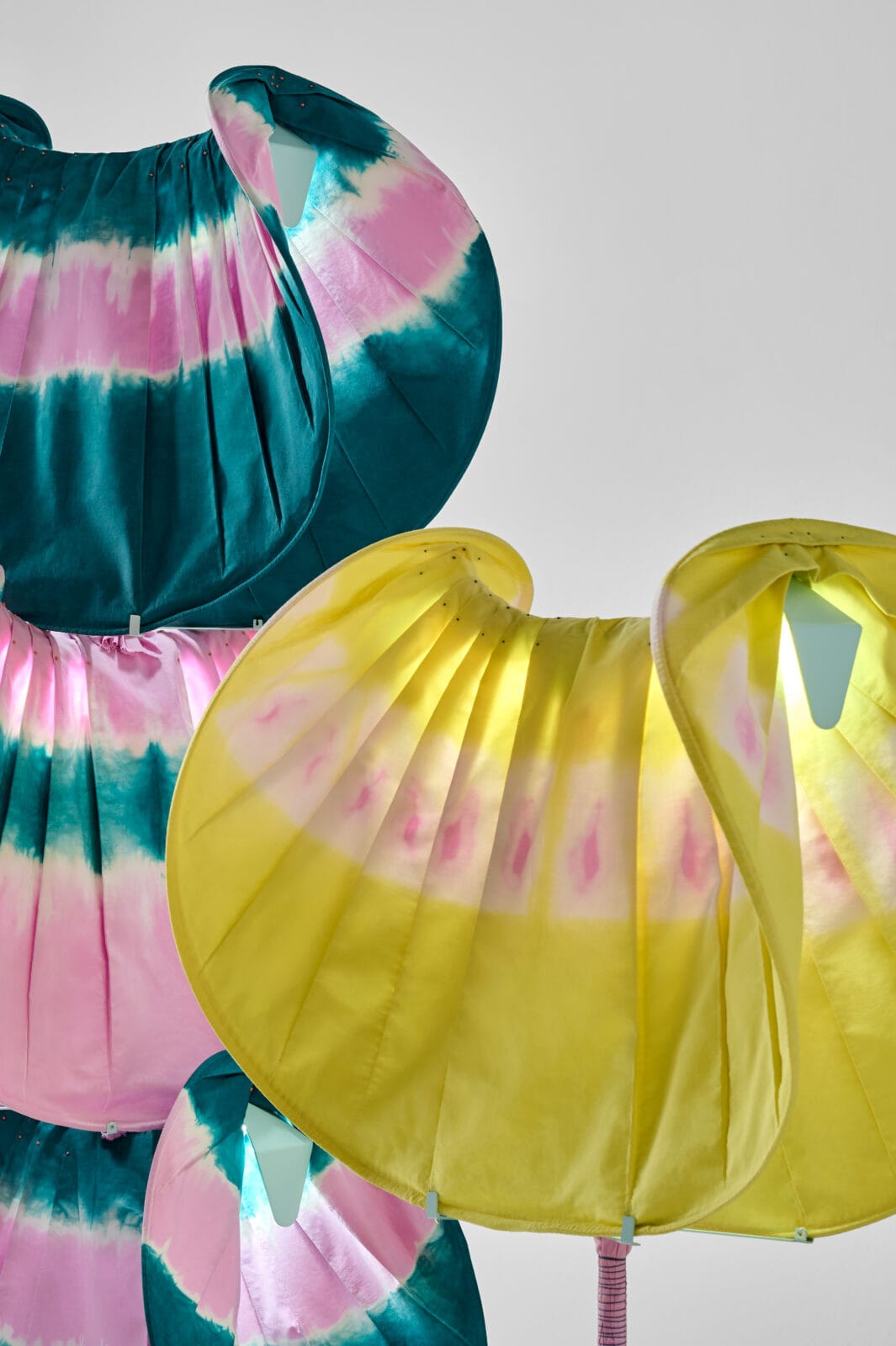
'Kataginu' by Bethan Laura Wood x Suzusan. Photos courtesy of Craft × Tech.