

Inside the 17th-century Baroque Spanish courtyard of Palau Can Vivot in Palma de Mallorca, time slows down. Colorful textiles drape from ancient walls. Woven tapestries lie rolled in straw baskets. Indigo-dyed cloth catches the afternoon light. This is XTANT, an annual gathering founded by Kavita Parmar. Across seven editions, it has become a platform for promoting craft, textile art, and ancestral knowledge.
Entitled NOMAD, the May 2026 edition showcased 87 artists from 38 countries. Set in Palma's historic center, the event featured five days of markets, talks, installations, and workshops. Part village fair, part lecture series, part craft workshop, the NOMAD theme invited reflection on nomadic cultures; communities whose knowledge lives not in institutions – but in hands, in movement, in the making itself.
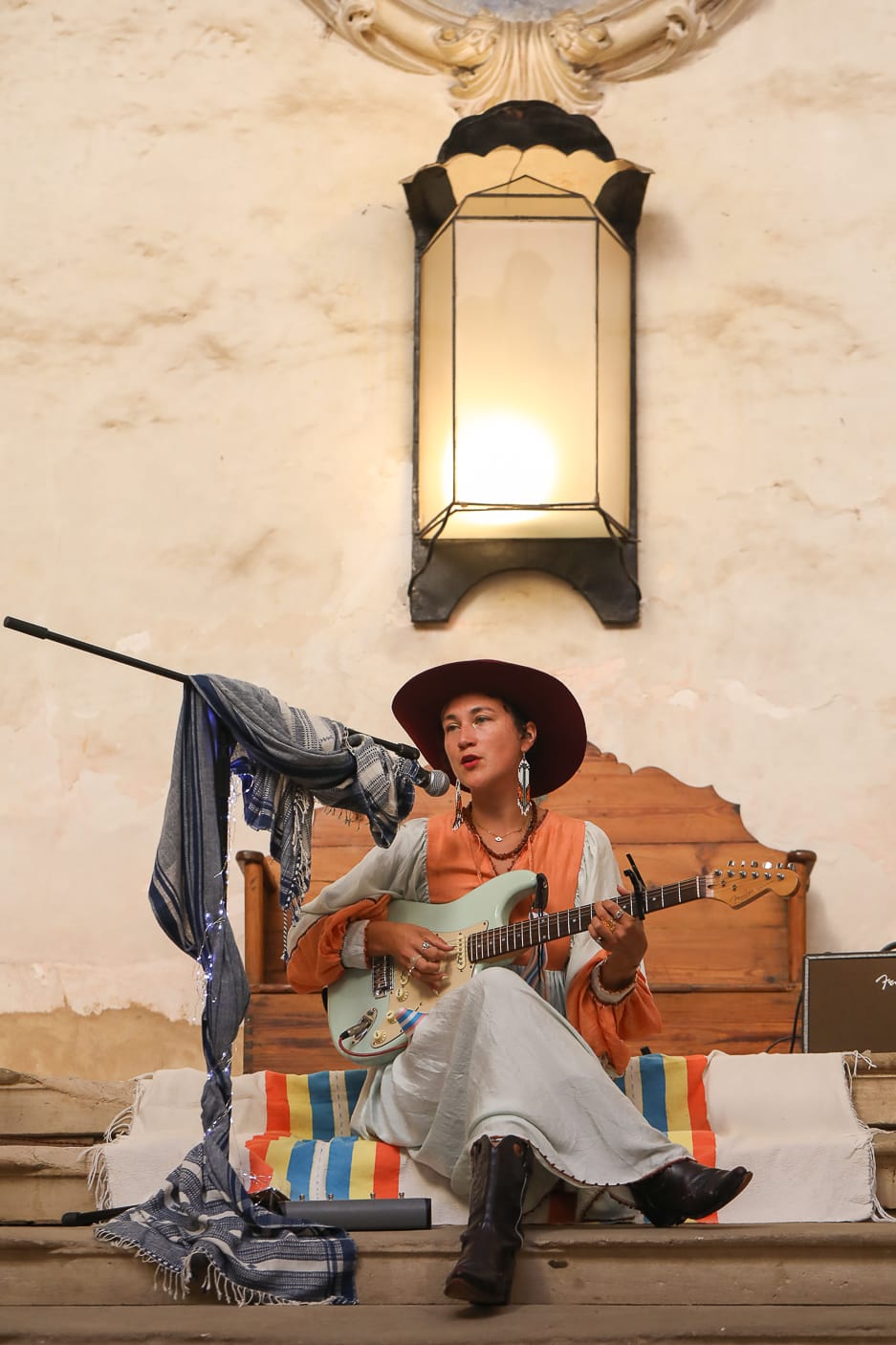

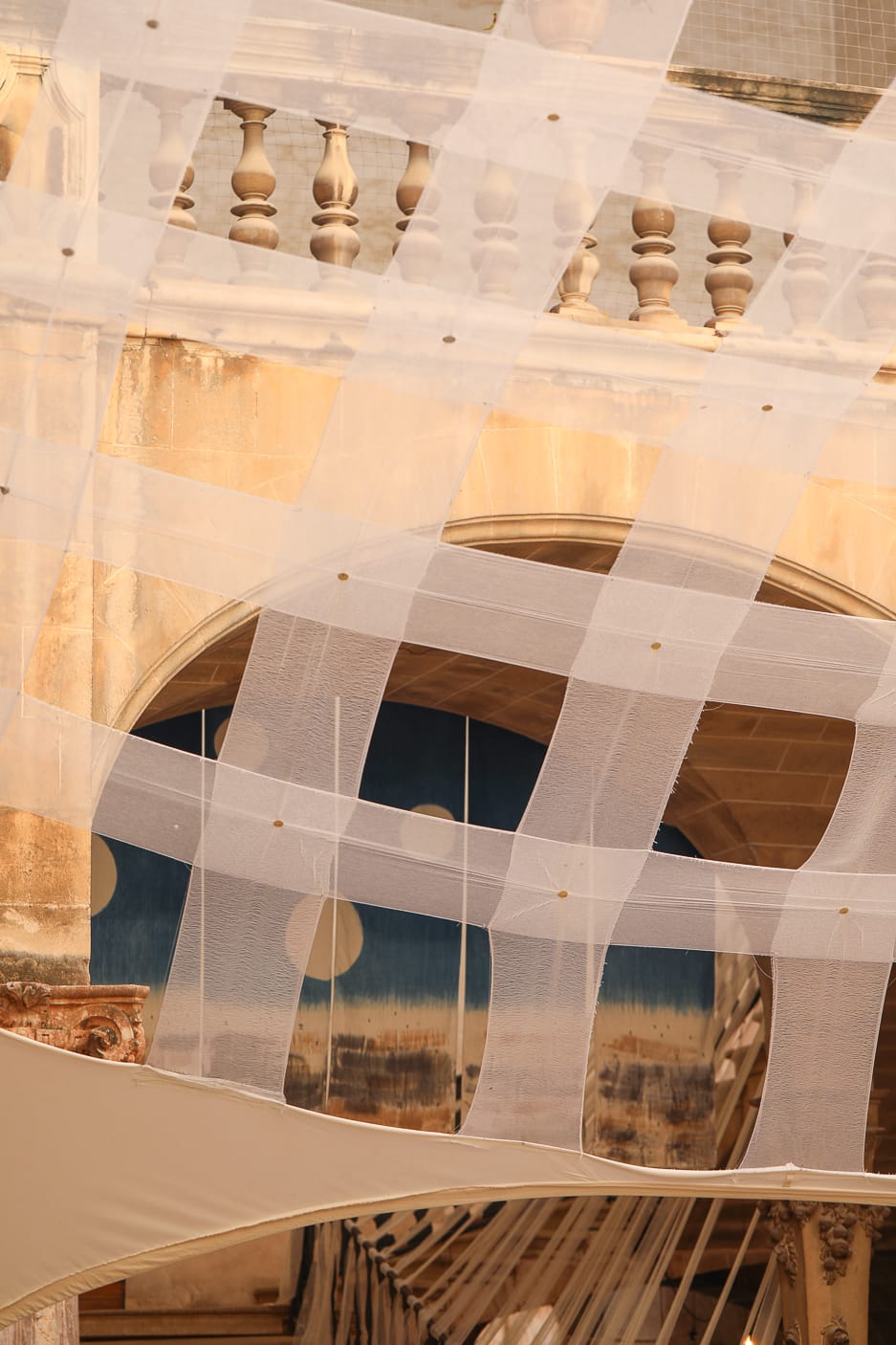
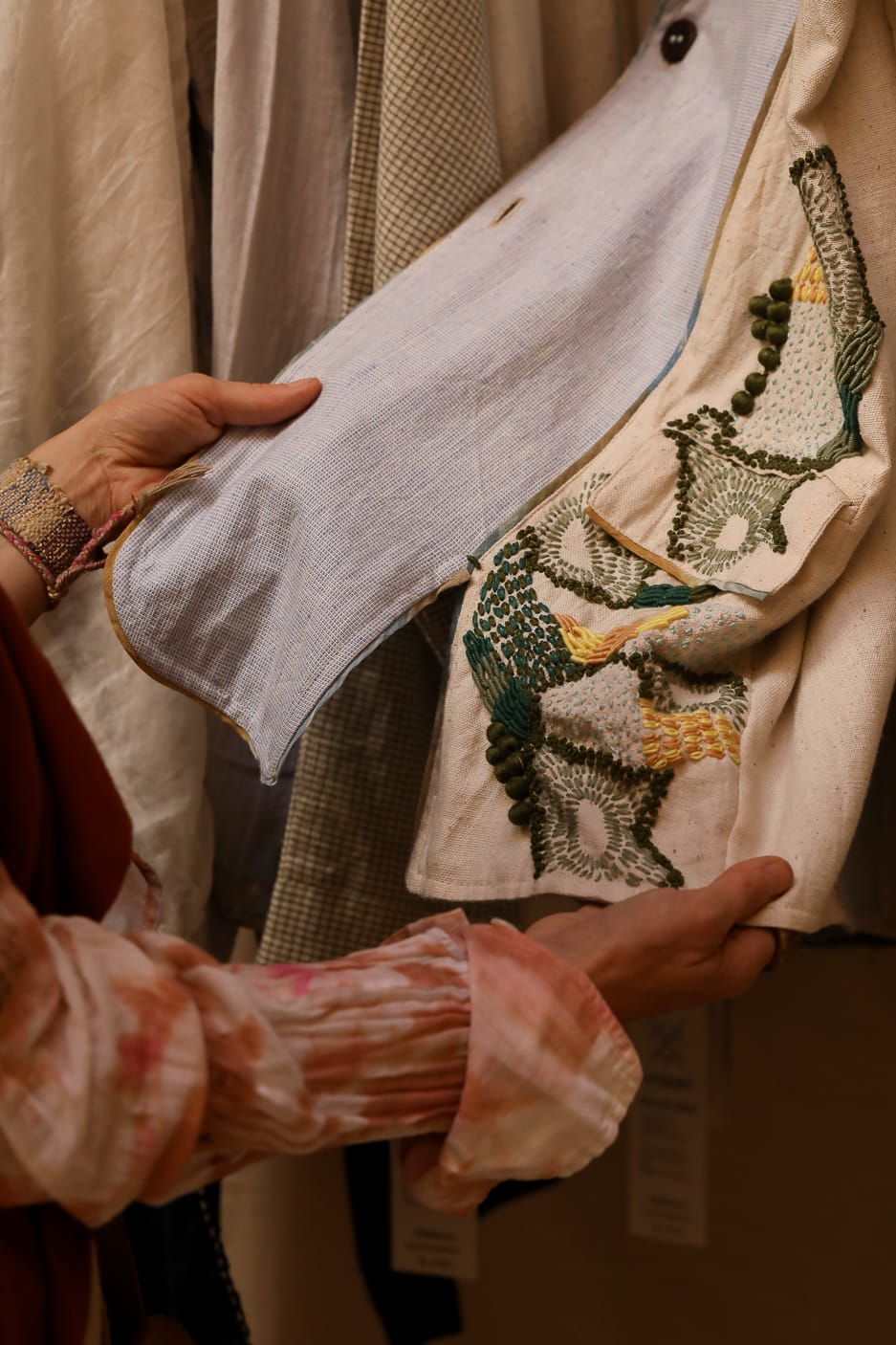
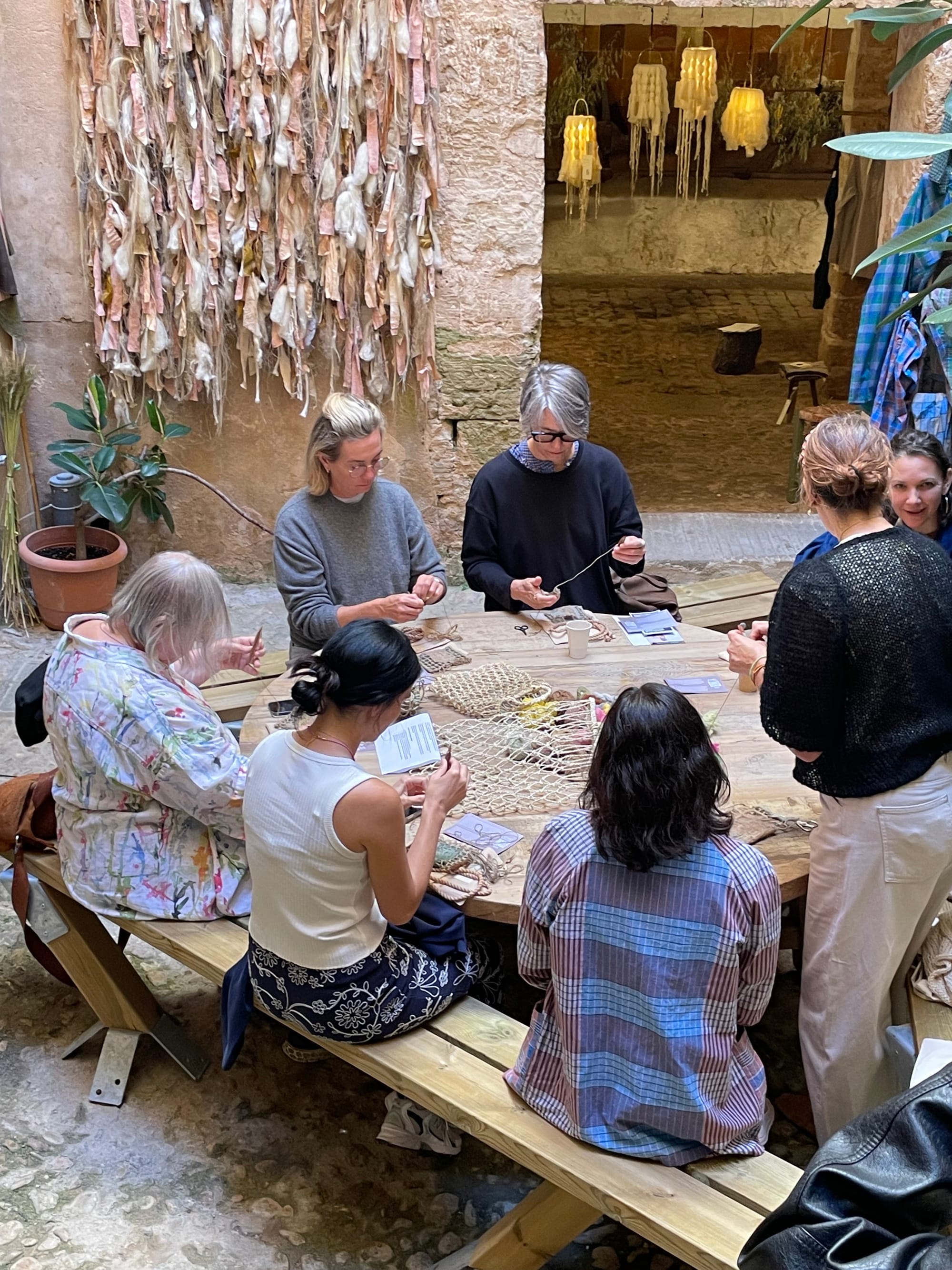
First four photos by Leyre Lopez de la Paz, courtesy of XTANT. Last photo by Liat Gorodenzik.
Contributor Liat Gorodenzik attended NOMAD in May, where she presented her brand, ílát studios, for the first time. Our report highlights Liat’s label and presents her conversations with three other makers at NOMAD whose work shares the same commitment to traceability.
ilát studios
Knitwear label ílát studios is the creation of Liat Gorodenzik, a Los Angeles-based textile designer. Her debut womenswear collection was built around the idea that the fabric that sits closest to our skin should be designed to nourish it. The brand works exclusively with 100% organic, undyed Pima cotton that is grown, ginned, spun and knitted in Peru. Her approach is to maintain consistency from the source to the finished piece — with nothing added or hidden along the way.
After training at the Textile Department of Shenkar College, Gorodenzik split time between Tel Aviv, Europe, and the United States working as a fabric consultant, stylist, yogi and florist — a range of disciplines that deepened her attention to material. Her initial capsule collection for ílát received its public presentation at NOMAD — six pieces comprising Body Suits, Pants, a Scarf, and a Dress/Vest. The garments are organic Pima cotton, native to Peru's coastal valleys where it has been cultivated for centuries. The fabric is knitted in the same region and left undyed, unbleached, and untouched by additional chemical treatments.
Gorodenzik describes her approach as biocompatible, a term borrowed from medicine. The skin, she says, is not a surface to be covered but an organ in constant conversation with whatever it touches. The garment, in that reading, is more than an aesthetic object. "What became apparent at the table was something harder to communicate in advance: the cotton itself. Throughout the day, visitors returned — not always to look, but to touch. Hands reached for the pieces and stayed. There was a pause that happened consistently, a moment of recalibration, and then almost always a question: Is there cashmere in this? Or wool? What they were feeling was the Pima fiber itself, one of the longest-staple cottons grown anywhere in the world, left so entirely unaltered that it arrived at the hand almost as the plant had made it."
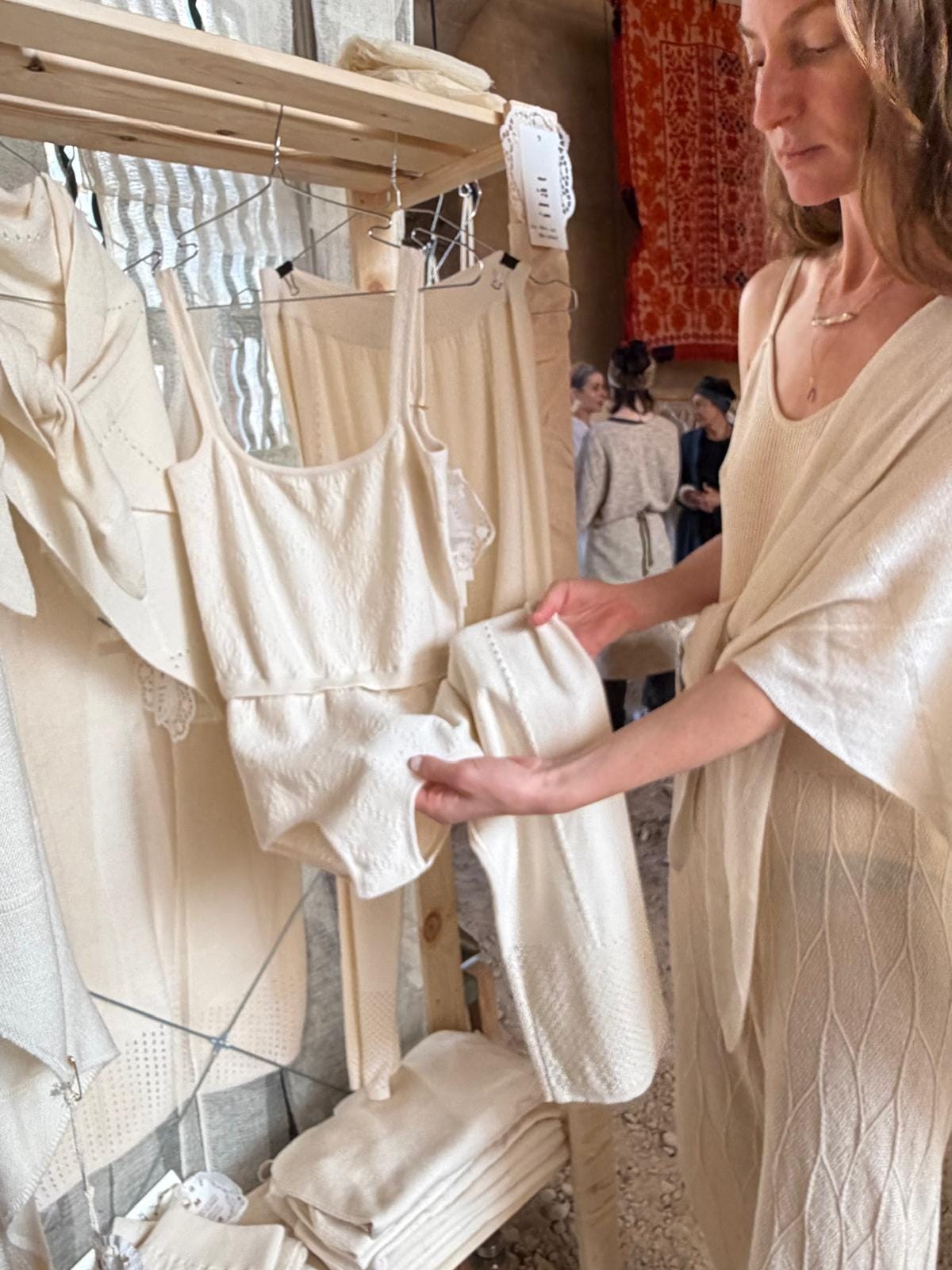
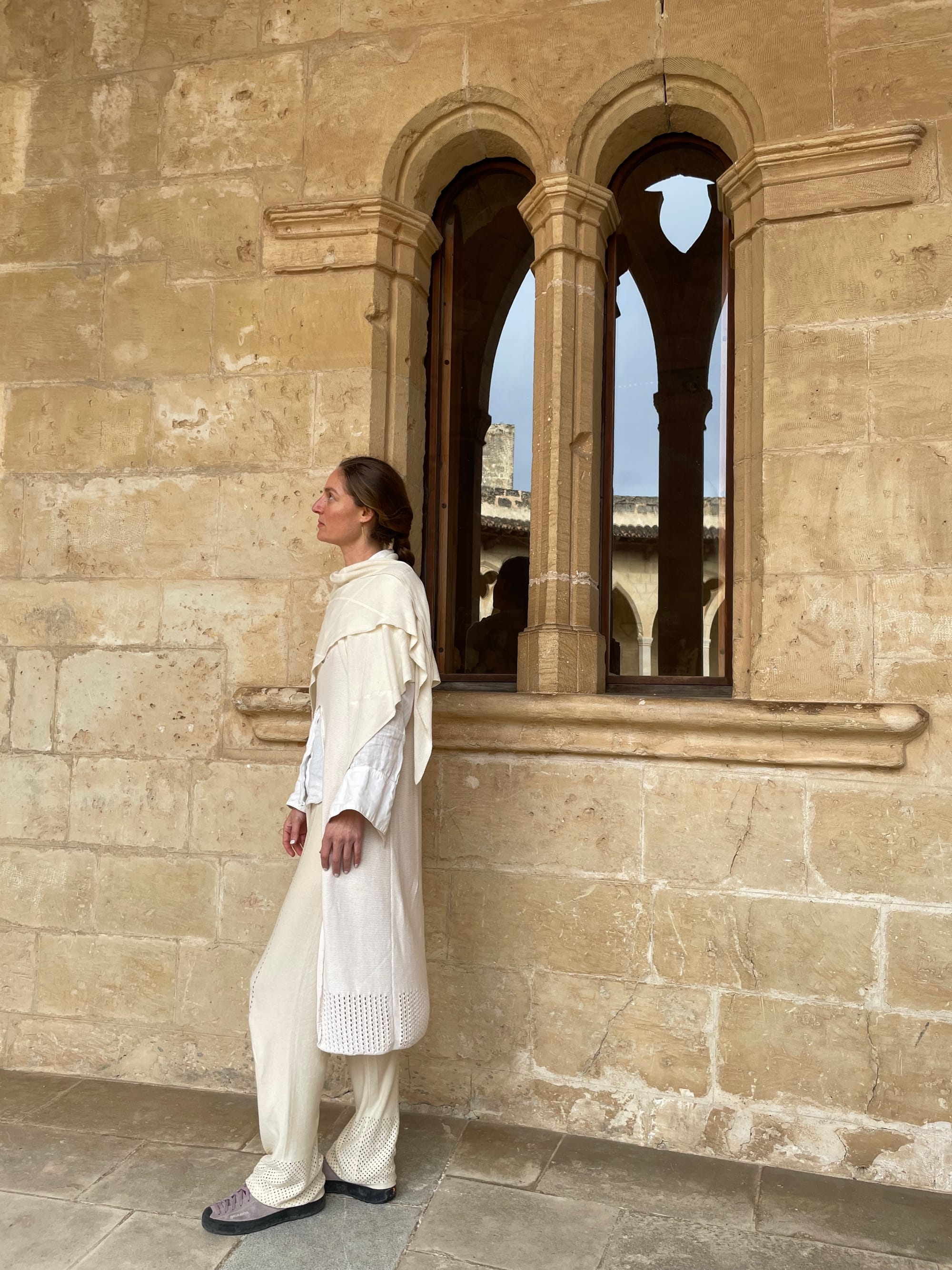
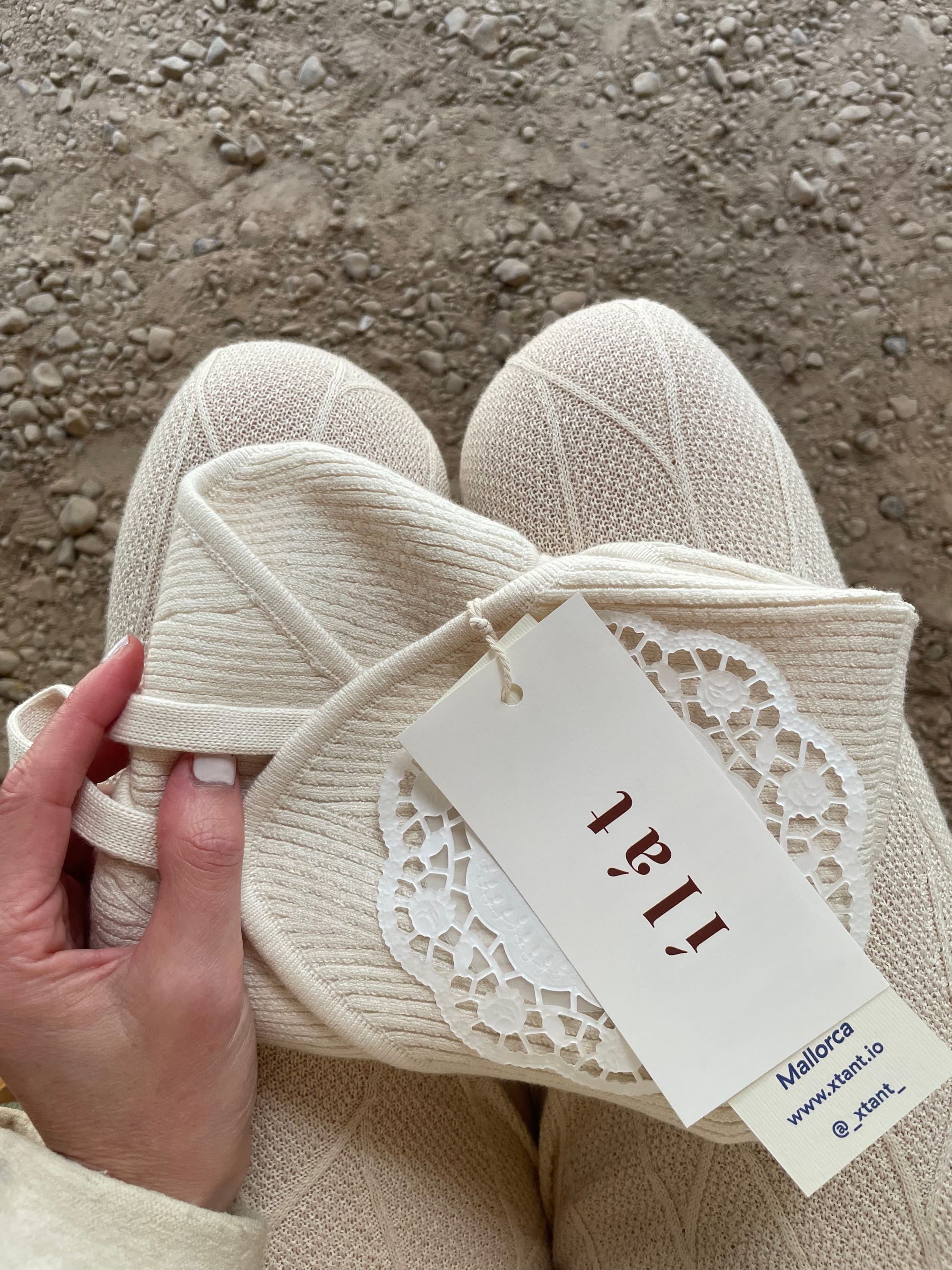
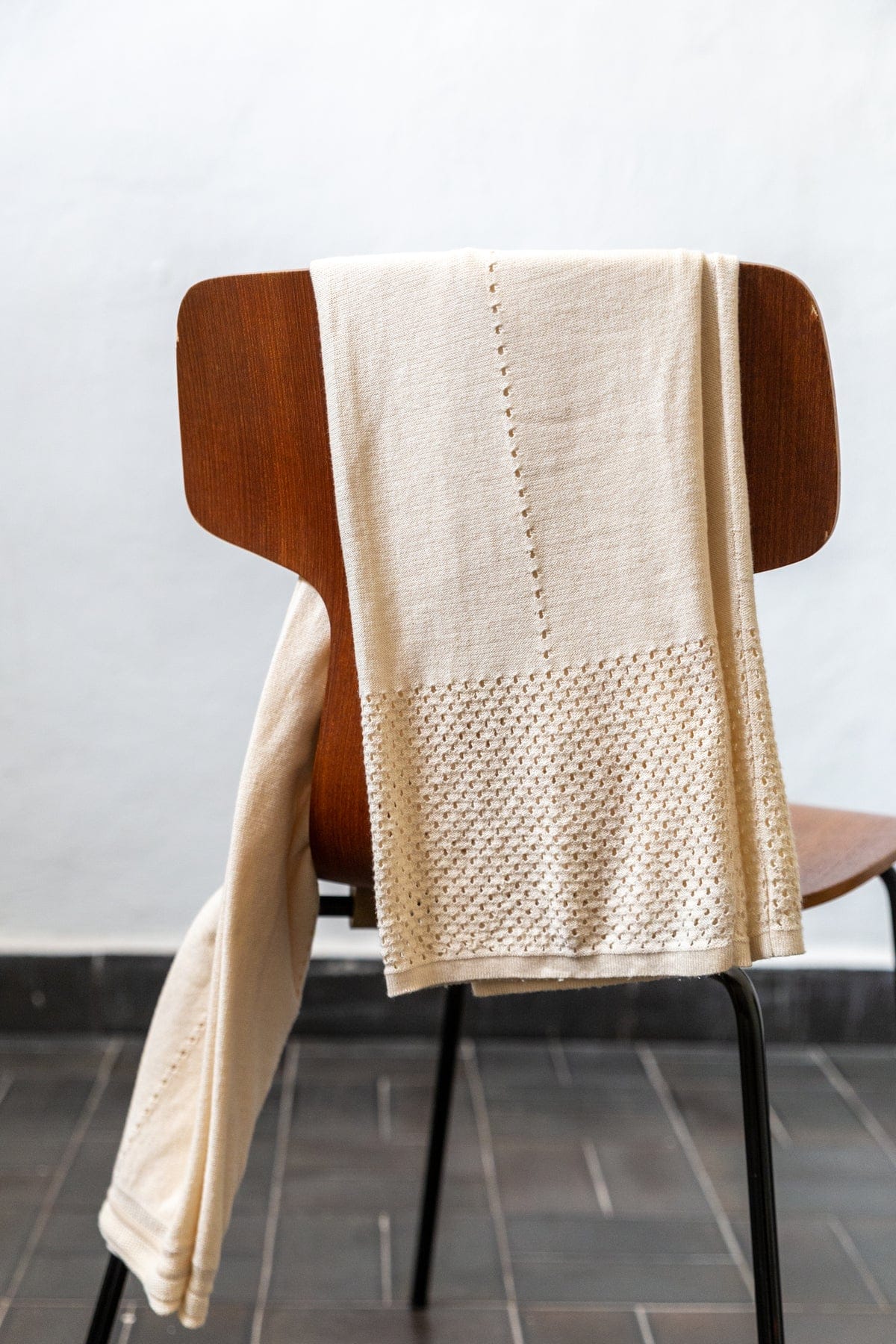
Ilát Studios 2026. First two photos by Sharon Gordon. Third photo by Mari Elizabeth. Last two photos courtesy of Ilát Studios.
Kristina Foley
Where ílát works with the cotton plant, Kristina Foley works with animals that grow fiber. Based in Oregon, in the Pacific Northwest of the United States, Foley has built a practice around wool felt-making that begins not at a mill or a supplier but, at the farm, with the sheep themselves, and the land they graze on.
Foley learned how to felt during a BFA course in Fiber Structure at Syracuse University. She continued her practice in Florence, Italy, where exposure to the city's deep artisan culture, and a collaboration with knitwear designer Boboutic sharpened her sense of the material. She has since settled into the American West, building sourcing relationships with small regional farms and international suppliers. She's partnering with Shaniko Wool Company, an Oregon-based producer of fully traceable Merino wool, as part of a broader supply chain rooted in regenerative agriculture and land stewardship.
Felt-making is among the oldest textile techniques in the world — a process in which wool fibers, through soap and pressure, bind to one another without weaving or knitting — also known as a nonwoven. The result retains something essential of what the wool was and the sheep's presence remains in the piece. Foley has described her work as an invitation to a "respectful, reciprocal connection" with the animal and the land it lived on. At XTANT, her pieces sat quietly, but to see her tapestry works hung on display was to understand that regenerative farming, traceable supply chains, and ten thousand years of felt-making are one continuous thread.
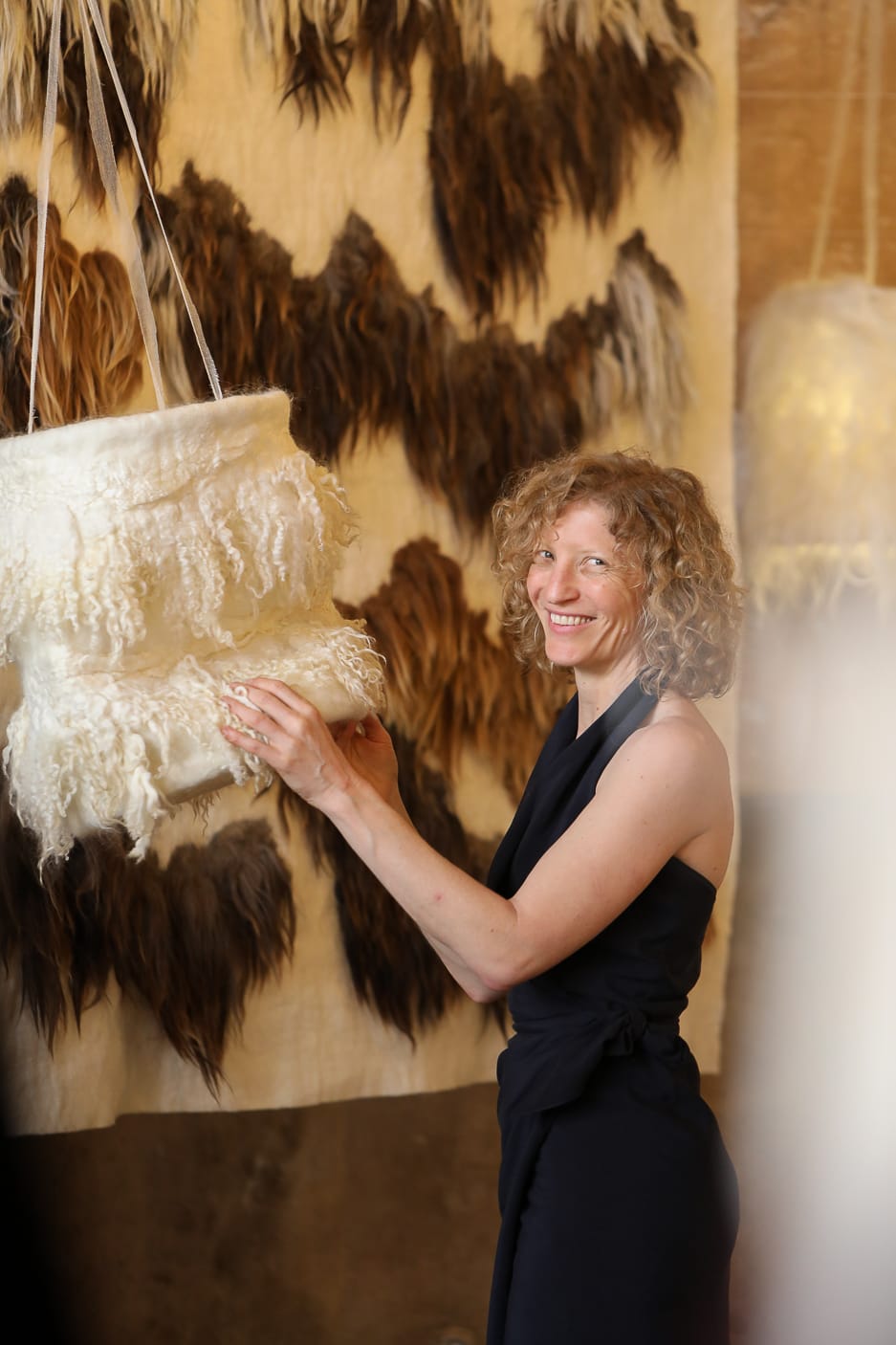
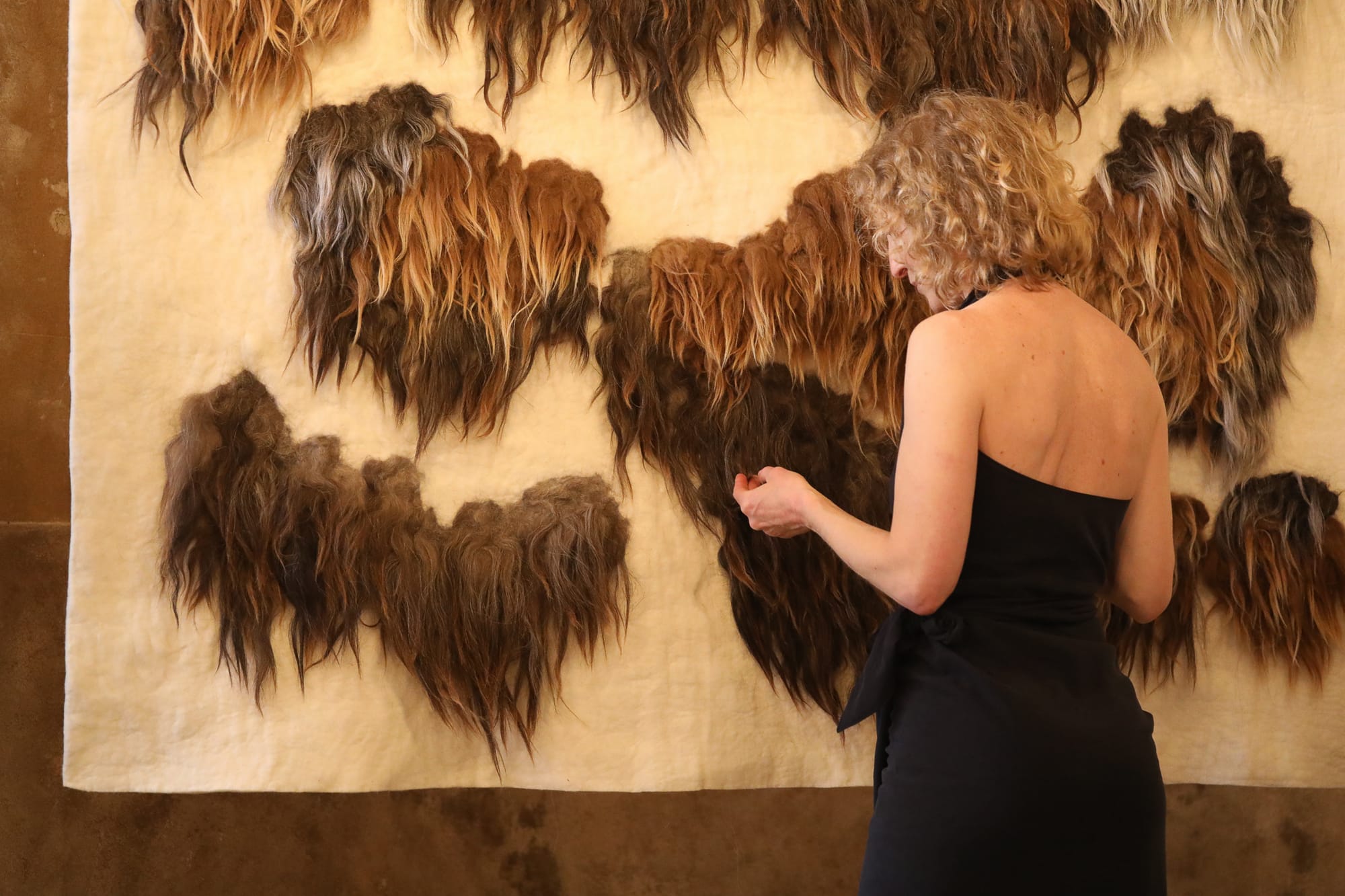
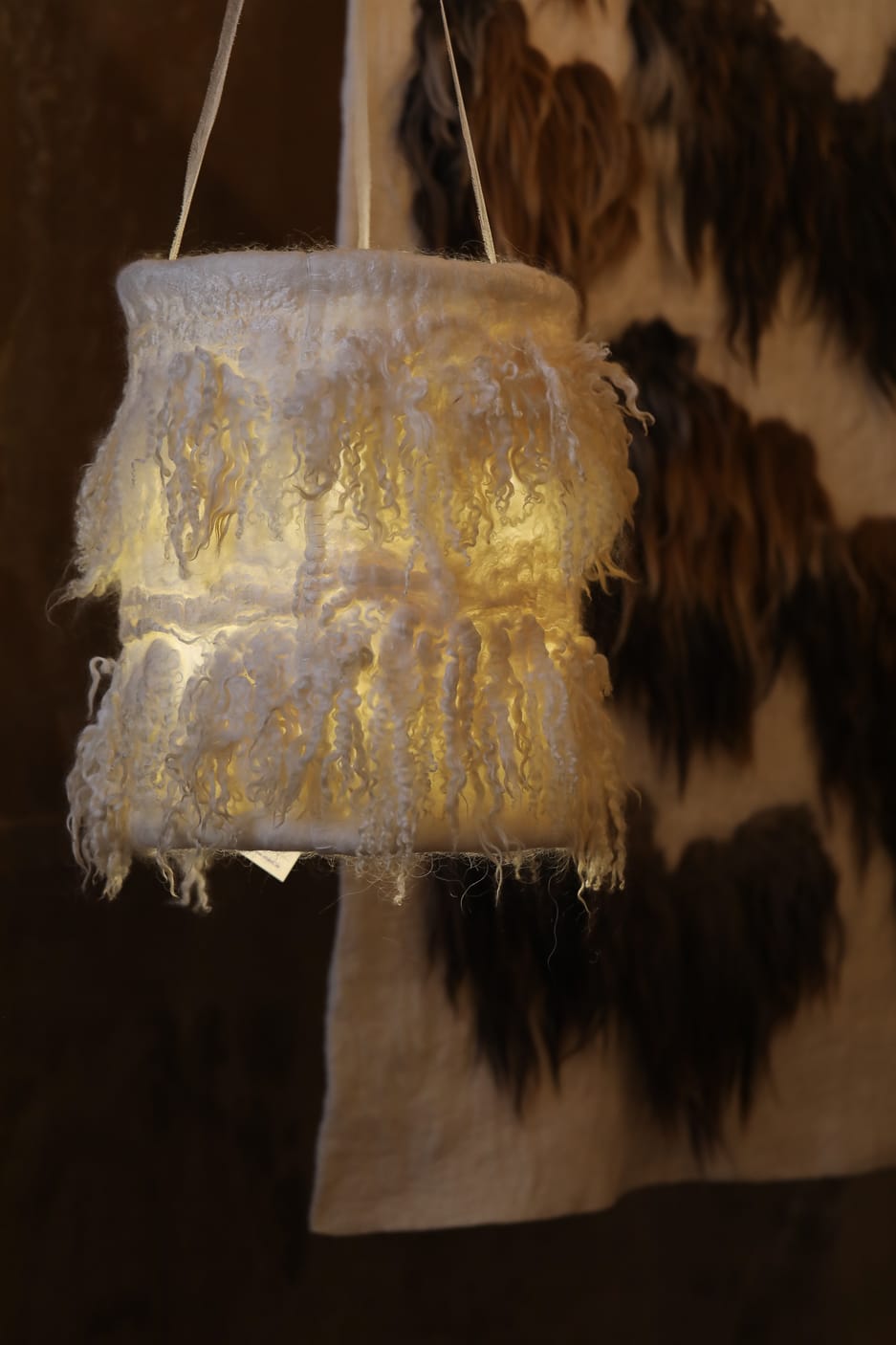
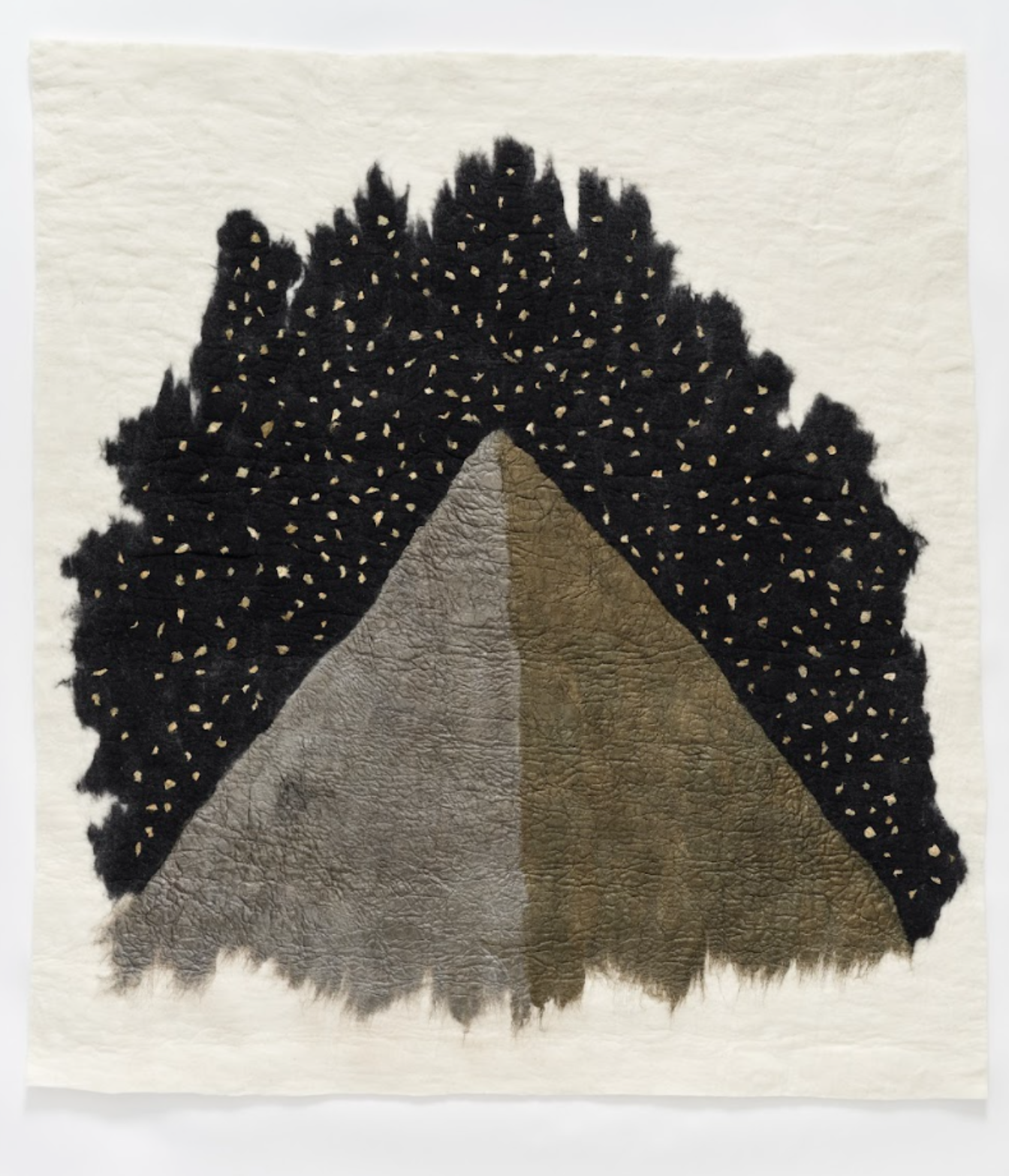
Kristina Foley 2026. Photos by Leyre Lopez de la Paz, courtesy of XTANT. Last image courtesy of Kristina Foley.
Traditional Futures
The work of Surzhana Radnaeva carries more geography than most. She was born in the vast Siberian steppes of the Buryat Republic, shaped by Moscow's urban intensity, and educated in art history and fashion design across Russia and Beijing. Each place left a trace, and Radnaeva's artistic practice is the story of what she made of those experiences.
Founded in 2019 and now based in France, Traditional Futures is a trans-disciplinary studio dedicated to the exploration and preservation of cultural traditions through material research, garment design, and photography. Radnaeva works with sustainable biomaterials, like textiles derived from processed plant cellulose. What stopped people at XTANT were her paper garments constructed from textile-grade paper fiber. The material preparation of the garments were painstaking and precise, requiring an intimate understanding of how the fiber moves, breaks, and holds before a pattern can even be cut.
What distinguished these pieces was not novelty alone, but the quality of listening that had gone into them. Paper textile does not behave like woven cloth; it has memory, directionality, a particular way of holding a crease and releasing another. Radnaeva's silhouettes emerge from the material's own logic and are constructed so that the stiffness became structure, the translucency became depth. Years of research into the material are visible in the details where a seam was placed, how a hem fell, the way a collar held its shape. The process, like the material, is slow by design. The slowness is the point.
The materials Radnaeva investigates carry what she calls cultural memory — ancestral techniques preserved not in archives but in the act of making itself. The Traditional Futures brand represented something that resists easy categorization: a practice in which material research, heritage preservation, and garment design are not separate disciplines but a single, inseparable act.
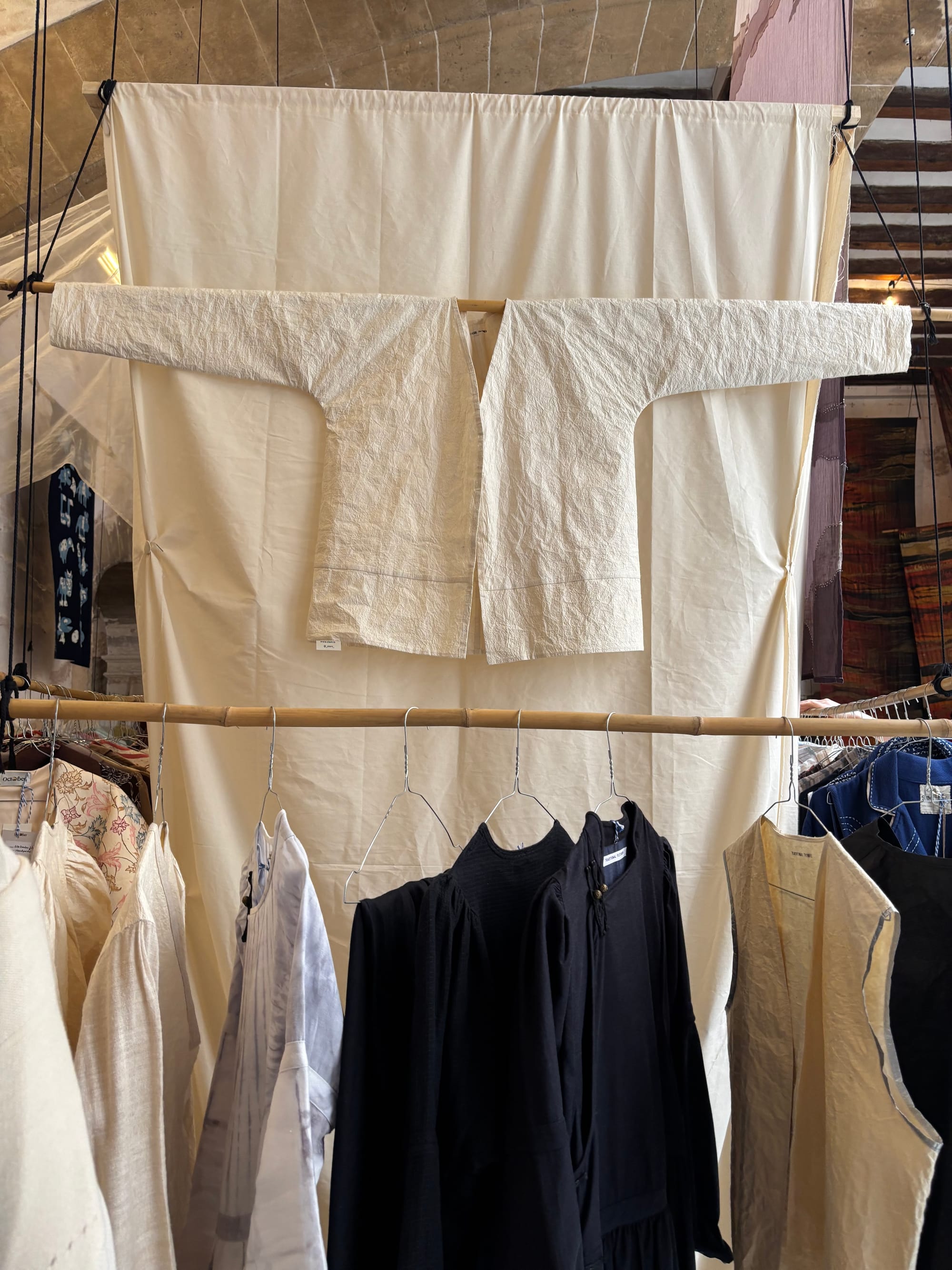
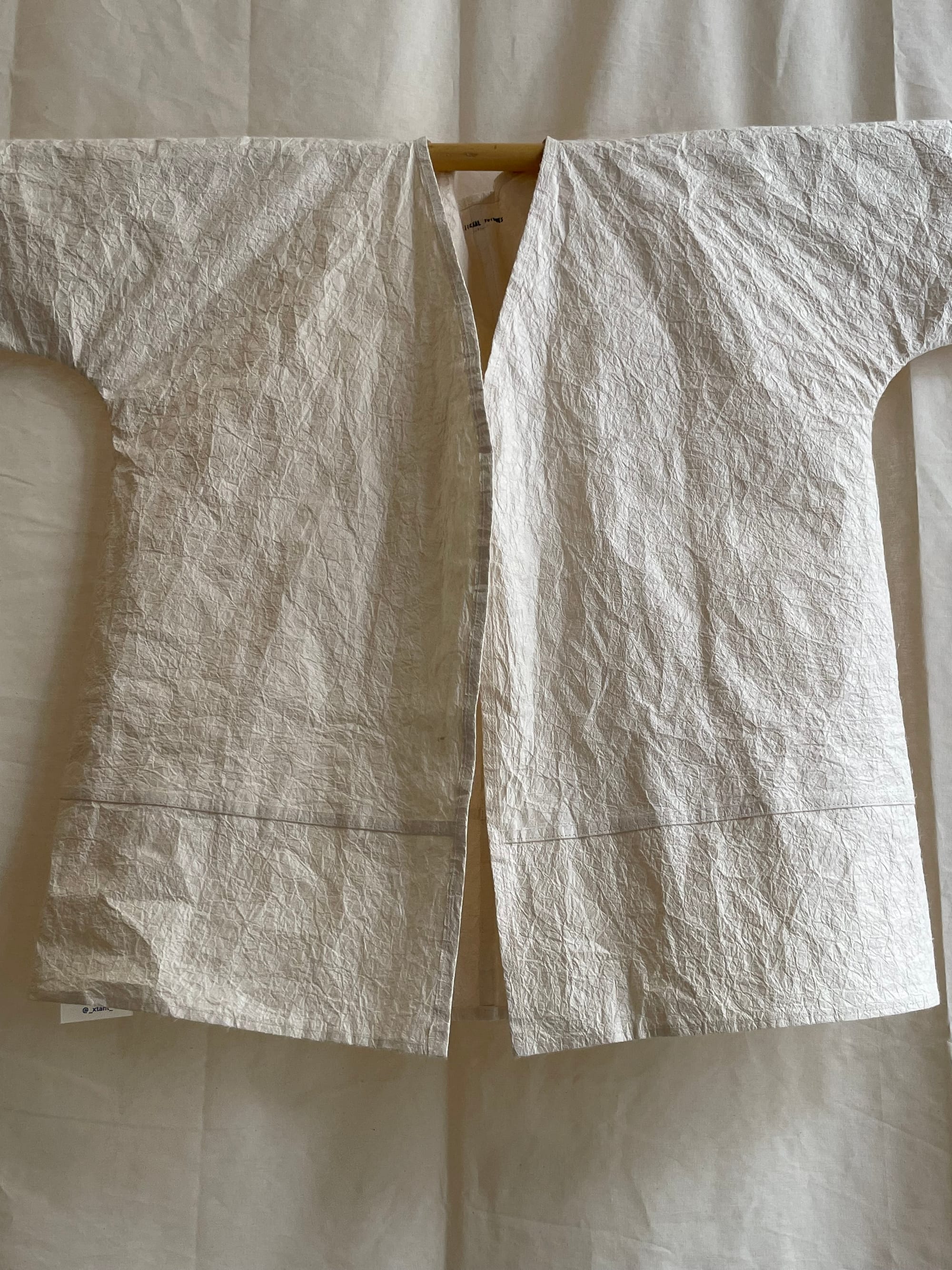
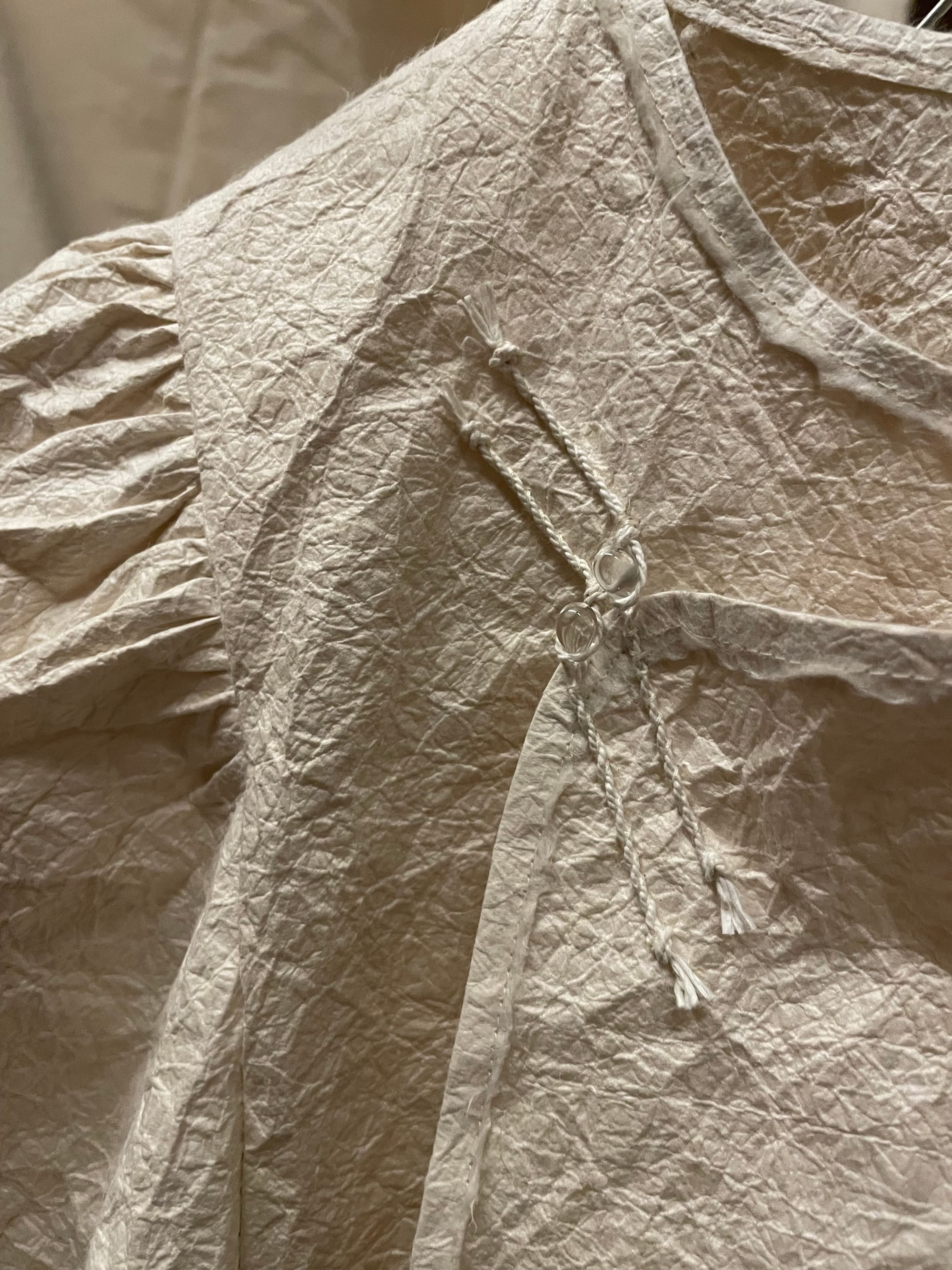
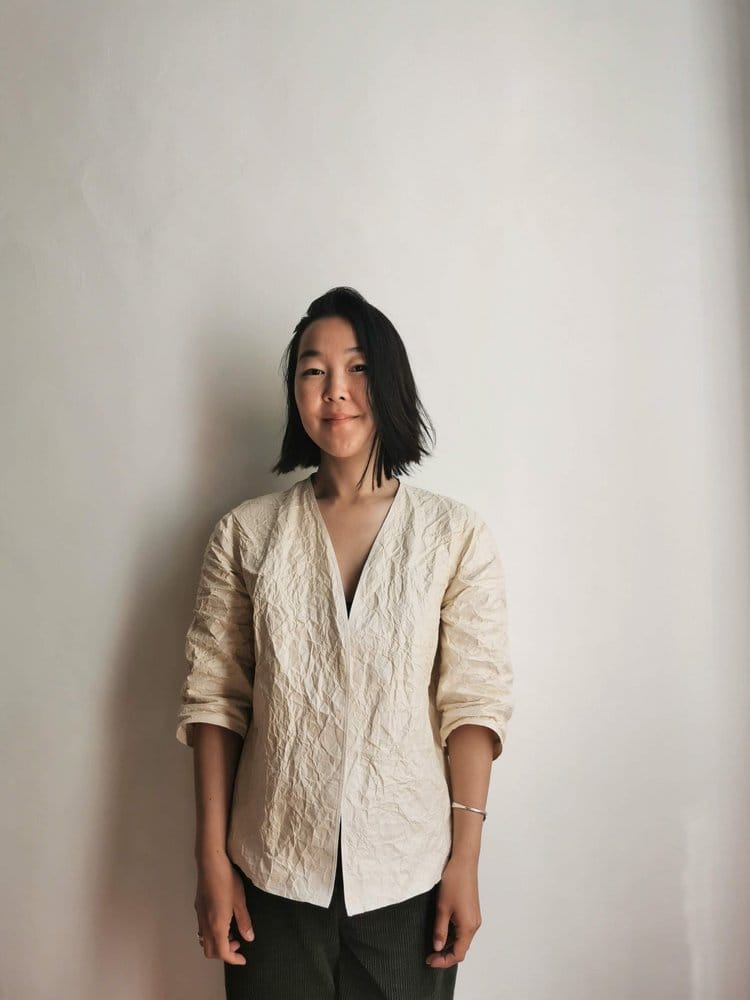
Traditional Futures 2026. First photo by Leyre Lopez de la Paz, courtesy of XTANT. Second and third photo by Liat Gorodenzik. Last photo courtesy of Traditional Futures.
THIS IS US
If Traditional Futures asks what a material carries from the past, THIS IS US, the Nigerian fashion and lifestyle brand founded by fashion designer Oroma, asks what a material can build going forward. Working with natural indigo and hand-woven cotton, both sourced and processed within Nigeria, THIS IS US operates what might be described as a complete material ecosystem: the plant grown, the dye cultivated and fermented, the weaving done, the garment made, the community sustained — all within the same geography. This is not a positioning statement. It is an infrastructure.
The brand's Funtua Project is the clearest expression of this philosophy, documenting and supporting the cotton-farming and weaving communities of northern Nigeria, whose techniques form the basis of the collection. THIS IS US works with these artisan communities on a long-term basis, developing relationships rather than extracting supply, and creating "pathways for traditional techniques to evolve without losing their integrity." The hand of the maker is present in each piece, and so is the framework that made the making possible – from raw material sourcing, to knowledge transfer, market access, to community continuity.
At XTANT, THIS IS US occupied the space where many conversations about African craft tend to stop at the surface, the visual, the decorative. This brand moves well past that. Its work sits at the intersection of design, systems, and cultural storytelling. It's not one person and their fiber, but a whole people and their land, expressing themselves as cloth. Fiber-to-garment is not a concept reclaimed by contemporary sustainability discourse. In Nigeria, it's an ancient practice that continues.
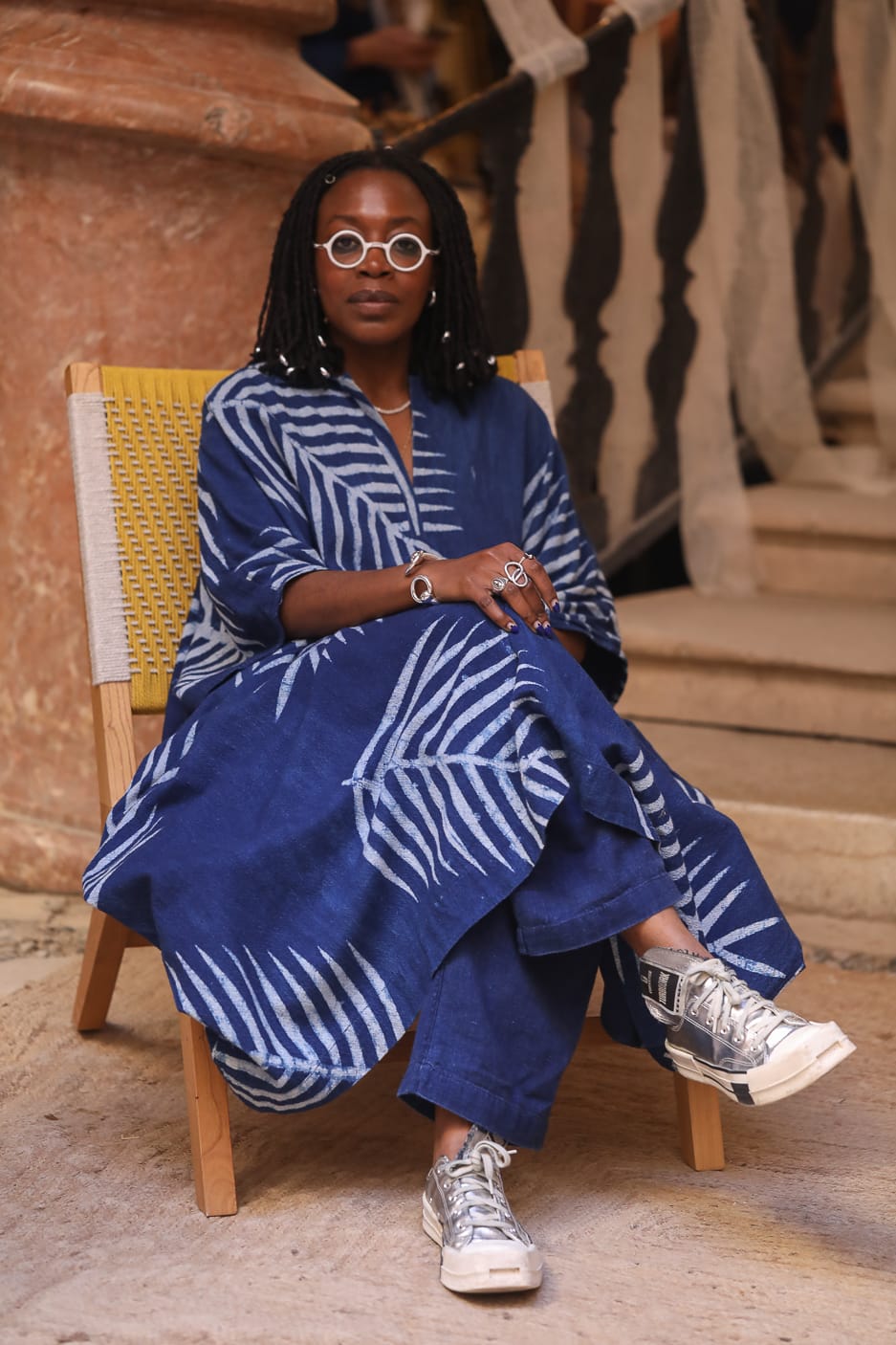

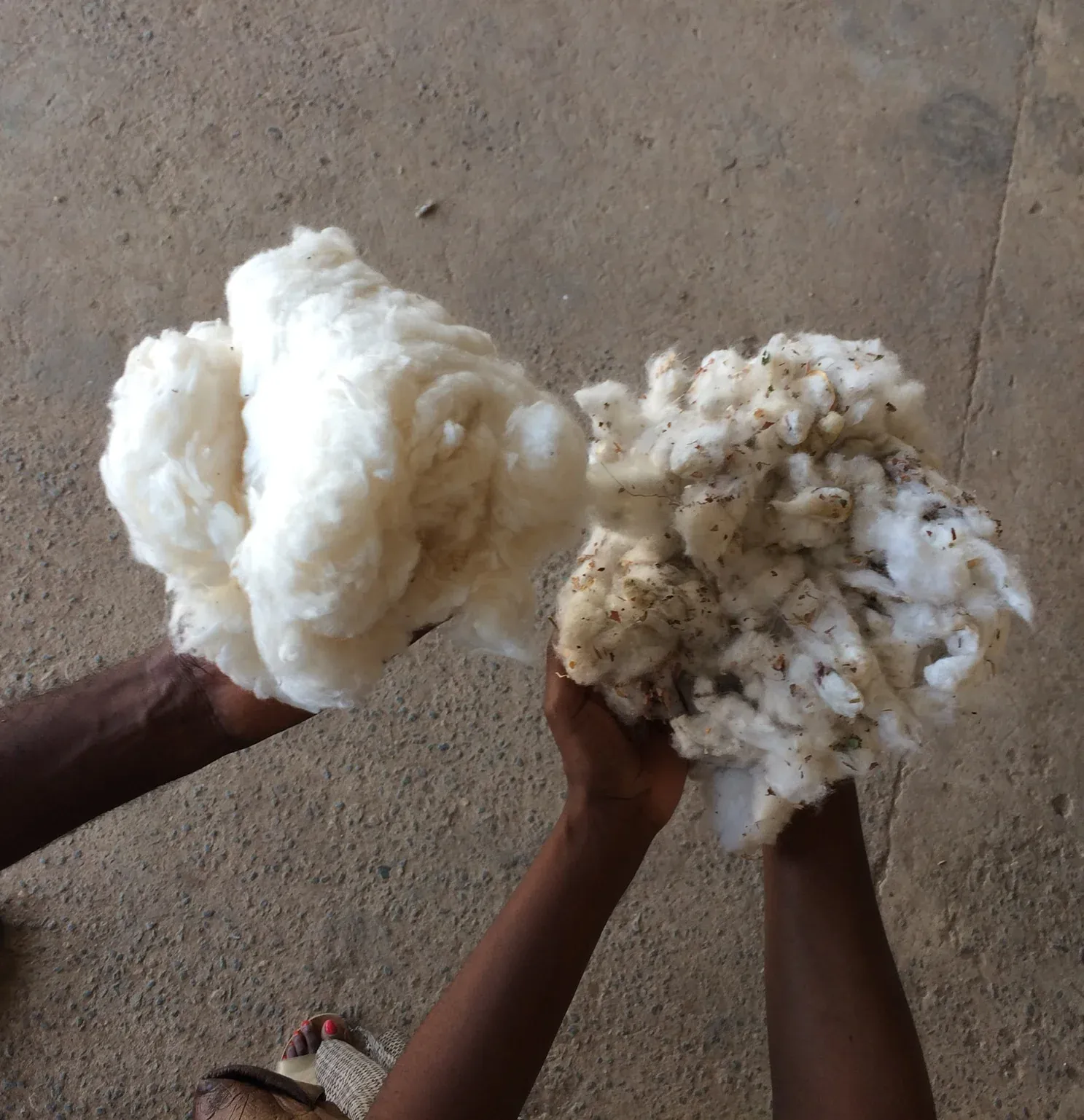
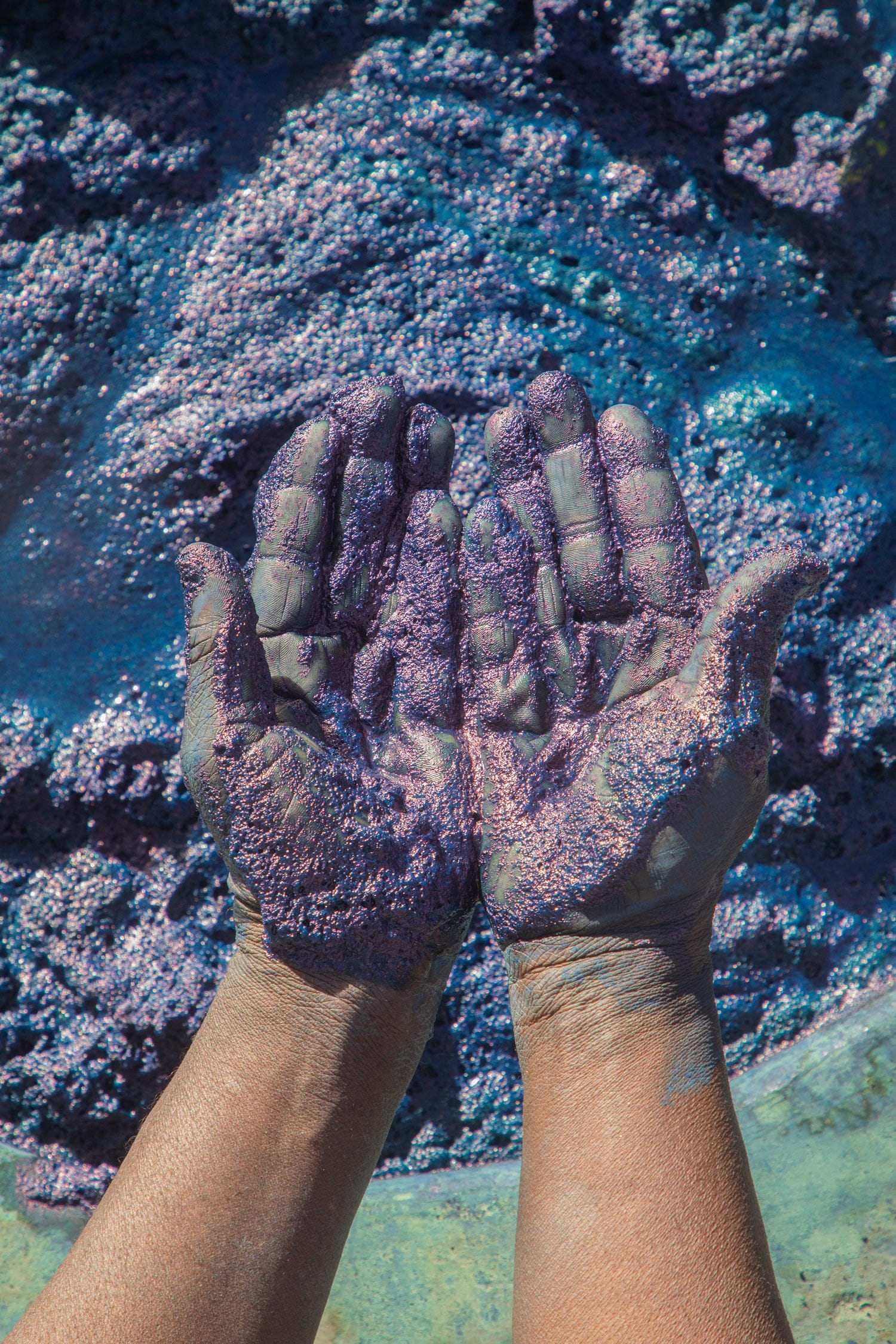
THIS IS US 2026. First photo by Leyre Lopez de la Paz, courtesy of XTNAT. All following photos courtesy of THIS IS US.
What these four makers share cannot be reduced to a supply chain diagram. It is closer to an ethic of attention — a refusal to let the distance between material and body go unexamined. At XTANT Nomad 2026, within the stone courtyard of a 17th-century palace, that refusal was on the wall, the table, and the skin. The makers came from four different geographies, worked with four different techniques, and carried four different histories into the room. What united them was simpler and harder to name: the conviction that a garment is never merely a garment. It is a record of every decision made before it reached you.
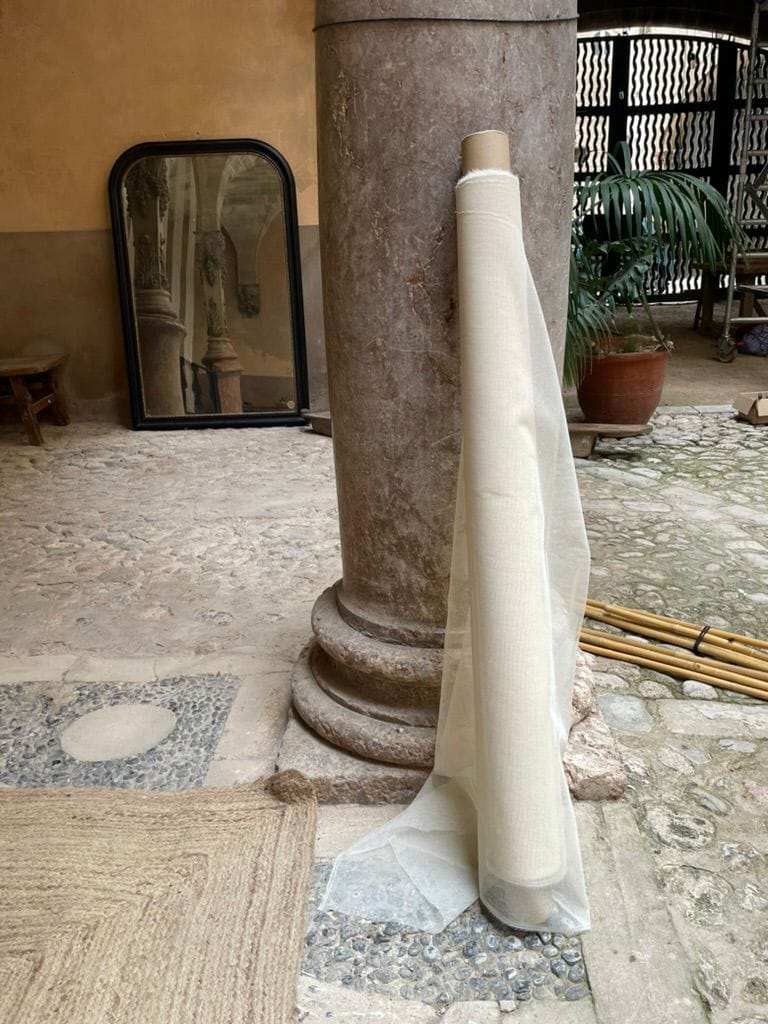
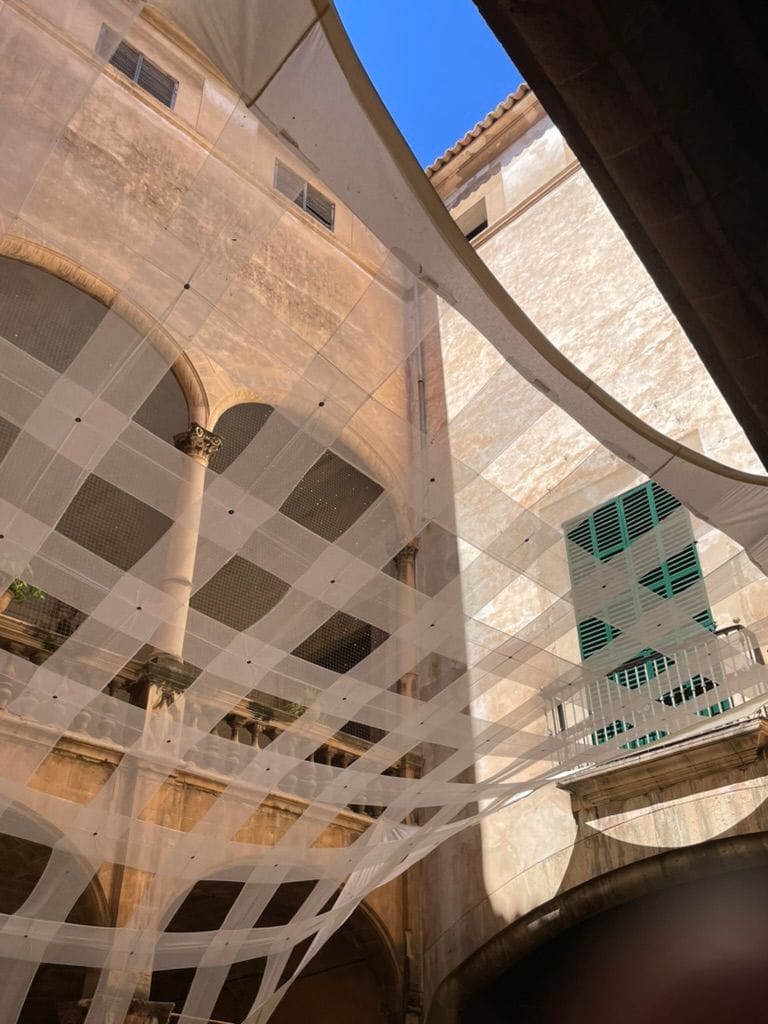
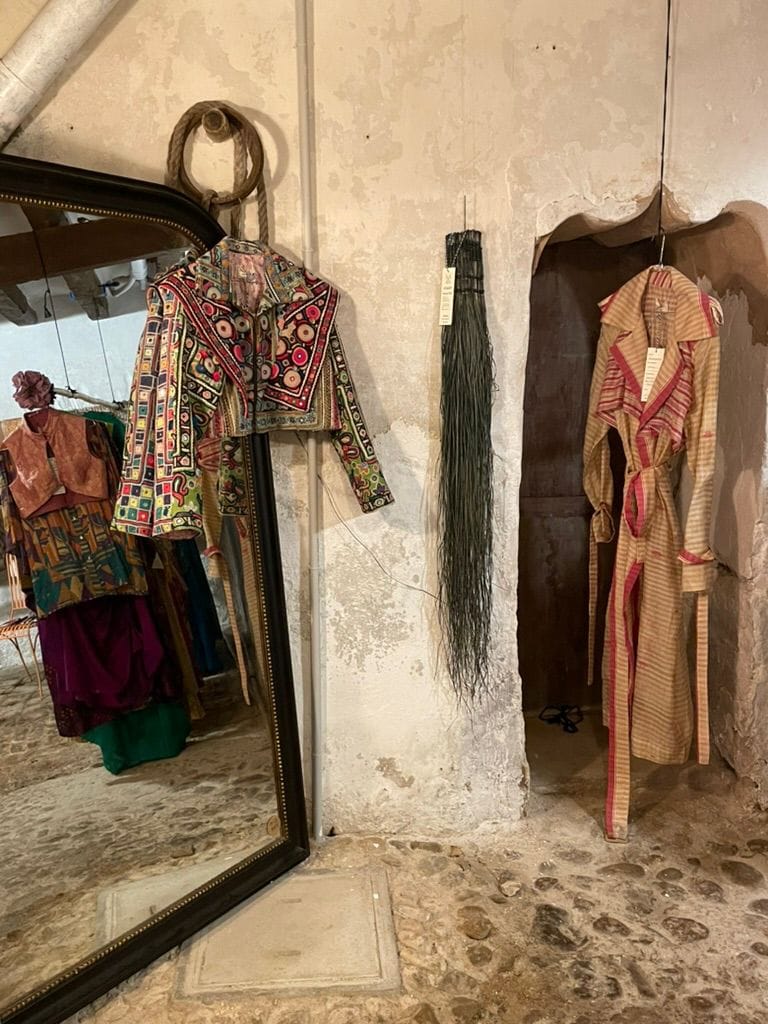
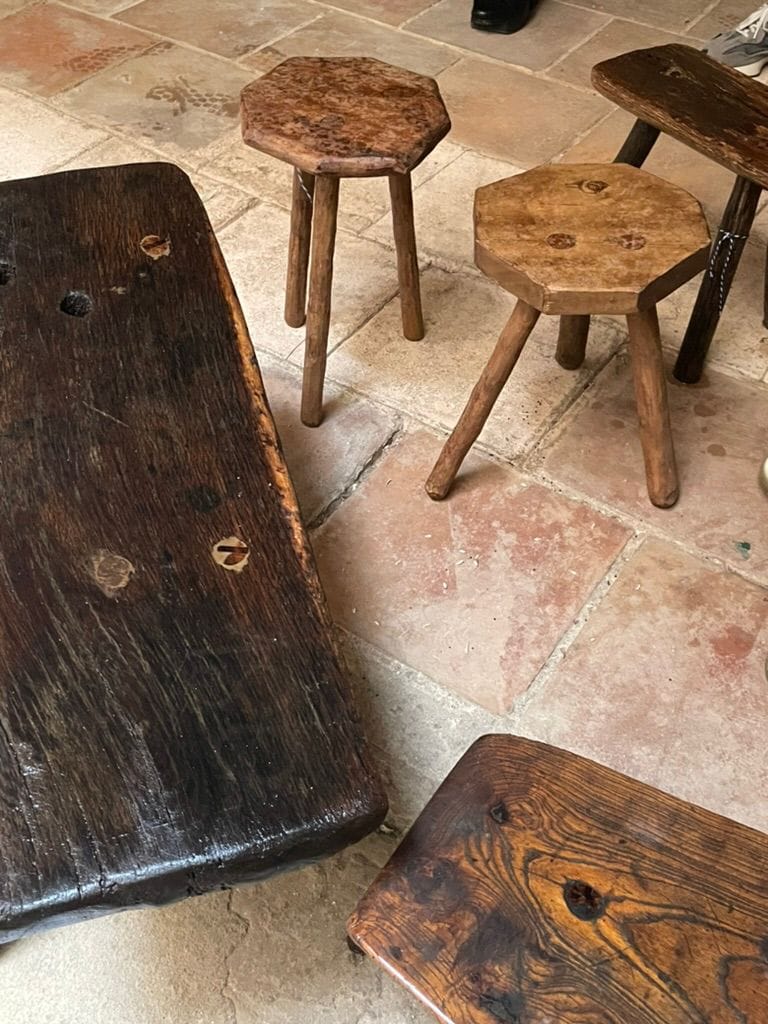
XTANT NOMAD 2026. Photos by Liat Gorodenzik.