

A new exhibition in London makes the case that the future of activewear will be shaped not just by performance, but by cleaner, innovative materials and finishes. Performance Without Toxicity is open at The Mills Fabrica's innovation gallery in King's Cross through June 26, 2026 and gathers a wide coalition of material scientists, outdoor brands, biotech start-ups, and footwear innovators under one roof.
The shared premise is that the global activewear industry — currently valued at USD 206.64 billion and projected to reach USD 350.45 billion by 2032 — has relied on petroleum-based materials for far too long and that less toxic alternatives are now available. Contributor to THE KINDCRAFT Fiona Coleman visited the exhibition and highlights exciting new concepts from Reimagining Materials, to Greener Chemistries, and Future Footwear.
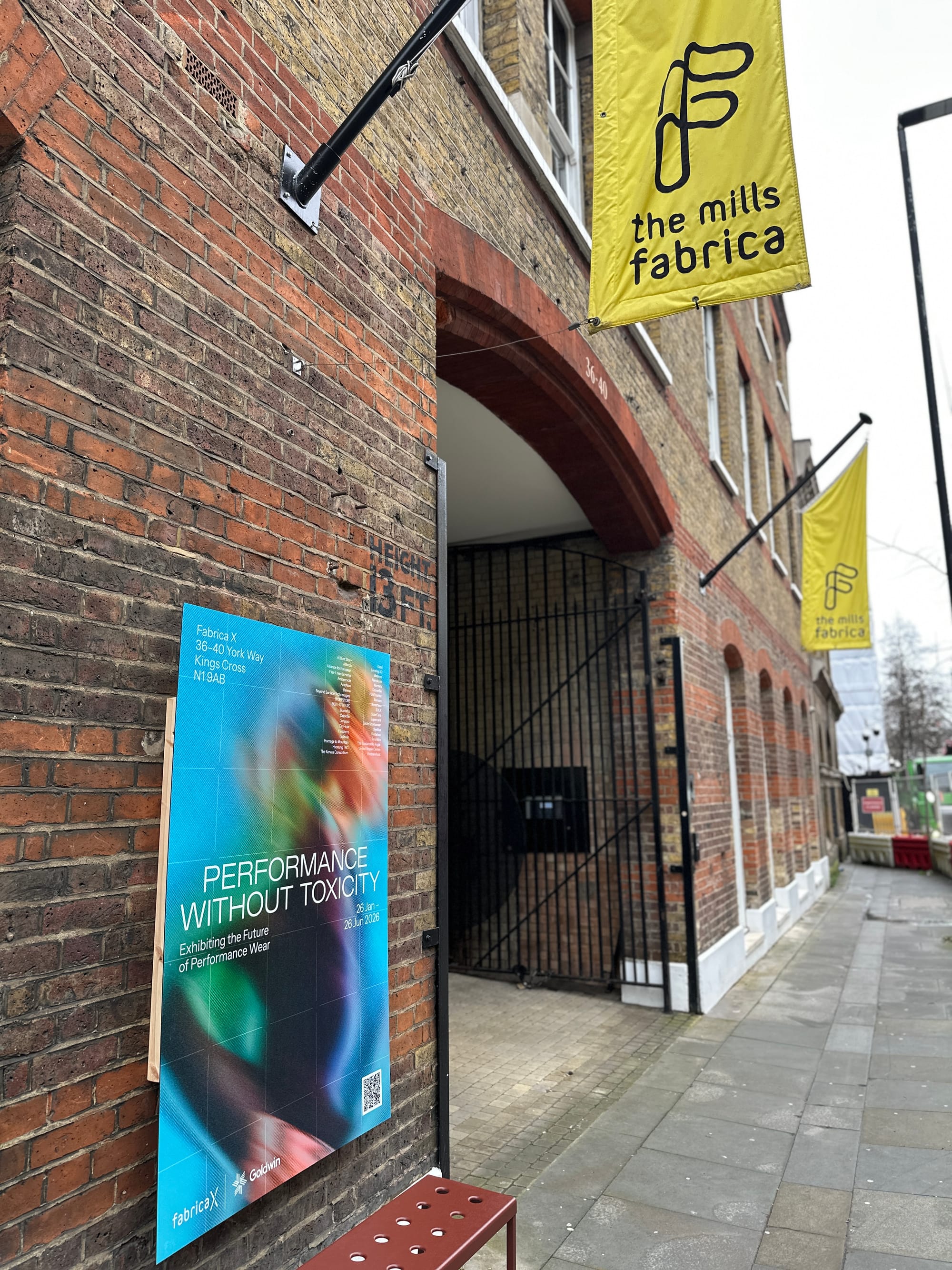
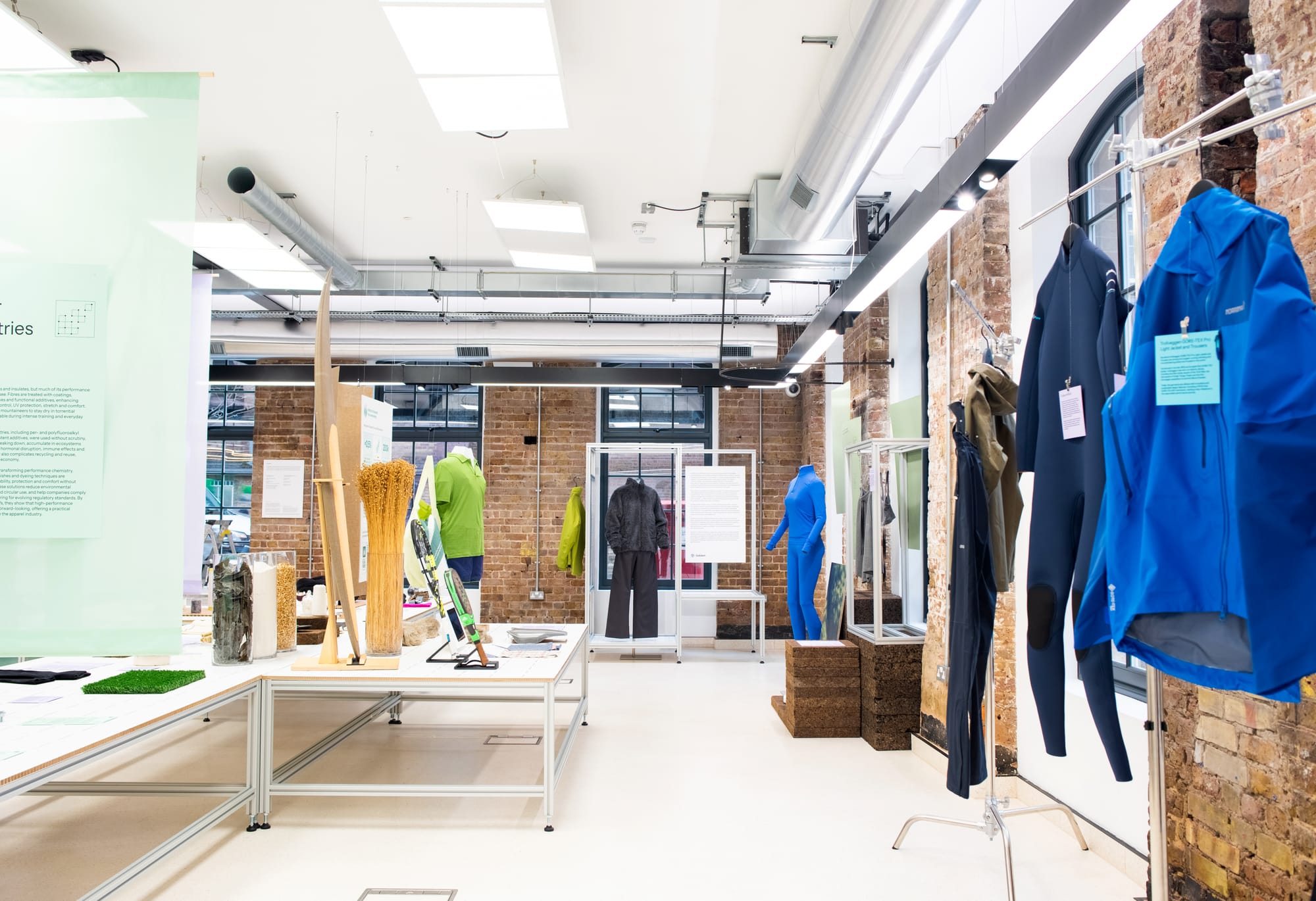
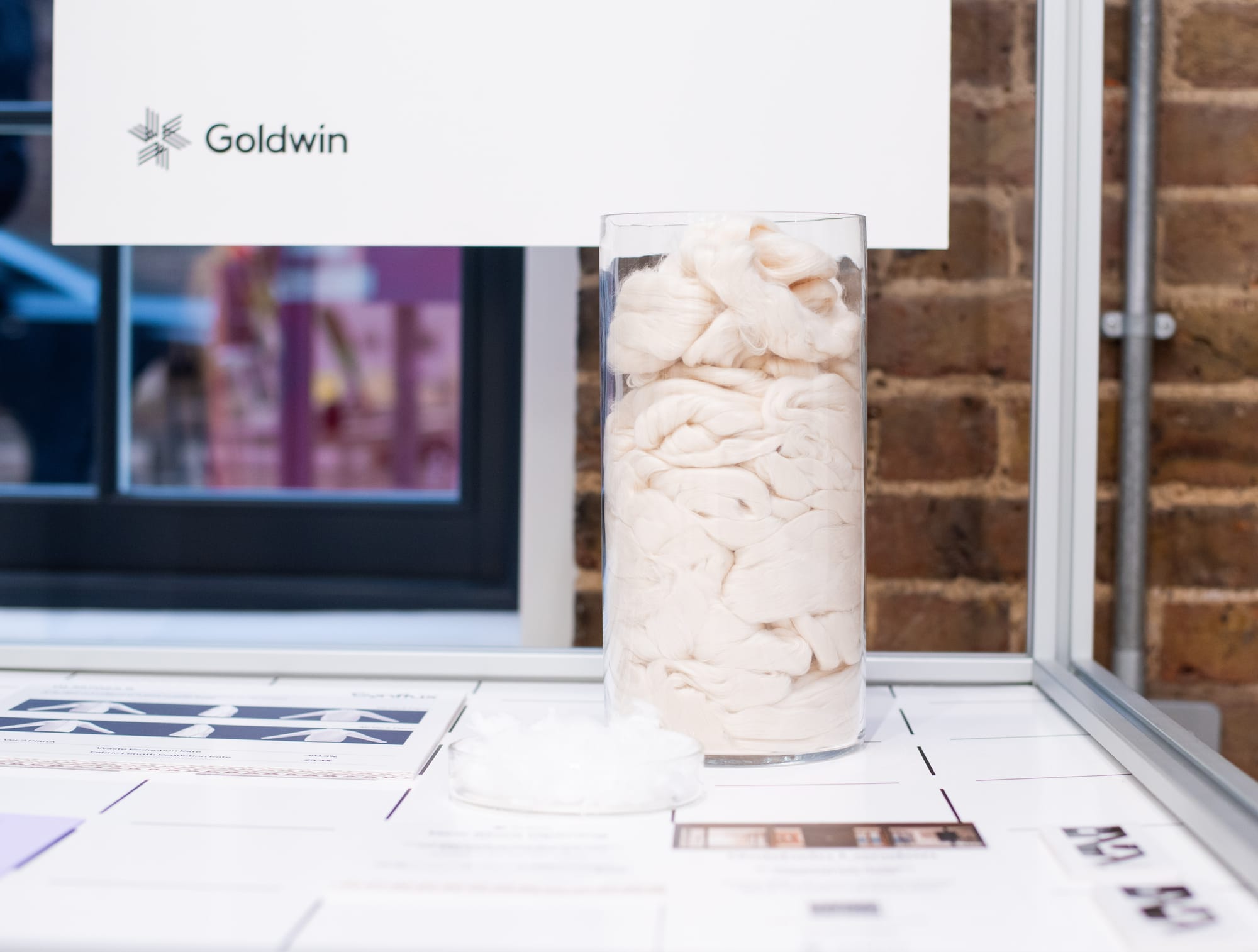
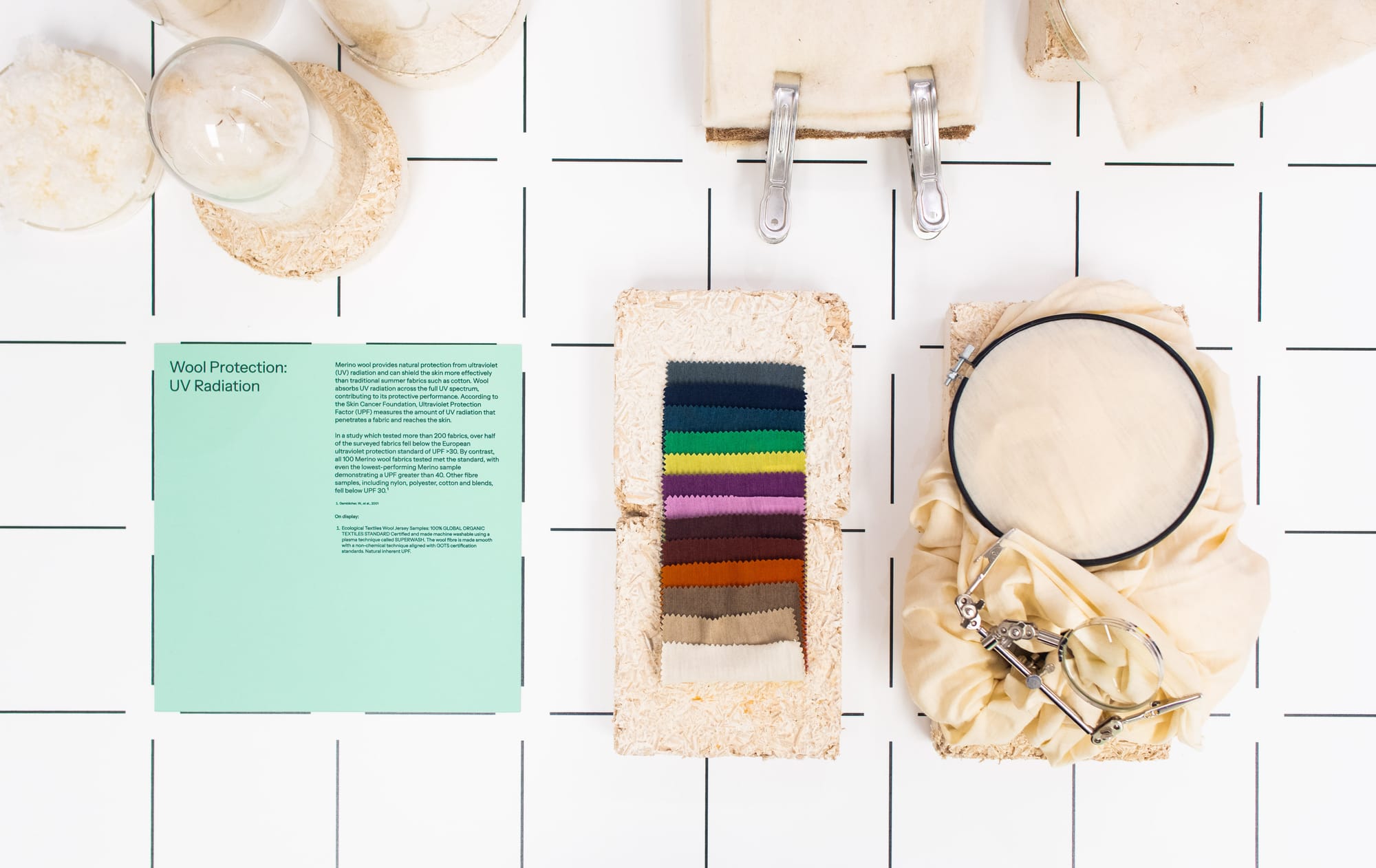
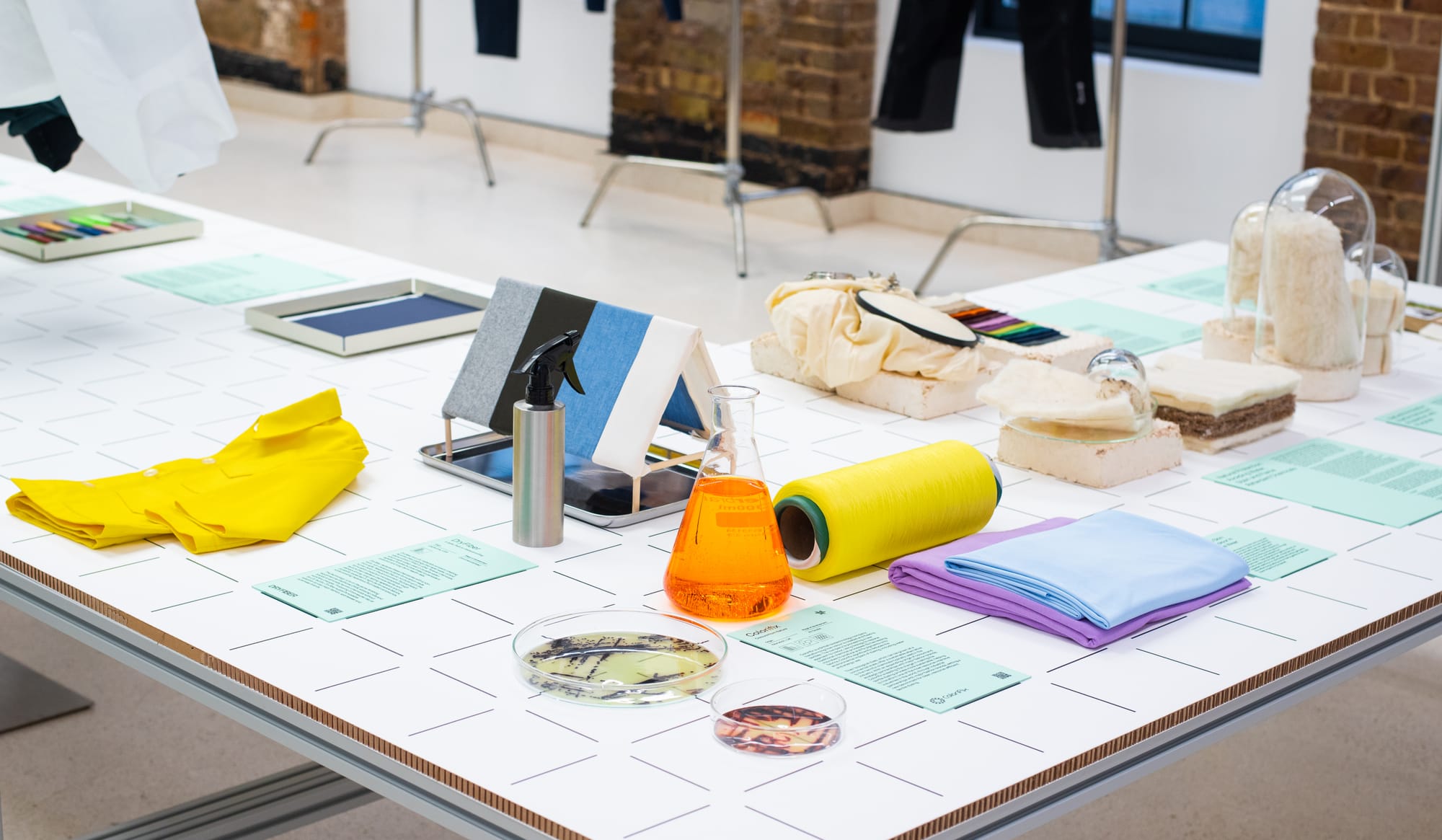
Exterior photo by Fina Coleman. Exhibition photos courtesy of The Mills Fabrica.
The exhibition's lead partner is Goldwin, the Japanese performance apparel company whose in-house Goldwin Tech Lab, conducts research into human physiology and environmental conditions. Goldwin's presence here isn't just curatorial — their corporate venture fund, the Goldwin Play Earth Fund, launched in 2022, has backed a number of the exhibitors.
Reimagining Materials
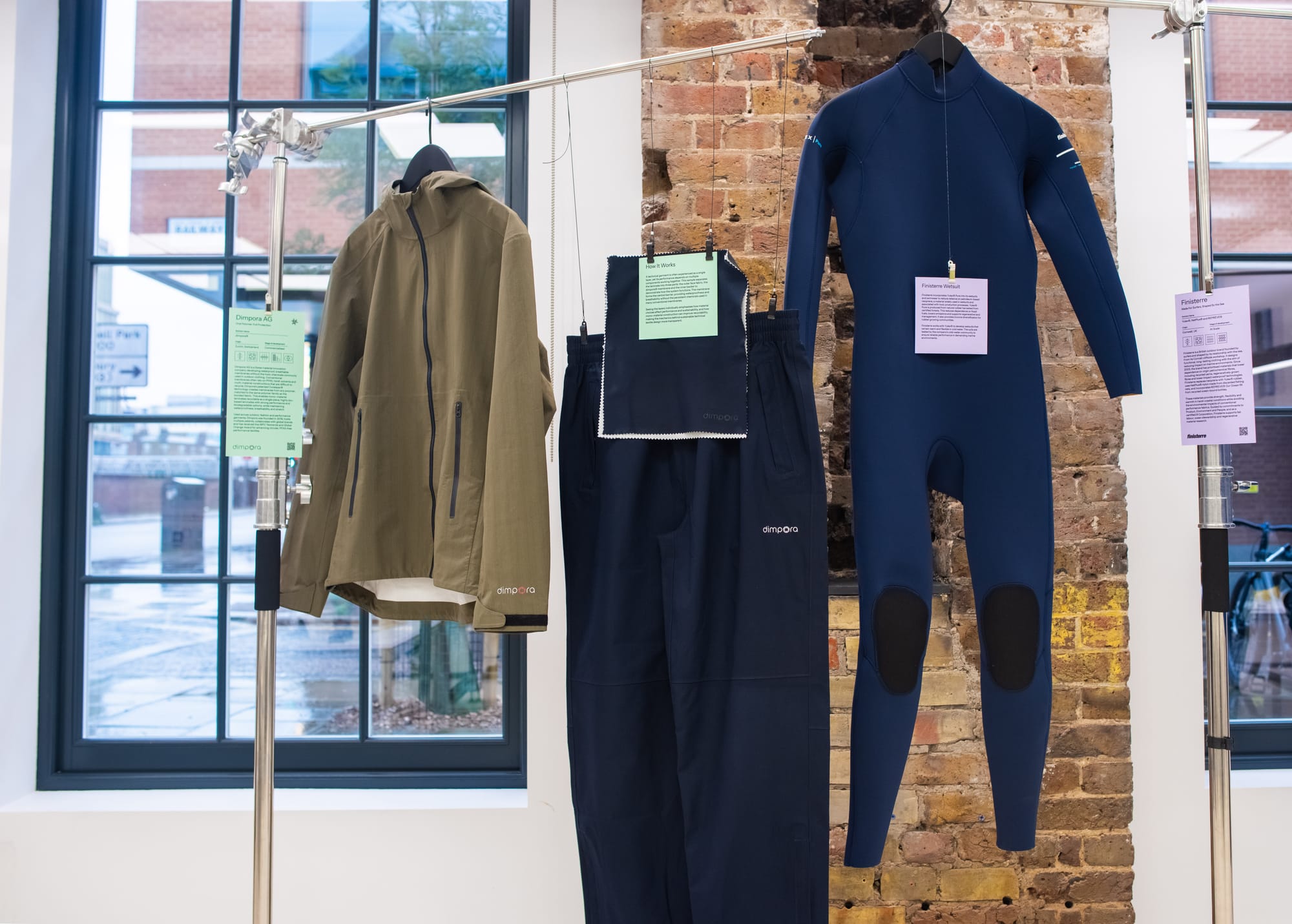
Yulex is a plant-based natural rubber alternative to petroleum-based neoprene. Sourced from FSC-certified Hevea trees, the material is used in wetsuits and apparel and offers similar warmth and stench to neoprene, while reducing CO2 emissions by up to 80%. The US-based company's Yulex 2.0 materials are even more flexible featuring high-tier stretch comparable to traditional neoprene, while better resisting UV and saltwater degradation.
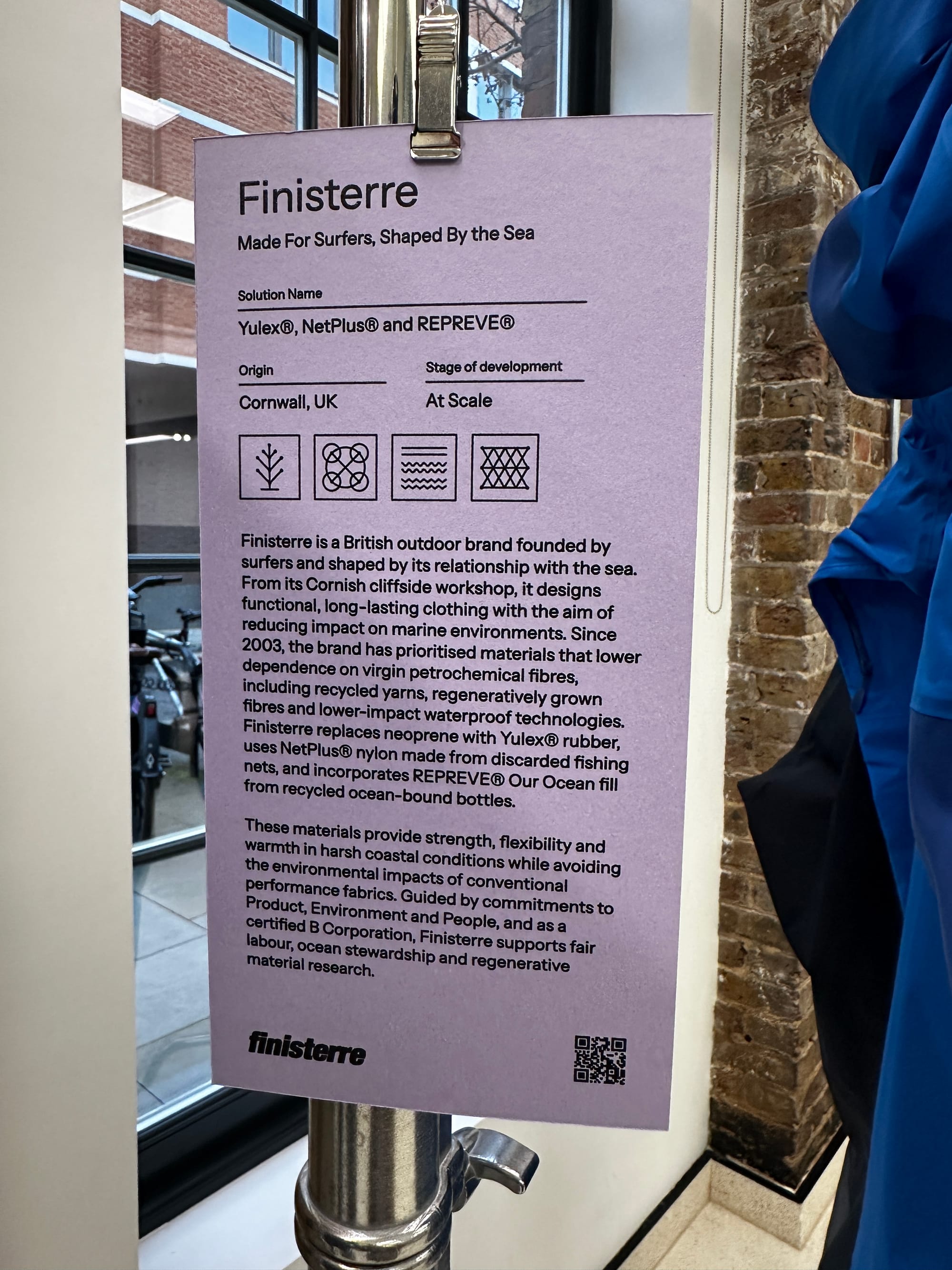
Yulex was originally pioneered by Patagonia and has been adopted by several brands including Finisterre. The British outdoor brand founded by surfers showcased their Yulex wetsuit at the Performance Without Toxicity exhibition. Since 2003, Finisterre has prioritized materials that lower dependence on virgin petrochemical fibers. including recycled yarns, regeneratively grown fibers, and lower-impact waterproof technologies.
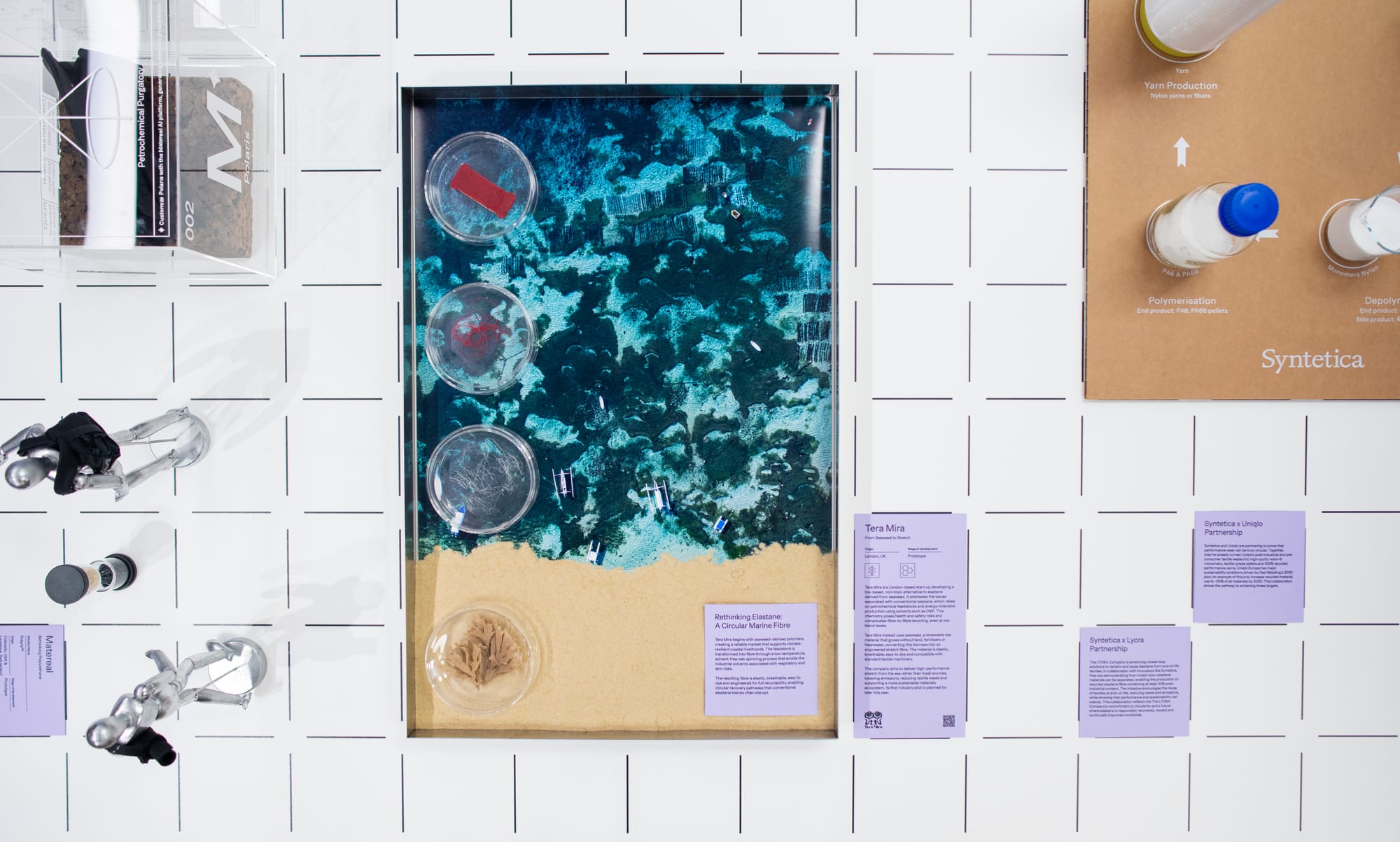
Tera Mira is a London start-up developing a bio-based, non-toxic alternative to elastane derived from seaweed. It addresses the issues associated with conventional elastane, which relies on petrochemical feedstocks and energy-intensive production using solvents such as DMF. This chemistry poses health and safety risks and complicates fiber-to-fiber recycling, even at low blend levels.
The result is an elastic, breathable fiber that is easy to dye and engineered for full recyclability, enabling circular recovery pathways that conventional elastane blends often disrupt.
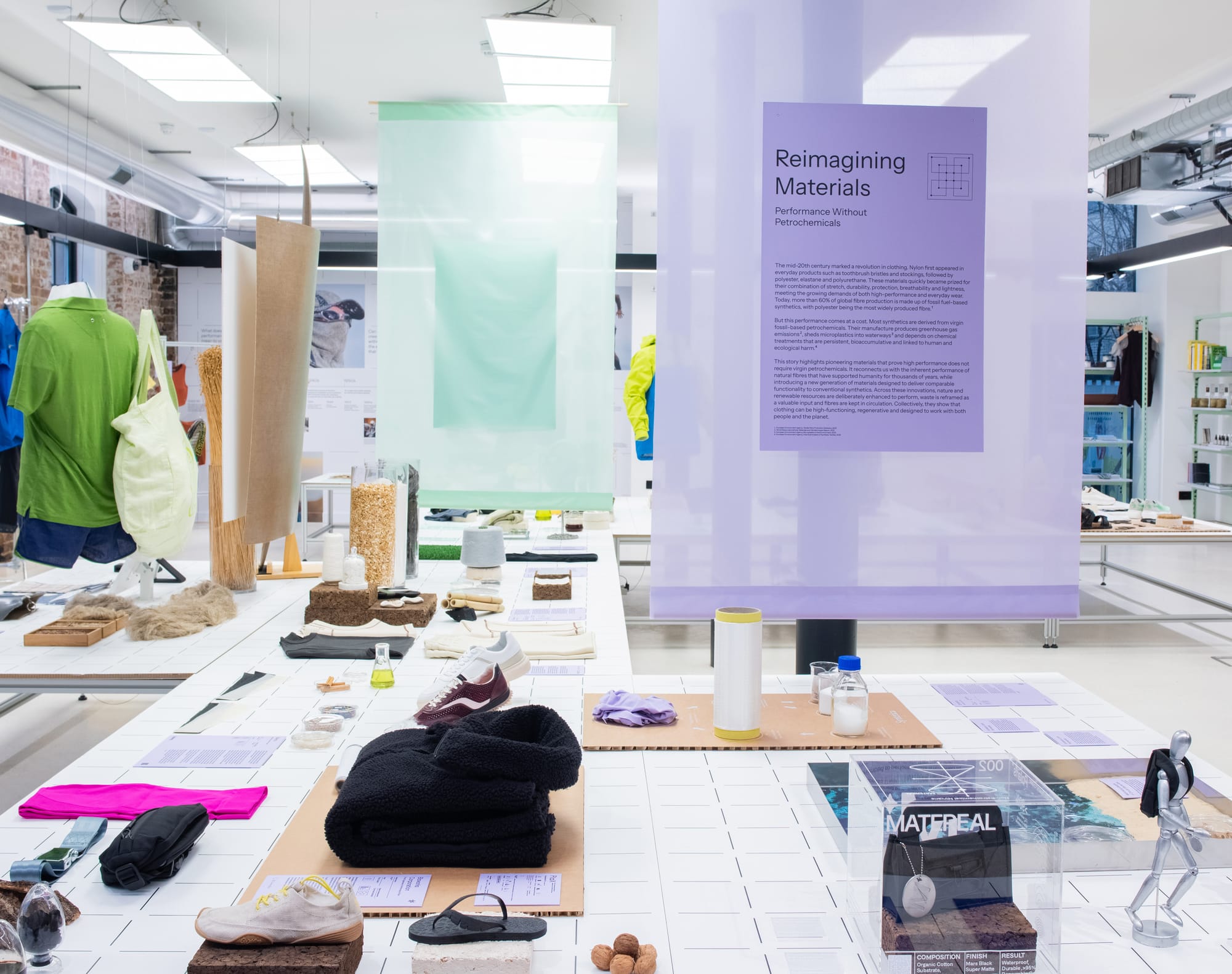

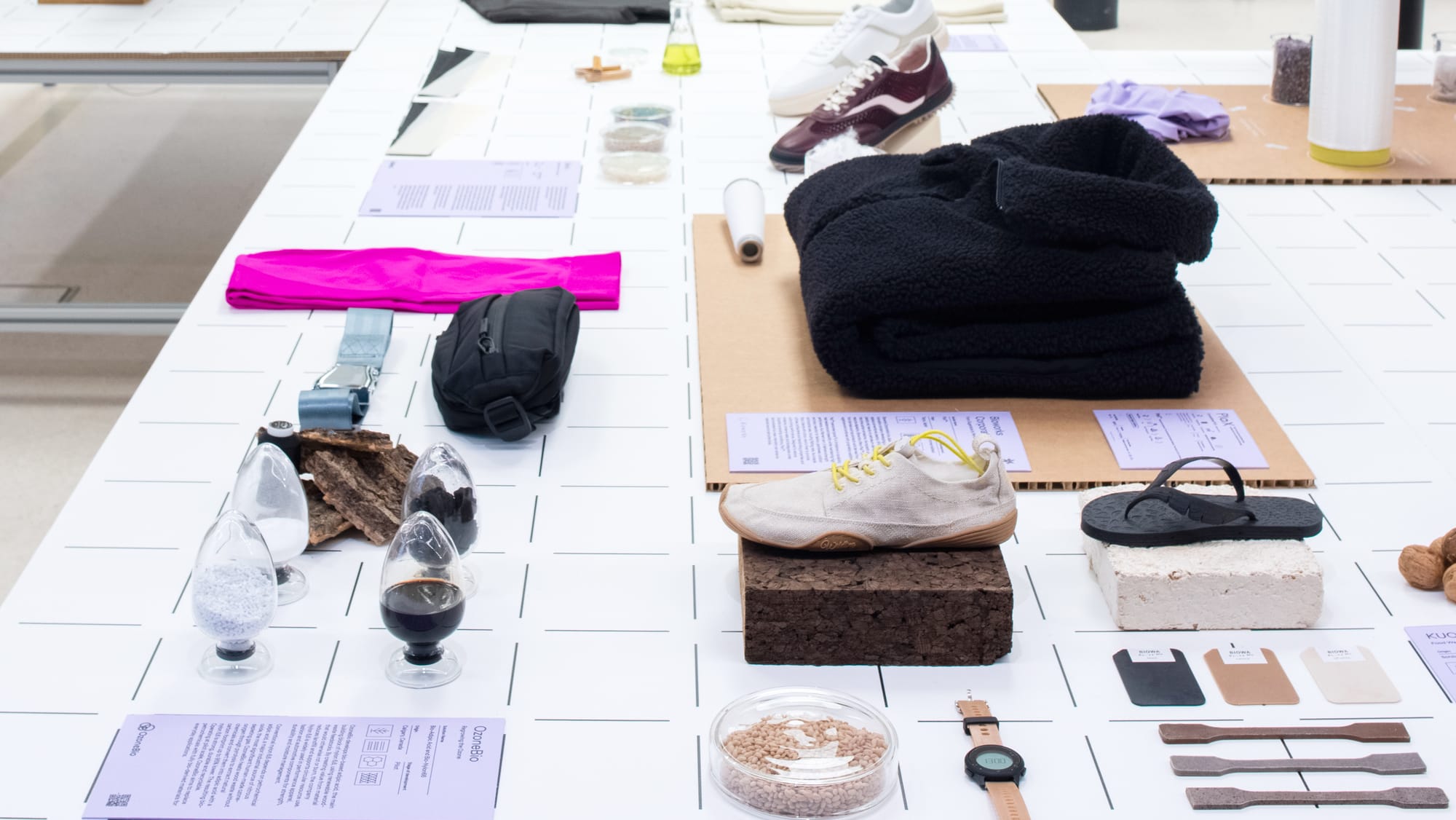
Photos courtesy of The Mills Fabrica and Fiona Coleman
Greener Chemistries
For anyone who's followed the problem with PFAS — the "forever chemicals" used extensively in waterproof and water-repellent performance gear — this section of the exhibition alone is worth the visit.
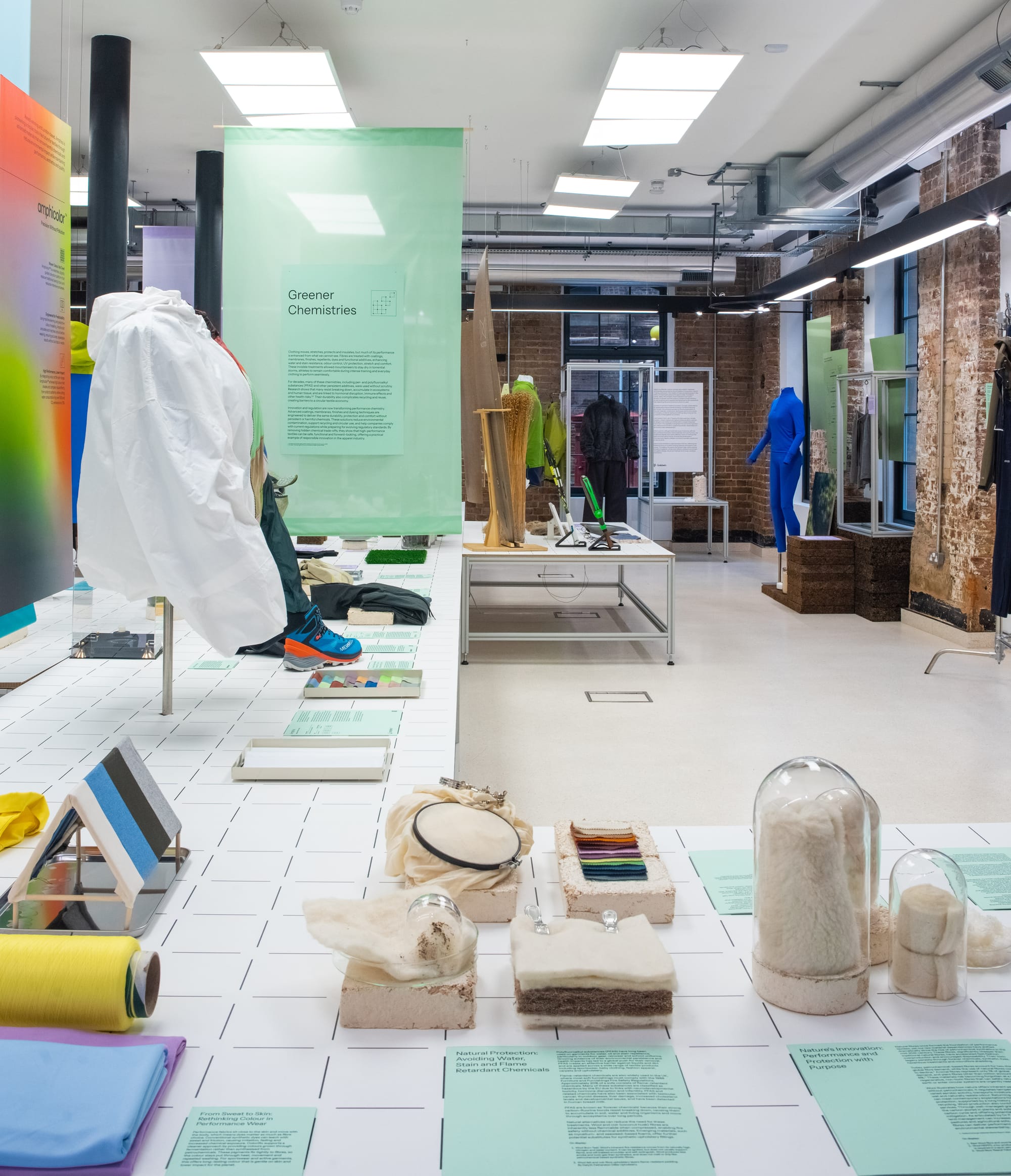
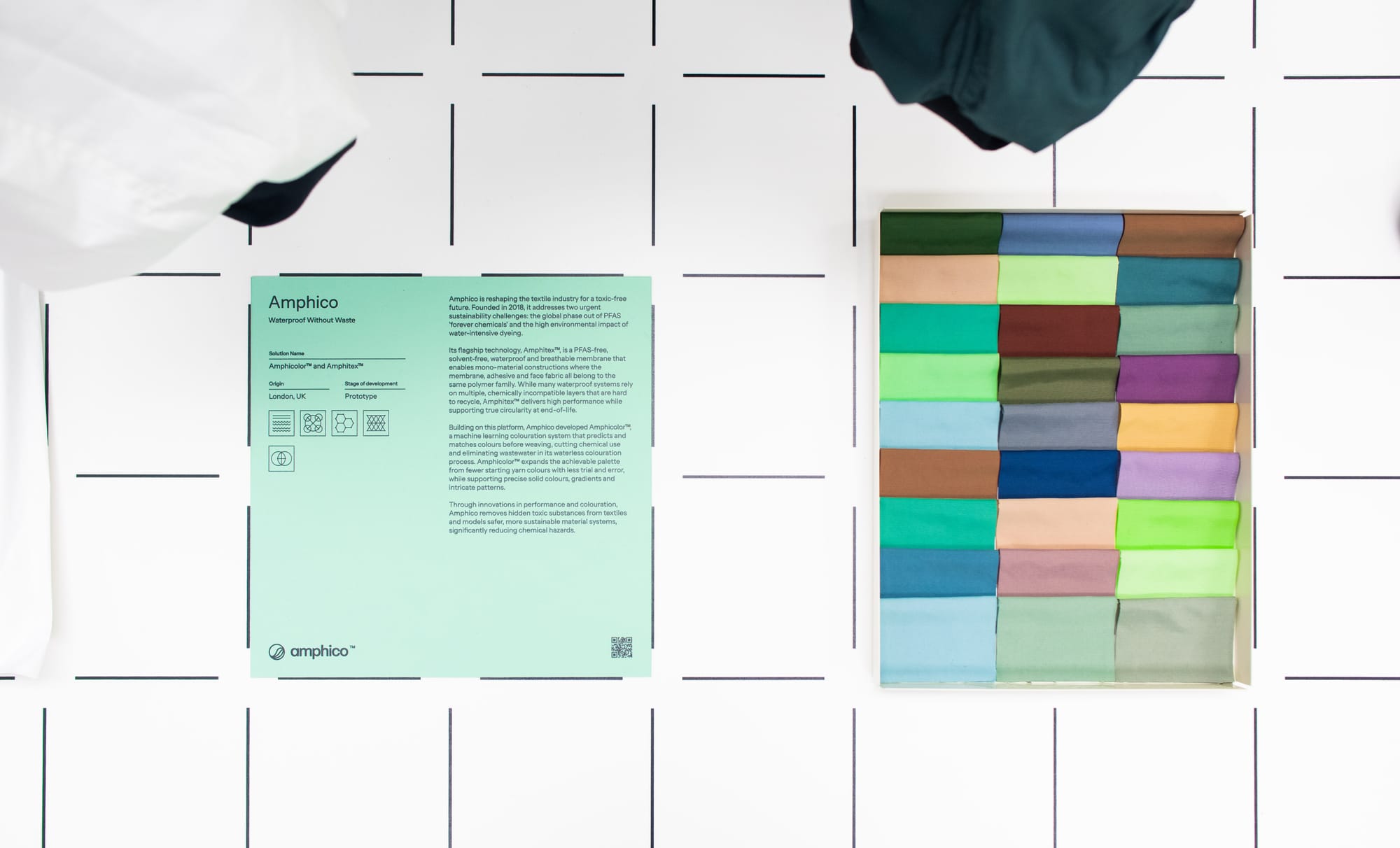
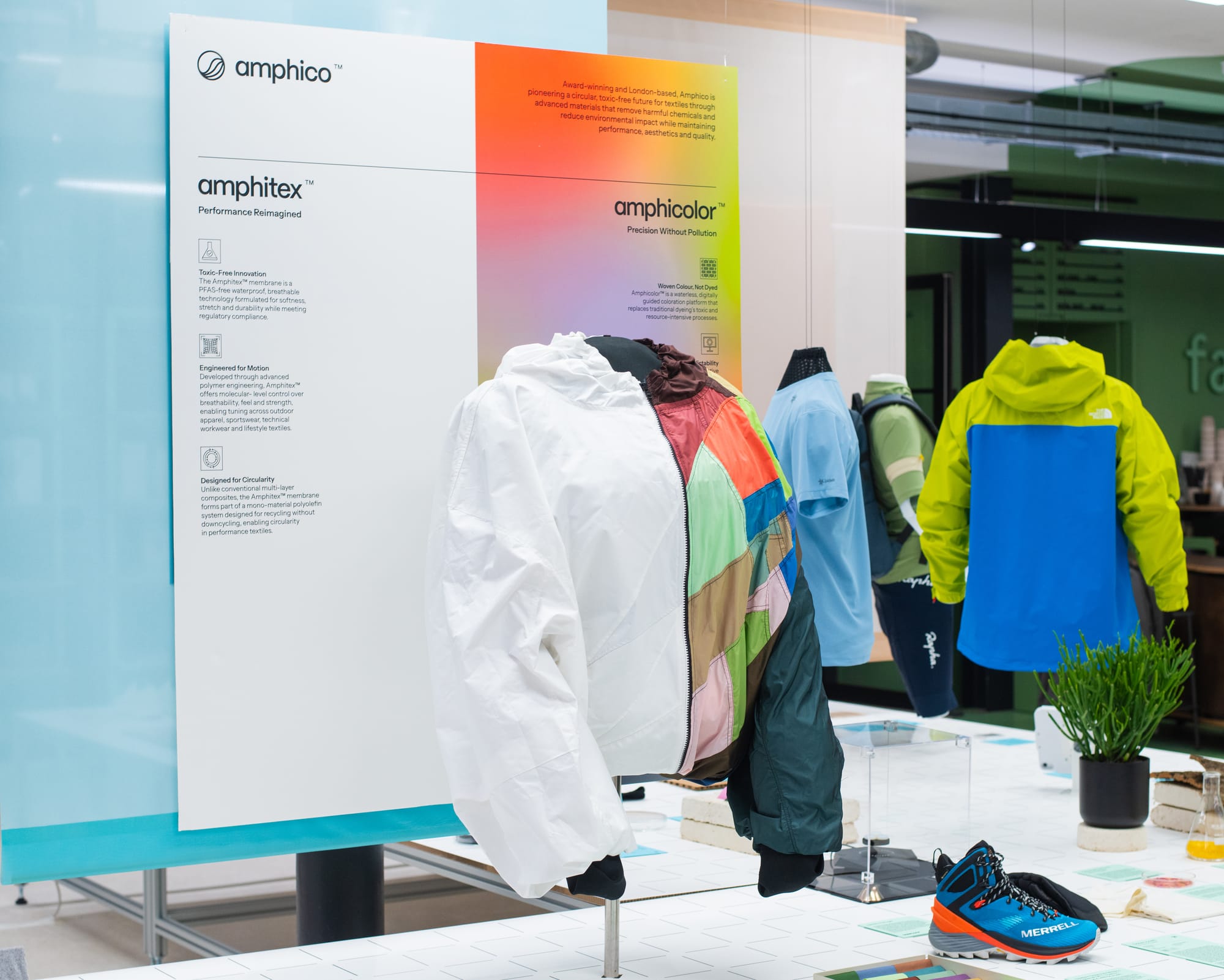
Amphico has developed PFAS-free waterproof, breathable textile technologies including its Amphitex™ membranes and Amphicolour™, a waterless coloration system that predicts and matches colors before weaving reducing chemical use and eliminating wastewater. Amphitex is a PFAS-free, solvent-free, waterproof and breathable membrane that enables mono-material constructions where the membrane, adhesive, and face fabric all belong to the same polymer family. While many waterproof systems rely on multiple chemically incompatible layers that are hard to recycle, Amphitex delivers high performance while supporting true circularity at the product's end-of-life.
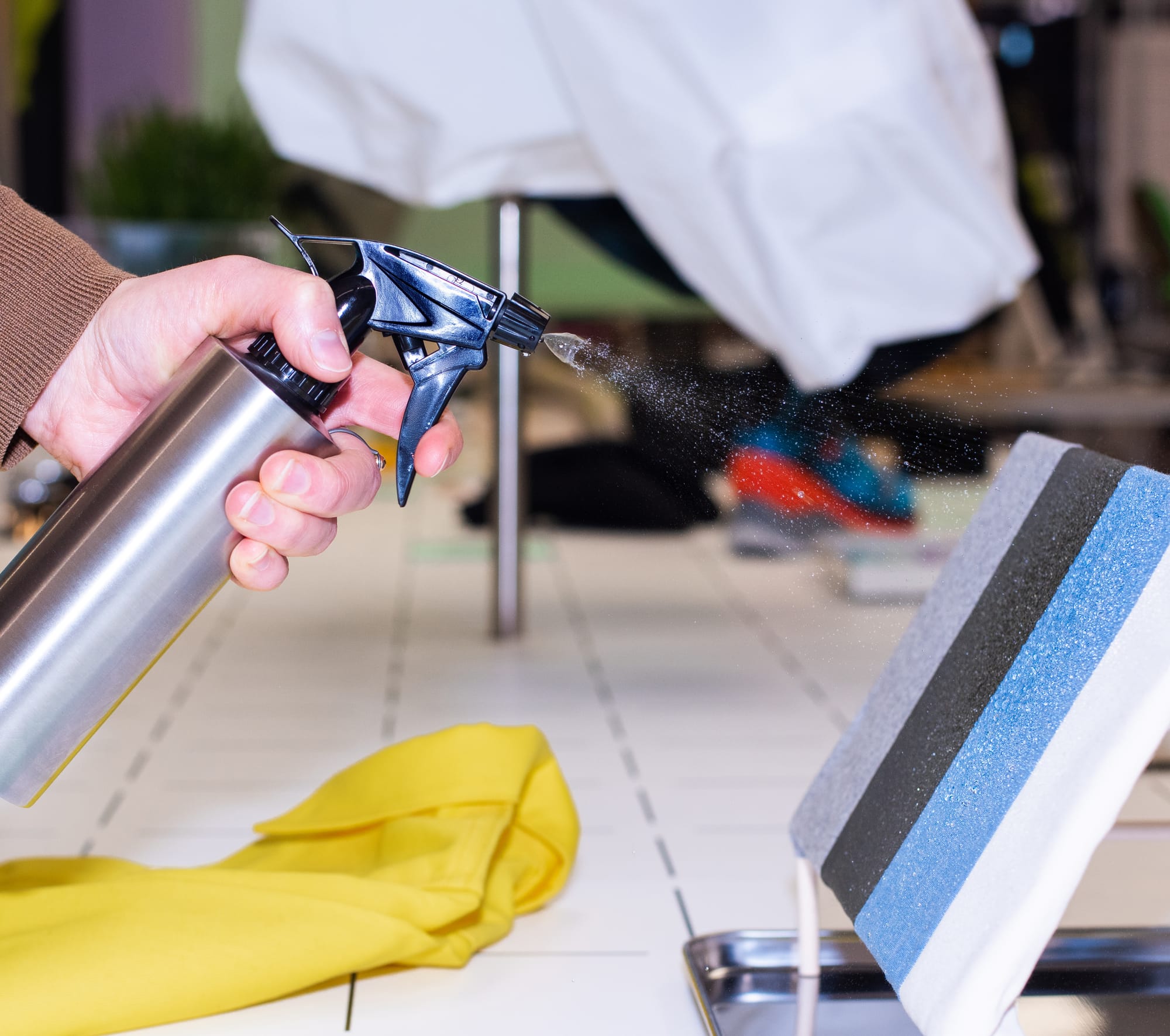
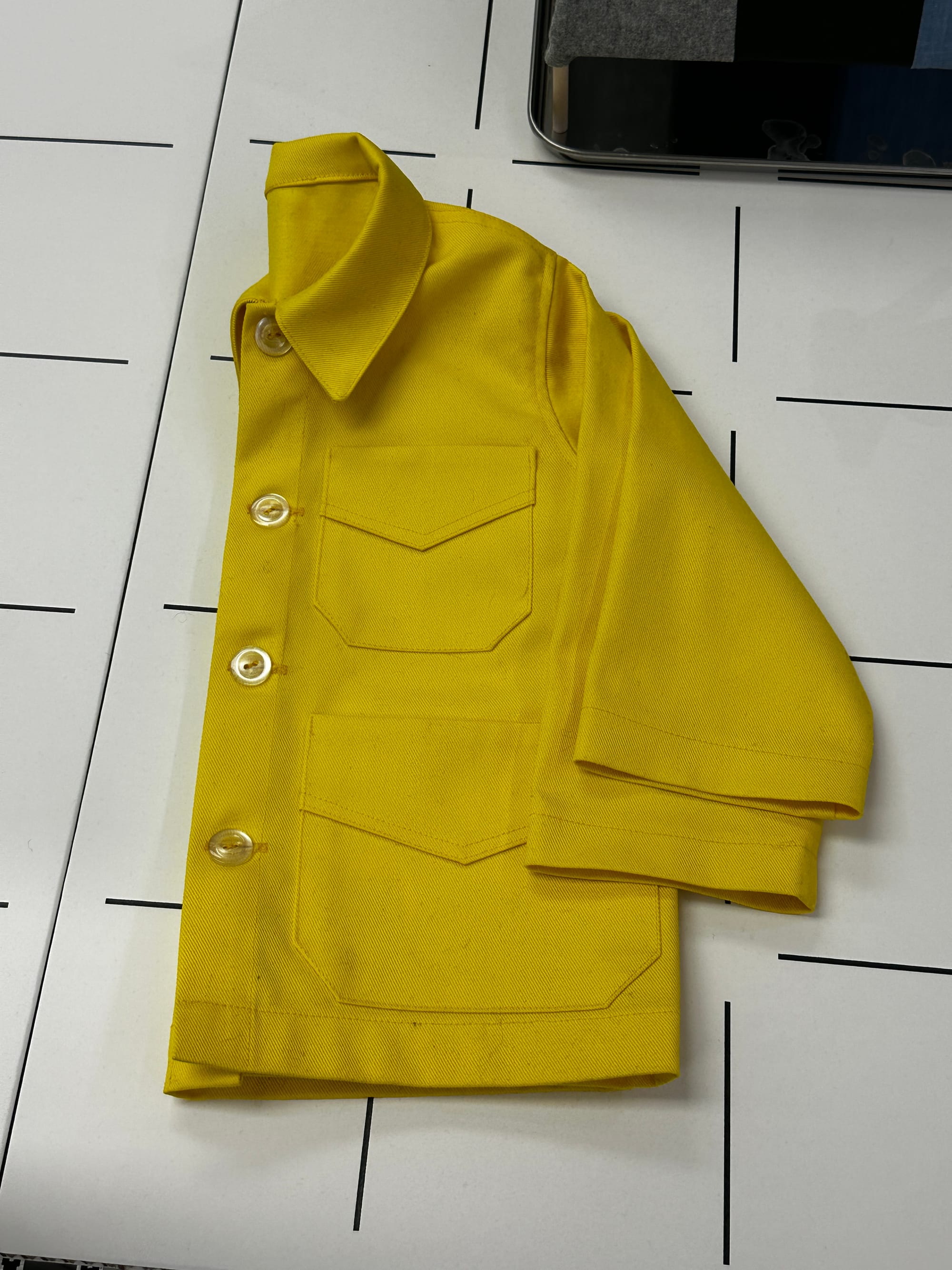
DRYFIBER is a California-based materials company creating fluorine-free coatings that repel water, oil, and stains without PFAS which were widely used in durable water-repellent finishes but are linked to persistent. pollution and long-term health risks. The company replaces these chemistries with a non-toxic, non-bioaccumulative formulation made from safer feedstocks that do not build up in the human body or the environment. Its proprietary formulation imparts a microscopically rough texture that creates a chemical barrier and delivers strong, long-lasting repellency and the durability expected in high-performance fabrics, while avoiding hazardous fluorinated compounds.The technology runs on the same finishing equipment as traditional DWR, allowing mills and brands to eliminate harmful chemicals without overhauling their workflow. Producing 5 tonnes per day at its US facility, DRYFIBER is scalable across major fashion, activewear, and outerwear brands.

Photos courtesy of The Mills Fabrica and Fiona Coleman
Future Footwear
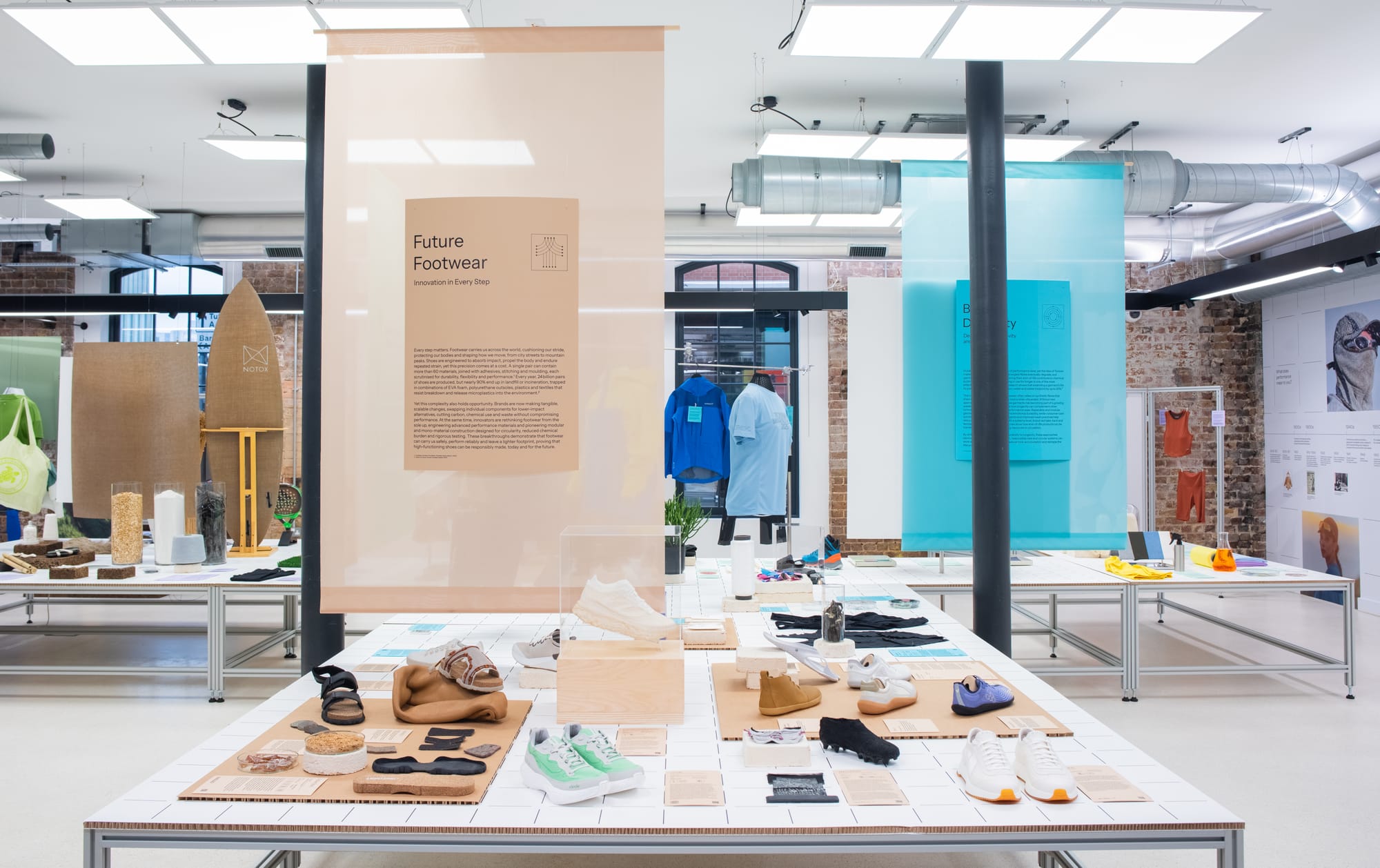
The footwear section of the exhibition might be its most immediately tangible:
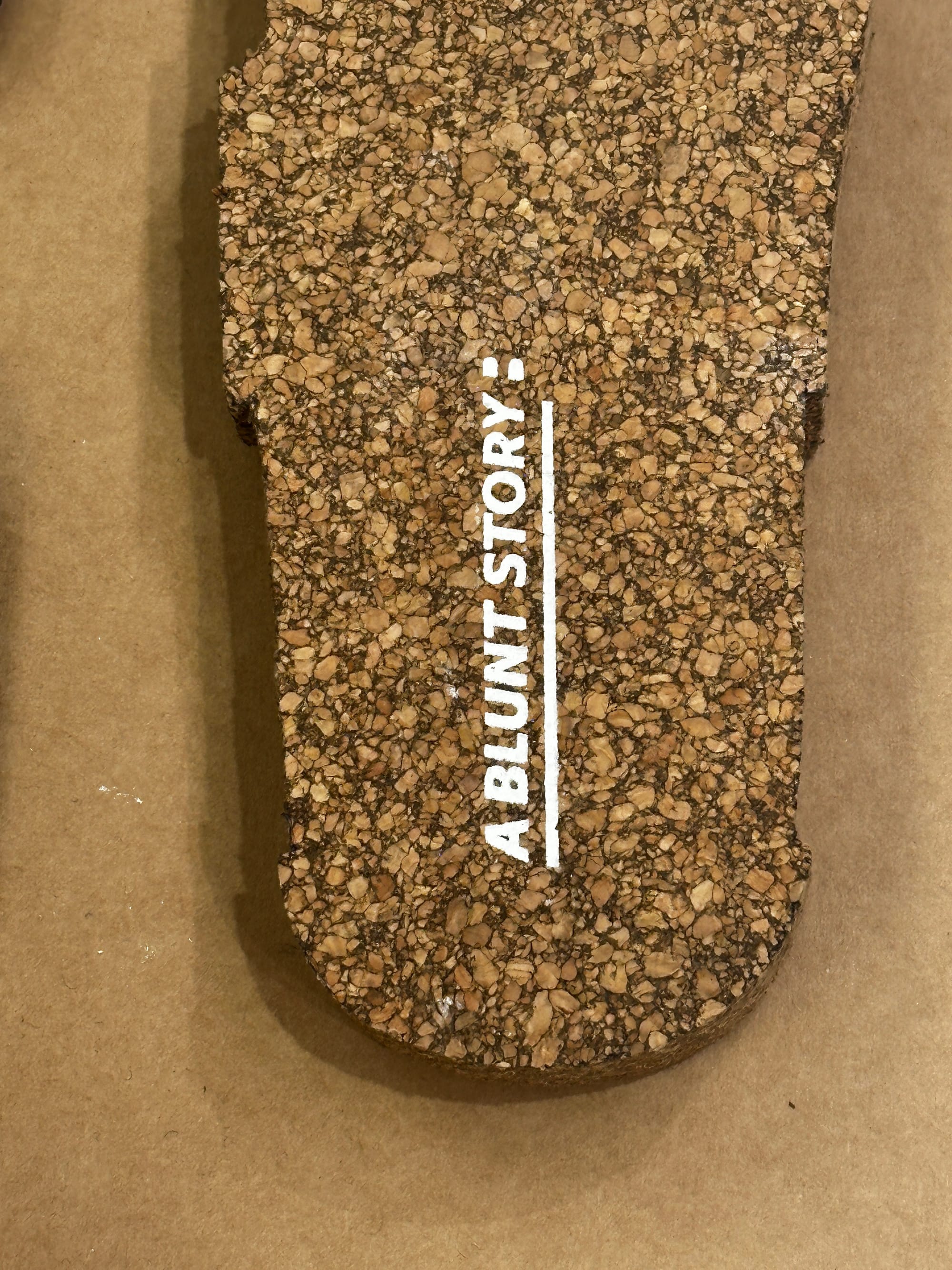
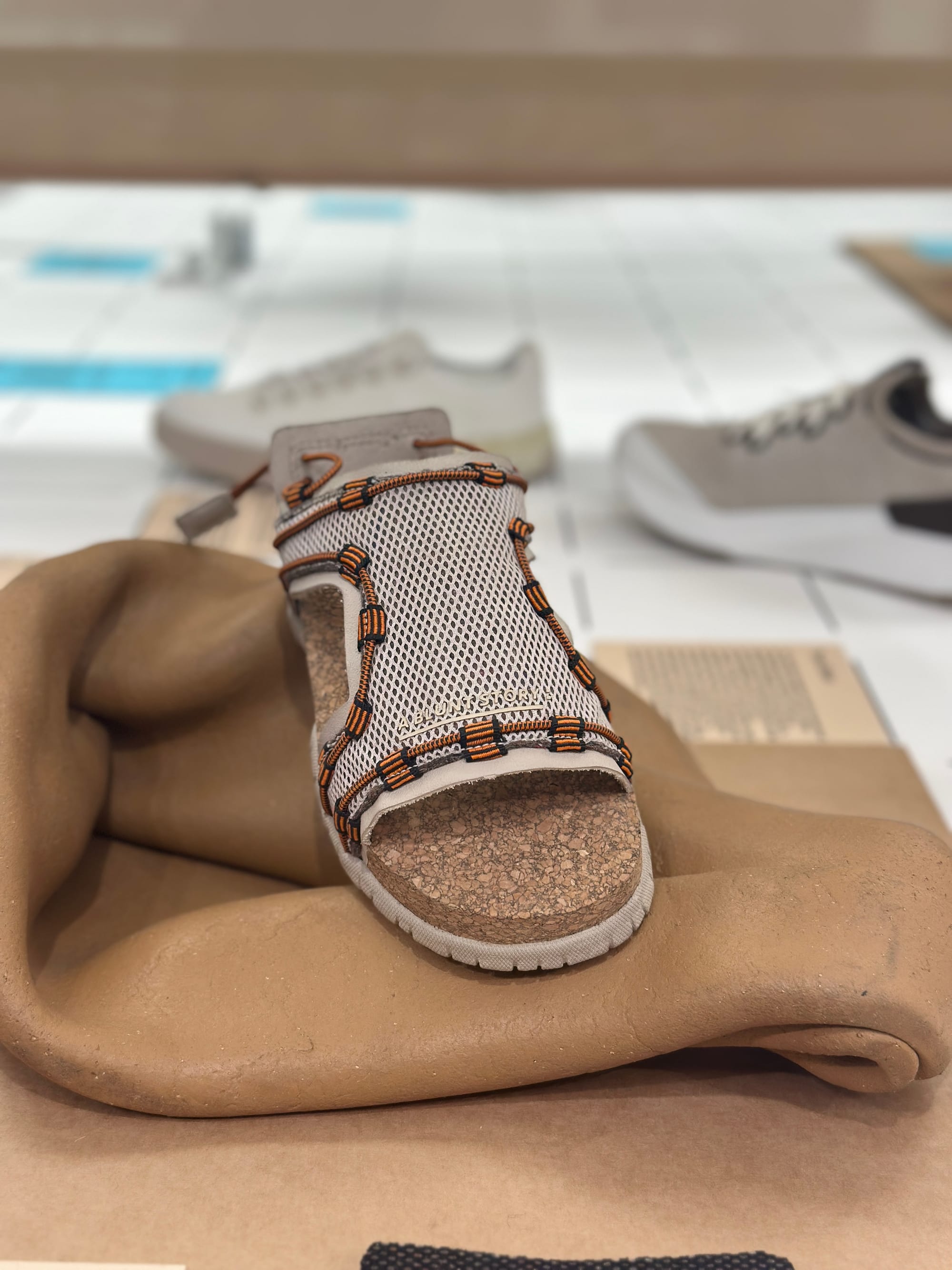
A Blunt Story is working with plant-based, plastic-free soles made from crop waste. The brand, which is based in Ghaziabad, India, aims to move beyond petroleum-derived plastics, resins and synthetic rubbers to low-impact materials made from agricultural resides, plant oils, and post-consumer textiles.
Conventional shoe soles are typically made from ethylene-vinyl acetate (EVA), thermoplastic polyurethane (TPU) and Pebax foams, which often contain toxic additives that leach into soil and waterways. Their lightweight structure also makes them prone to microplastic shedding during everyday wear, contributing to pollution and posing risks to ecosystems. As an alternative, A Blunt Story has developed two innovative materials, UNCRUDE® and UNWASTE™. Both solutions prioritize circularity and safe chemistry across the supply chain and reduce the negative environmental and human impact of performance footwear.
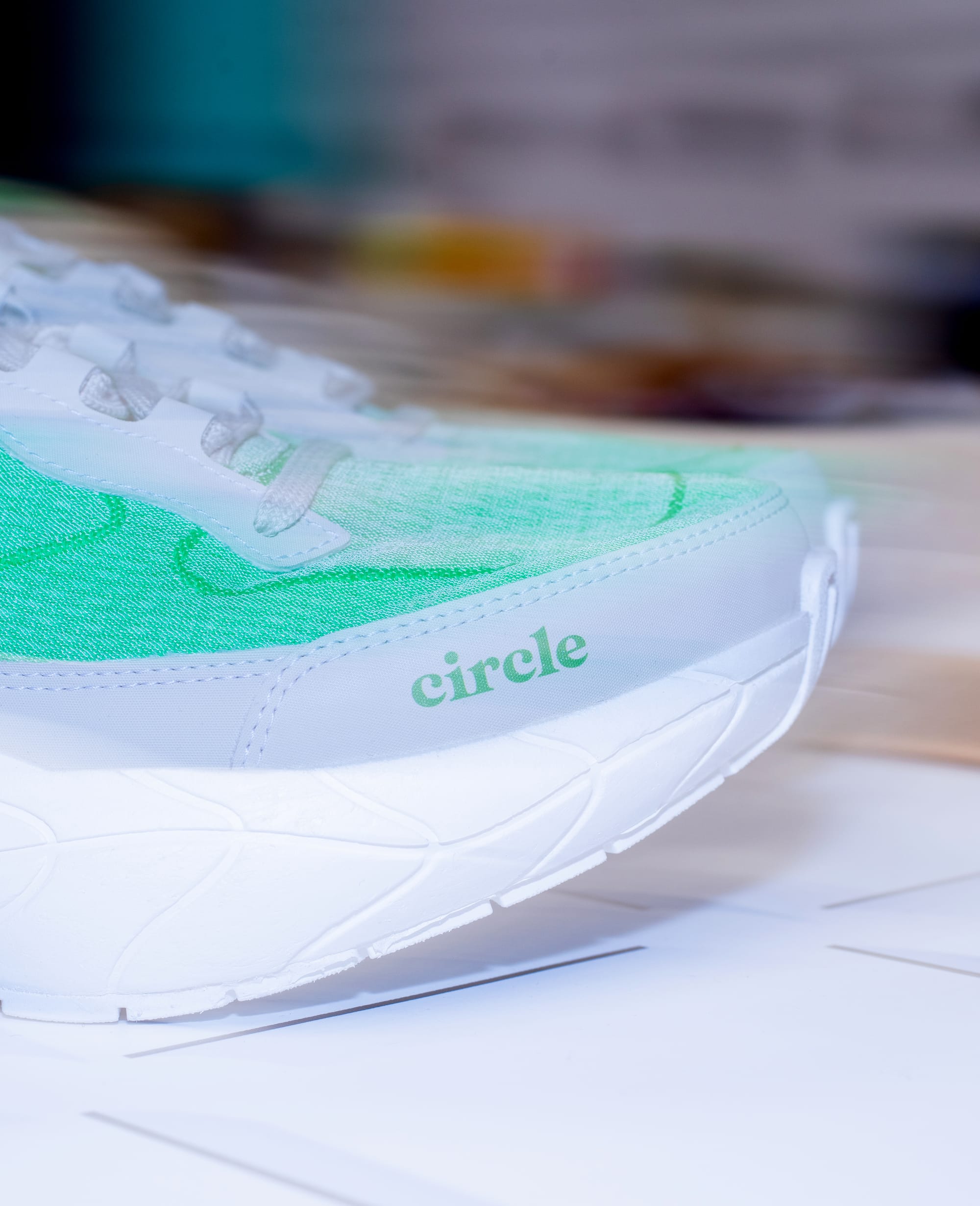
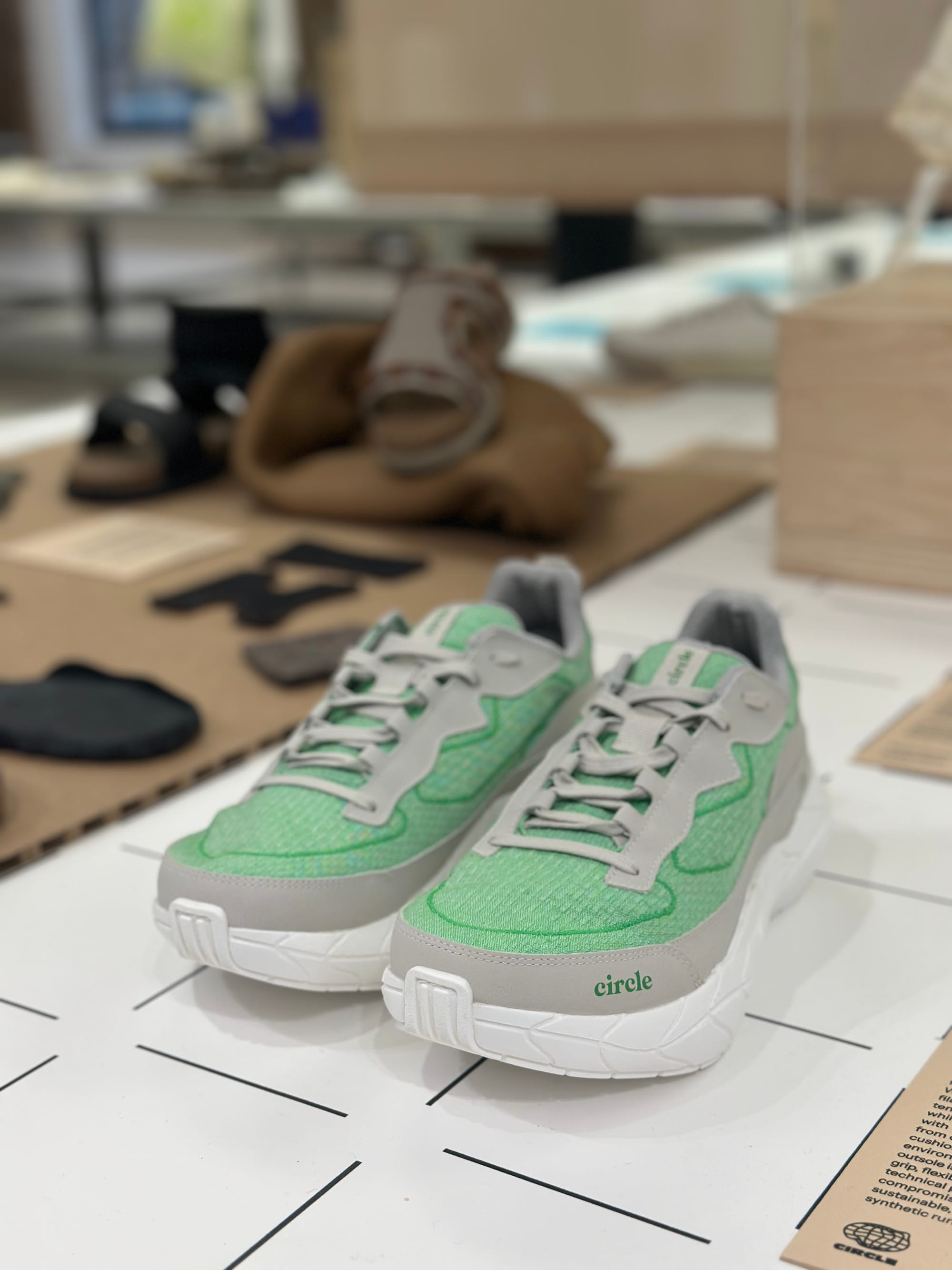
Circle Sportswear is a French running apparel brand proving that natural, bio-based materials can rival or surpass petroleum-based alternatives found in conventional running shoes. The Supernatural Runner™ is the world's first running shoe made from 75% bio-based materials. Its upper merges Woolmark®-certified wool with TENCEL™ Luxe filament derived from wood pulp. Wool regulates temperature, wicks moisture and resists odor, while TENCEL™ Luxe offers a durable fit that moves with the foot. The midsole uses PLNT-FOAM™ from castor beans, providing lightweight cushioning and efficient energy return without the environmental cost of conventional foams. The outsole is crafted from bio-based rubber, delivering grip, flexibility and durability.

Photos courtesy of The Mills Fabrica and Fiona Coleman
Performance Without Toxicity signals a critical shift away from activewear’s petroleum-heavy past. As the industry swaps harmful synthetics and "forever chemicals" for bio-based alternatives, it proves that performance gear doesn't require a toxic trade-off. Ultimately, the new metric of high-performance apparel will no longer be its durability alone, but its commitment to healthy materials that protect both people and planet.